
When Collaboration Becomes Chaos: My Experience with LEGO Crocs
The LEGO x Crocs collaboration left me wondering whether we’ve reached peak absurdity—or if playful design still has the power to surprise us in meaningful ways.


I remember the first time I saw photos of the LEGO Crocs collaboration circulating online. It was one of those images that made me pause mid-scroll—bright, blocky bits of nostalgia attached to a shoe widely mocked for being an enemy of good taste. I couldn’t tell if it was genius or parody. The LEGO colors, those unapologetic reds, yellows, and blues, looked like costume pieces for a child playing “designer.” But the Crocs silhouette—the stubby, ventilated rubber clog—had a kind of accidental honesty to it. Together, they looked like an inside joke about consumer desire.
I bought a pair, of course. Curiosity is an expensive impulse when it intersects with pop culture drops. When the box arrived, it felt like unboxing irony itself. The shoes were chunkier than I imagined, the little LEGO tiles even brighter in person. Each step produced a faint slapping noise—rubber on tile on ego. And yet, I wore them for days. There was something oddly liberating about surrendering my sense of aesthetic restraint to pure, unapologetic fun.
The thing is, products like LEGO Crocs aren’t really about the product anymore. They’re symbols of cultural play—the way nostalgia and absurdity merge into brand collaboration as performance art. On paper, it’s the perfect storm of modern marketing: one brand built on childhood imagination, another built on comfort bordering on defiance. Together, they manufacture attention. Anyone who buys them, including me, is participating in that theater of irony—part mockery, part sincerity.
I found myself reflecting on what it means to wear something that’s meant to make people look twice. I didn’t buy the shoes because I thought they were beautiful; I bought them because they challenged my instinct for taste. They reminded me that the idea of “cool” has collapsed into something more elusive—something that laughs at its own absurdity. These aren’t shoes so much as statements: that design doesn’t have to take itself seriously, that humor is a valid aesthetic, that nostalgia can be engineered into a form of brand intimacy.
But that also feels like the problem. Everything now is engineered for reaction. LEGO Crocs don’t exist to exist—they exist to trend. They fit perfectly into the metaverse of virality: a product so self-aware it’s almost sentient. I can’t fault Crocs for this. For years, they’ve weathered ridicule and turned it into loyalty. Their persistent presence on both nurses’ feet and runway shows is a testament to the weird democracy of comfort. LEGO, too, has navigated cultural reinvention deftly, expanding from toys to films to brand collaborations that reframe play as lifestyle. In that sense, LEGO Crocs make brutal sense.
When I wore mine to the grocery store, two different people stopped me. One asked if I’d built them myself. Another asked, half-laughing, where they could get a pair. That’s the power of an object that dissolves boundaries between adult irony and childlike enthusiasm. Still, I couldn’t shake the feeling that these moments were manufactured—that even my spontaneity had been scheduled weeks in advance by a marketing team predicting exactly this kind of encounter.
Fashion, in its upper echelons, thrives on this destabilization. When Balenciaga releases duct-taped sneakers or muddy Crocs, they’re not designing—they’re orchestrating conversations. LEGO Crocs operate similarly. They don’t ask to be liked; they ask to be noticed. And the noticing, in our algorithmic hunger for novelty, becomes the point.
I started thinking about what happens when nostalgia becomes a business model. LEGO used to represent imagination with infinite outcomes—you could build worlds. Today, those same bricks arrive pre-curated, packaged into IP tie-ins and collaborations. Creativity gets replaced by kits, and kits become content. I don’t resent it, exactly. I just feel the quiet melancholy of a play that has become predictable.
The Crocs themselves are comfortable, of course. It’s almost unfair how practical they are. They’re weatherproof, durable, and functionally indestructible—just like LEGO. Maybe that’s why the partnership works more deeply than I first thought. Beneath all the irony lies an accidental truth: both brands are about longevity through reinvention. They’re anti-fashion in the same way—the kind that laughs from the sidelines while everyone else tries to look serious.
A few weeks later, I shelved my LEGO Crocs next to my other sneakers. They’ve become fewer shoes than artifacts of a cultural moment. They remind me of a particular mood in design—when collaboration stopped being about synergy and started being about provocation. I don’t think I’ll wear them often, but I’m oddly glad they exist.
Because even in their absurdity, they raise an honest question: what happens when a brand runs out of sincerity and instead leans into spectacle? Maybe that’s the truest reflection of our age—that we crave products not for what they do, but for what they say about our ability to laugh at consumption while still consuming.
So yes, LEGO Crocs are ridiculous. But they’re also, somehow, exactly right. They make fashion childish again. And maybe, in a world that takes itself too seriously, that’s worth celebrating—at least once, in bright plastic colors and unapologetic rubber soles.
About the Creator
Trend Vantage
Covering the latest trends across business, tech, and culture. From finance to futuristic innovations, delivering insights that keep you ahead of the curve. Stay tuned for what’s next!
Keep reading
More stories from Trend Vantage and writers in Styled and other communities.
Karrueche Tran: A Multifaceted Talent in the Spotlight
Karrueche Tran is a name that resonates with many in the realms of fashion, acting, and social media. Born on September 17, 1988, in Los Angeles, California, Karrueche has carved out a unique niche for herself in the entertainment industry. With a career that spans modeling, acting, and entrepreneurship, she has become a prominent figure, particularly known for her high-profile relationships and her ability to navigate the complexities of fame. This article delves into her life, career, and the impact she has made in various fields.
By Trend Vantage6 months ago in Styled
2026 Oscar Nominations: The Complete List of Nominees
The annual celebration of cinematic achievement is upon us once again. On January 22, 2026, the 98th Academy Awards nominations were officially revealed, setting the stage for one of the most exciting Oscar seasons in recent memory. With record-breaking nods, surprise contenders, and an unusually diverse field of films and talents, the Academy Awards nominations have generated widespread conversation in Hollywood and around the world.
By Salaar Jamalia day ago in Styled
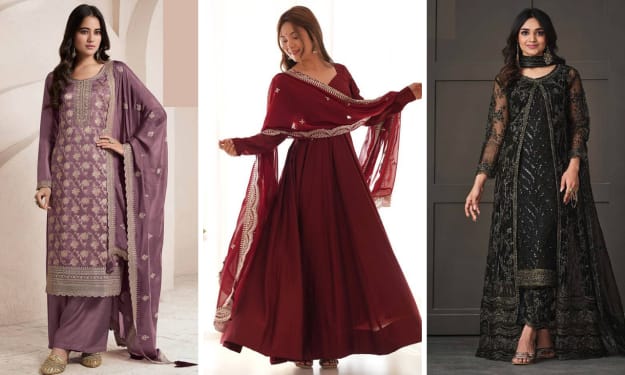
Indian Dresses You Can Wear More Than Once Without Re-Styling
The winds of Indian fashion in 2026 are blowing new. Rather than clothes requiring new jewellery, new shoes, and a whole new mood to pull off each time you wear them, women favour Indian dresses that simply work on repeat. The kind you can recycle time and again for various occasions without feeling bored or overdressed.
By Amit Mandalabout 18 hours ago in Styled
Five—One Grounding
Five—Locked in a perpetual battle against my failing senses and reason, I fight to survive, to get through; I am afraid of... nothingandeverythingallatonce—...—my mouth is dry, and my muscles seize up... what can I see? I can see the birdcage and birds; I can see the watercolour my beautiful wife painted many years ago and unlocked her journey into art; I can see the empty mug of tea as it sits perilously on the arm of the sofa; how many is that now? Three down, two to go; I can also see a jackdaw on the roof of our neighbour's house across the road and a bookcase of potential—Five things you can see.
By Paul Stewart5 days ago in Poets



Comments
There are no comments for this story
Be the first to respond and start the conversation.