
The Brilliant Truth About Lab-Grown Diamonds: A Deep Dive Into the Future of Ethical Luxury
How Science and Ethics Are Reshaping Our Relationship with Luxury's Most Coveted Gemstone.

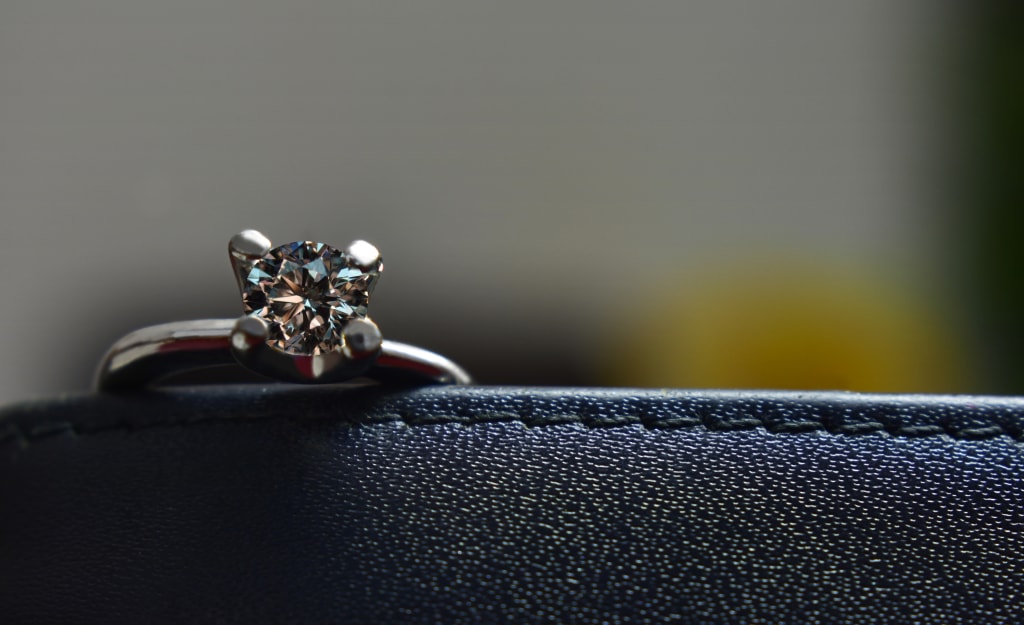
Redefining Diamond Tradition
The first time I held a lab-grown diamond, I was skeptical. Having grown up with the marketing narratives that natural diamonds are formed over billions of years deep within the Earth—making them rare, precious, and inherently valuable—I couldn't help but wonder if this laboratory-created alternative would feel somehow less authentic, less special.
I was wrong.
The stone caught the light with the same mesmerizing dance of rainbow reflections. It possessed the same adamantine luster that has captivated humanity for centuries. In that moment, I realized I was witnessing not just a scientific achievement, but the beginning of a profound shift in how we think about luxury, value, and ethical consumption in the 21st century.
This revelation sparked a year-long journey of research that transformed my understanding of the diamond industry and convinced me that lab-grown diamonds represent one of the most significant innovations in the jewelry world in generations. Organizations like the International Grown Diamond Association (IGDA) have been instrumental in establishing standards and educating consumers about this revolutionary technology. What follows is what I've learned—a comprehensive exploration of why these technological marvels are rapidly redefining our relationship with one of the world's most coveted gemstones.
The Science of Creation: How Lab-Grown Diamonds Come to Life
To appreciate the revolutionary nature of lab-grown diamonds, we must first understand exactly what they are and how they're made. Unlike diamond simulants such as cubic zirconia or moissanite, which merely resemble diamonds, lab-grown diamonds are atomically identical to their mined counterparts. They are real diamonds in every scientific sense—composed of carbon atoms arranged in the characteristic crystalline structure that gives diamonds their legendary hardness and optical properties.
Scientists create these gems using one of two sophisticated methods:
High Pressure-High Temperature (HPHT)

This method mimics the natural conditions under which diamonds form deep within the Earth. A carbon seed is placed in a chamber with pure graphite carbon and exposed to temperatures exceeding 2,000 degrees Fahrenheit and pressure greater than 1.5 million pounds per square inch. Under these extreme conditions, the carbon melts and slowly crystallizes around the seed, forming a rough diamond.
The HPHT process has been refined since the 1950s when General Electric first succeeded in creating small industrial-grade diamonds. Today's advanced HPHT technology produces gem-quality stones that can weigh several carats.
Chemical Vapor Deposition (CVD)
The more recent CVD method takes a different approach. It begins with a thin slice of diamond seed placed in a sealed chamber. The chamber is filled with carbon-rich gas (typically methane) and heated to around 1,400 degrees Fahrenheit. This extreme heat causes the gas to ionize into plasma, breaking down the molecular bonds. The freed carbon atoms then gradually descend onto the diamond seed, building up atom by atom in crystalline formation.
The CVD process allows for more precise control over the growing conditions and can produce exceptionally pure diamonds. Recent advances in CVD technology have dramatically increased growth rates and quality, making it increasingly cost-effective for gem production.
Dr. James Butler, a pioneering scientist in diamond CVD technology and former researcher at the Naval Research Laboratory, explains the significance: "The ability to grow single-crystal diamond by CVD represents one of the major scientific and technological achievements of the late 20th century. These aren't imitation diamonds—they're the real thing, just created in weeks rather than billions of years."
What makes both processes remarkable is that they yield stones that are optically, physically, and chemically identical to mined diamonds. The Gemological Institute of America (GIA), the world's foremost diamond grading authority, evaluates lab-grown diamonds using the same rigorous standards applied to natural diamonds—the famous 4Cs of cut, color, clarity, and carat weight.
In fact, lab-grown diamonds are so identical to their natural counterparts that professional gemologists cannot distinguish between them without specialized equipment that detects subtle growth-pattern differences or traces of metallic catalysts used in some lab processes.
The Ethical Imperative: Beyond the Kimberley Process
For many consumers, the appeal of lab-grown diamonds begins with ethical considerations. The diamond mining industry has made significant strides in addressing its most problematic practices, most notably through the Kimberley Process Certification Scheme established in 2003 to prevent "conflict diamonds" from entering the market. However, human rights organizations including Global Witness and Amnesty International have consistently highlighted the limitations of these efforts.
The Kimberley Process narrowly defines conflict diamonds as those funding rebel movements against legitimate governments. This definition fails to address broader human rights concerns such as child labor, dangerous working conditions, community displacement, and environmental degradation. Organizations like Human Rights Watch have extensively documented these ongoing issues. Moreover, the certification tracks rough diamonds in batches rather than individual stones, creating significant traceability challenges.
Ian Smillie, one of the architects of the Kimberley Process who later resigned in protest over its shortcomings, stated bluntly in an interview with Time magazine: "The Kimberley Process's refusal to evolve and address the clear links between diamonds, violence, and tyranny has rendered it increasingly irrelevant."
Even when mining operations follow best practices, the nature of diamond supply chains—spanning multiple countries with varying degrees of transparency and governance—makes absolute certainty about a diamond's origins extraordinarily difficult. A single natural diamond might change hands dozens of times on its journey from mine to market.
Lab-grown diamonds circumvent these complexities entirely. Their origin story is transparent and traceable, beginning in controlled laboratory environments with stringent oversight. Each stone's provenance can be documented with certainty, offering consumers peace of mind that their purchase has not contributed to human suffering.
Tanya Kaur, who transitioned from working in traditional diamond retail to founding an ethical jewelry brand featuring lab-grown stones, summarizes the appeal: "When customers buy a lab-grown diamond, they aren't just getting a beautiful gemstone—they're getting absolute certainty about its origins. That certainty has become increasingly valuable to conscious consumers."
Environmental Considerations: A Comparative Impact Analysis
The environmental impact of diamond mining has long been a concern for ecologically conscious consumers, and with good reason. Traditional diamond mining, particularly open-pit mining, involves significant landscape alteration. To access diamond-bearing kimberlite deposits, mining operations must remove massive amounts of earth—sometimes excavating craters visible from space.
The numbers are staggering: according to environmental assessments, producing a single one-carat mined diamond typically requires moving more than 250 tons of earth, using approximately 127 gallons of water, and consuming 538.5 million joules of energy, resulting in 57 kg of carbon emissions.
Marine diamond mining—which uses ships to dredge diamonds from the ocean floor—brings additional concerns about ecosystem disruption and marine habitat destruction. Meanwhile, some mining operations have been linked to deforestation, soil erosion, and water pollution from chemical processing.
Lab-grown diamonds present a significantly different environmental profile. A comprehensive analysis conducted by Trucost (part of S&P Global) found that lab-grown diamonds produce approximately:
- 95% less air pollution
- 99% less water pollution
- 85% less mining waste
- 58.5% fewer carbon emissions (based on operations powered by traditional energy sources)
When diamond-growing facilities utilize renewable energy—as an increasing number now do—the carbon footprint can be reduced even further. Some producers have achieved carbon-neutral or carbon-negative operations by investing in renewable energy infrastructure that exceeds their consumption needs.
Dr. Saleem Ali, an environmental scientist specializing in extractive industries at the University of Delaware, offers important context: "While we should acknowledge that lab-grown diamonds do require considerable energy input, their overall environmental footprint is substantially smaller than that of mined diamonds when measured across all impact categories. The concentrated nature of the production process also offers greater opportunities for implementing sustainability measures and transparent monitoring."
It's worth noting that the environmental impact of both mined and lab-grown diamonds varies significantly depending on specific production practices. The most responsible mining operations implement progressive land reclamation and stringent pollution controls, while the most sustainable lab operations utilize renewable energy and closed-loop water systems. Nevertheless, the inherent nature of each production method results in significant differences in their environmental footprints.
The Economics of Innovation: Disrupting the Diamond Market
Beyond ethical and environmental considerations, lab-grown diamonds offer another compelling advantage: value. These diamonds typically cost 20-40% less than mined diamonds of equivalent quality, size, and characteristics.
This price difference doesn't reflect inferior quality—remember, lab-grown diamonds are chemically identical to mined diamonds. Rather, it stems from fundamentally different market dynamics and production economics.
The traditional diamond market has historically been characterized by artificial scarcity. For much of the 20th century, a near-monopoly controlled diamond supply, strategically limiting availability to maintain high prices while masterfully marketing the stones as symbols of love, commitment, and status. This history is thoroughly documented in Edward Jay Epstein's landmark investigation "Have You Ever Tried to Sell a Diamond?" published in The Atlantic. Even as the market has become somewhat more diversified, the supply chain remains complex and multi-layered, with each intermediary between mine and retailer adding margin to the final price.

Lab-grown diamonds operate under different market principles. While still requiring sophisticated technology and expertise to produce, they aren't subject to the same scarcity economics. Production capacity can be expanded in response to demand, and the supply chain is dramatically simpler. Many lab-grown diamond companies operate with vertical integration—controlling production, cutting, and retail—further reducing costs passed to consumers.
Paul Zimnisky, an independent diamond industry analyst, explains: "Lab-grown diamonds have introduced a new competitive dynamic to the market. They've essentially created a separate diamond category that operates according to technology economics rather than commodity economics. As the technology continues to improve, we can expect production efficiencies to increase and prices to continue falling relative to mined stones."
This economic reality offers consumers an unprecedented opportunity: access to larger, higher-quality diamonds than would otherwise be within their budget. A couple that might have settled for a 0.75-carat mined diamond of moderate quality can now afford a flawless 1.5-carat lab-grown stone for the same price. Or they can choose a comparable stone to what they would have purchased otherwise and allocate the savings to other priorities.
Morgan Johnson, who recently chose a lab-grown diamond for her engagement ring, typifies this mindset: "We could have spent our entire budget on a smaller mined diamond, but choosing lab-grown allowed us to get a stone that truly took my breath away while still having money left for the wedding and honeymoon. It felt like the smarter choice in every way."
The Aesthetic Revolution: Creative Freedom Beyond Traditional Constraints
The economics of lab-grown diamonds have sparked another significant development: unprecedented creative freedom in diamond jewelry design. Historically, the high cost of natural diamonds has led to conservative design choices focused on maximizing the visual impact of minimal carat weight. The famous solitaire engagement ring—a single diamond in a simple setting—emerged partly as a way to showcase a small stone to its best advantage.
With lab-grown diamonds' more accessible price points, designers and consumers can explore bold new aesthetic directions. Multi-stone settings, larger center stones, innovative cuts, and mixed-material designs have all become more attainable. This democratization of diamond accessibility has unleashed a wave of creativity in jewelry design.
Renowned jewelry designer Melissa Torres observes: "Lab-grown diamonds have liberated both designers and consumers from many traditional constraints. I'm creating pieces now that would have been financially prohibitive for most clients five years ago. It's allowing for a renaissance in diamond jewelry design, with more experimentation and personalization than ever before."
This creative liberation extends to color as well. While colorless diamonds remain the traditional choice, fancy colored diamonds—naturally occurring in shades of yellow, pink, blue, and other hues—have historically commanded premium prices, sometimes millions of dollars per carat for the rarest colors.
Lab-grown colored diamonds can be produced more predictably and at a fraction of the cost of their natural counterparts. This has brought previously inaccessible pink, blue, and yellow diamonds within reach of average consumers, opening new aesthetic possibilities for both designers and diamond lovers.
The Technological Frontier: What's Next for Lab-Grown Diamonds

The technology behind lab-grown diamonds continues to advance at a remarkable pace. Current development efforts focus on several key areas:
Enhanced Growth Rates and Size Capabilities
Early lab-grown diamonds were small, often under half a carat. Today's advanced technologies routinely produce diamonds of two carats or more, with some companies achieving stones of 10+ carats. Research continues to improve growth rates and size capabilities, with the goal of making larger stones more efficient to produce.
Energy Efficiency
Diamond growth requires significant energy input. Researchers are developing more energy-efficient processes that require less electricity per carat, reducing both costs and environmental impact. Combined with renewable energy sources, these improvements could eventually lead to carbon-neutral or carbon-negative production.
Novel Properties and Applications
Perhaps most intriguing are research efforts focused on creating diamonds with properties that don't occur in nature. By introducing specific elements during the growth process, scientists can create diamonds with unique optical, thermal, or electronic characteristics. These aren't primarily intended for jewelry but rather for advanced technological applications in quantum computing, medical devices, and industrial tools.
Dr. Anirudha Sumant, a nanoscientist at Argonne National Laboratory who specializes in diamond materials, explains: "Lab-grown diamond is emerging as a quantum material with extraordinary properties. We can now engineer diamonds at the atomic level, creating possibilities that simply don't exist with natural diamonds. This represents the future of diamond technology—moving beyond jewelry to solve some of humanity's most challenging problems."
Cultural Significance: Redefining Luxury in the 21st Century
Perhaps the most profound impact of lab-grown diamonds lies in how they're helping reshape our cultural understanding of luxury and value. Traditionally, luxury has been defined largely by scarcity, heritage, and exclusivity. A diamond's value was tied to the narrative of its natural formation over billions of years and the difficulty of extracting it from the earth.
Lab-grown diamonds challenge this framework, suggesting instead that true luxury in the 21st century might be defined by different values: transparency, sustainability, innovation, and ethical integrity. They represent a shift from passive consumption of what nature has provided to active creation aligned with human values and technological capabilities.
This cultural shift reflects broader changes in consumer priorities, particularly among younger generations. For millennials and Gen Z, who will constitute the majority of luxury consumers within the decade, traditional status symbols are giving way to value-driven purchasing decisions. A 2023 report by McKinsey found that 65% of luxury consumers under 40 consider sustainability and ethical production among their top three purchasing criteria, compared to just 27% of consumers over 55. This shift in consumer values is further documented in research from the Diamond Producers Association, which shows growing interest in transparent sourcing across all luxury markets.
Dr. Emma Rivera, cultural anthropologist specializing in consumer behavior at NYU, observes: "What we're witnessing with lab-grown diamonds is part of a larger redefinition of luxury for the modern era. Younger consumers are questioning inherited assumptions about value and making consumption choices that align with their personal values and identity. They don't see lab-grown diamonds as 'less than' natural diamonds—they see them as representing a more thoughtful, forward-thinking approach to luxury."
This perspective is echoed by Alexandra Chen, who recently chose a lab-grown diamond for her engagement ring: "I wanted something beautiful that aligned with my values. My ring isn't just a symbol of my relationship—it's a reflection of who we are as people and what we care about. The fact that it's lab-grown is part of what makes it meaningful to me."
The Personal Choice: Navigating Your Diamond Journey
As with any significant purchase, the decision between natural and lab-grown diamonds ultimately comes down to personal values and priorities. There is no universally "right" choice—only the choice that aligns best with what matters most to you.
Some consumers continue to prefer natural diamonds for their historic tradition, geological uniqueness, or potential investment value. Others are drawn to lab-grown diamonds for their ethical clarity, environmental benefits, or superior value proposition. Many jewelers now offer both options, recognizing that consumer preferences have diversified.
If you're considering a diamond purchase, here are some questions that might help clarify your priorities:
How important is the diamond's origin story to your perception of its value and meaning?
- What role do ethical and environmental considerations play in your purchasing decisions?
- Would you prefer to maximize the size and quality of stone within your budget, or do other factors matter more?
- Are you drawn to innovative technologies or traditional practices?
- What meanings do you want your diamond to embody and symbolize?
Regardless of your preference, the most important factor is making an informed choice—understanding the origins, impacts, and implications of what you choose to purchase and wear, especially for items as significant and symbolic as diamond jewelry.
A Brilliant Future
The rise of lab-grown diamonds represents more than just a technological achievement or market disruption—it signifies a fundamental reconsideration of how we assign value and meaning to luxury goods. By offering consumers a choice that doesn't require compromising between ethics, aesthetics, and economics, these diamonds are helping to forge a more conscious approach to luxury consumption.
As the technology continues to advance and consumer awareness grows, lab-grown diamonds will likely become an increasingly significant part of the jewelry landscape. They offer a glimpse of a future where our most precious symbols of love and commitment can be created in harmony with our values—where brilliance comes not just from within the stone itself, but from the thoughtfulness behind choosing it.
Whether you ultimately choose a natural or lab-grown diamond, what matters most is that your choice reflects what truly matters to you. After all, the most valuable aspect of any diamond isn't its physical properties or origin—it's the meaning we imbue it with and the stories it helps us tell about our lives and what we hold dear.

About the Author: After spending over a decade in the jewelry industry and witnessing its transformation firsthand, I now write about the intersection of technology, ethics, and luxury. My exploration of lab-grown diamonds began as professional curiosity and evolved into a passion for helping consumers make informed choices about these remarkable gems.
About the Creator
Martha James
I'm a writer passionate about sharing ideas that matter. I explore the nuances of everyday life and tackle complex topics with clarity and insight.
Keep reading
More stories from Martha James and writers in Styled and other communities.
The Complete Engagement Ring Guide: Selecting Your Perfect Symbol of Love
Engagement Rings Through Time The tradition of engagement rings dates back millennia, with archaeological evidence showing ancient Egyptian rings symbolizing eternal love through their circular design. While diamonds became the standard following De Beers' influential 1930s marketing, today's couples increasingly explore diverse options beyond traditional choices, selecting rings that truly reflect their unique relationship.
By Martha James9 months ago in Styled
How To Dye A Wig?
Hey Sis! So you saw that fire honey-blonde balayage on TikTok, or maybe you’re feeling that midnight blue fantasy, but the thought of bleaching your own curls colored wigs has you saying, “Absolutely not.” I get it—our hair is our crown, and sometimes you don’t want to risk the throne.
By manman zhai7 days ago in Styled
Wild Card Weekend Recap: What Happens Now?
I think I figured out why I love Wild Card Weekend so much. It's because it's the first playoff anything of the calendar year. The NFL season starts in the fall, and once upon a time, the champion was crowned either on or slightly before New Year's. The evolution of the NFL schedule has resulted in the playoffs starting just into the New Year, and currently, the final week of the season falls on the first weekend of the New Year, with Wild Card Weekend coming a week after that. So yes, chronologically, the NFL's Wild Card Weekend serves as the first playoff anything of the calendar year.
By Clyde E. Dawkins6 days ago in Unbalanced



Comments
There are no comments for this story
Be the first to respond and start the conversation.