
Robotic Knitting Machines Enhancing Production Speed
Revolutionizing Textile Manufacturing: How Robotic Knitting Machines Enhance Speed, Efficiency, and Innovation
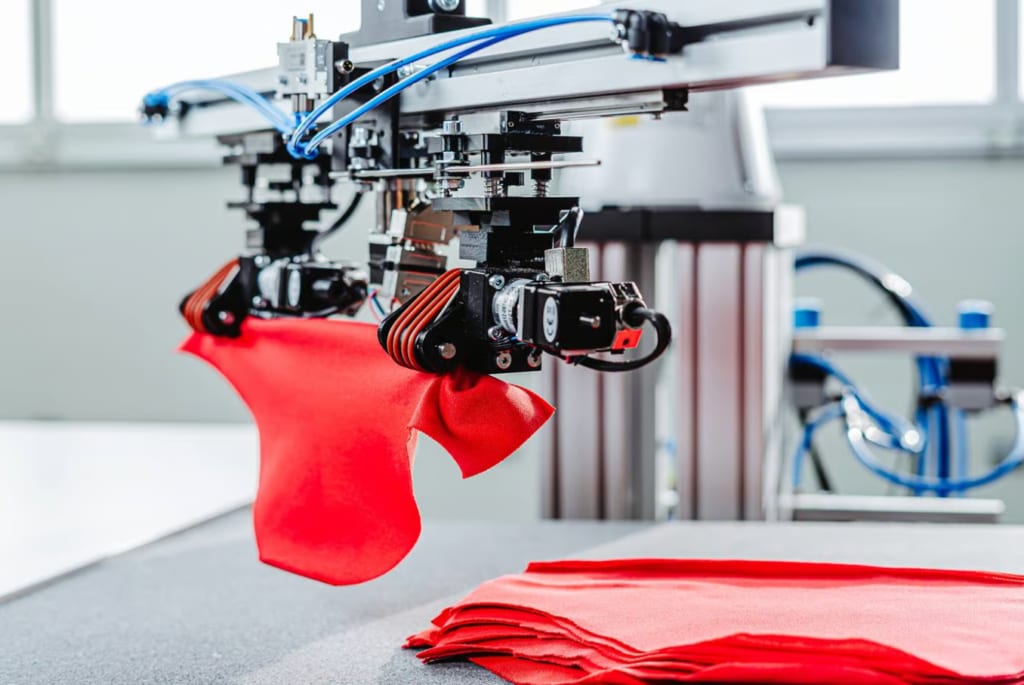
The textile manufacturing industry has witnessed ground-breaking advancements in recent years, with robotic knitting machines revolutionizing production speed and efficiency. These cutting-edge machines integrate automation, artificial intelligence (AI), and precision engineering to optimize the knitting process, ensuring faster turnaround times and higher-quality output. Traditional knitting methods, which relied on manual labour and semi-automated processes, are now being replaced by fully robotic knitting systems capable of producing complex patterns and garments with minimal human intervention.
This article explores how robotic knitting machines enhance production speed, their benefits, key innovations, and future implications in the textile industry.
1. The Evolution of Knitting Technology
From Manual to Automated Knitting
- Historically, knitting was a labour-intensive craft requiring skilled artisans to create intricate patterns.
- With the advent of mechanized knitting machines in the 19th and 20th centuries, the process became faster but still required human supervision.
- Early automated knitting machines introduced programmable controls, reducing manual input but not entirely eliminating human intervention.
The Rise of Robotic Knitting Machines
- The integration of robotics in knitting technology marks a significant leap in textile manufacturing.
- These machines use AI-driven algorithms, sensors, and robotic arms to perform intricate knitting tasks with unmatched speed and precision.
- Unlike conventional machines, robotic knitting systems can autonomously adjust stitch density, tension, and fabric structure without stopping production.
2. How Robotic Knitting Machines Enhance Production Speed
a) Automated Precision and Error Reduction
- Traditional knitting machines required constant monitoring to prevent errors, leading to production delays.
- Robotic knitting machines utilize AI-powered sensors to detect and correct mistakes in real time, minimizing material wastage and downtime.
- With precise control over yarn tension and stitch formation, these machines ensure flawless output at high speeds.
b) Continuous and Uninterrupted Production
- Unlike human-operated knitting machines, robotic systems can operate 24/7 without fatigue, significantly increasing production output.
- Automated yarn feeding and real-time adjustments enable seamless production without frequent stops for recalibration.
- High-speed robotic knitting can produce garments in a fraction of the time required by traditional methods.
c) Smart Programming for Complex Patterns
- Modern robotic knitting machines can be programmed to create intricate patterns, textures, and 3D structures that were previously time-consuming to manufacture.
- CAD (Computer-Aided Design) software integration allows designers to upload digital patterns directly to the machine, eliminating manual adjustments.
- Rapid prototyping capabilities enable quicker design iterations and faster production cycles.
d) Reduced Dependence on Manual Labour
- The textile industry has historically faced labour shortages and skill gaps in knitting operations.
- Robotic knitting reduces dependency on skilled workers while maintaining consistent quality.
- Automation enables manufacturers to meet high-demand periods without increasing workforce costs.
3. Key Innovations in Robotic Knitting Machines
a) AI-Driven Knitting Algorithms
- Machine learning algorithms optimize knitting speed, stitch patterns, and fabric elasticity.
- AI-powered systems analyse production data to improve efficiency and predict potential machine failures.
b) Internet of Things (IoT) Integration
- IoT-enabled knitting machines provide real-time production monitoring and remote control capabilities.
- Manufacturers can track machine performance, adjust parameters remotely, and receive maintenance alerts.
c) Seamless and 3D Knitting Technology
- Seamless knitting eliminates the need for post-production stitching, speeding up the garment manufacturing process.
- 3D knitting technology enables the production of entire garments in one piece, reducing assembly time.
d) High-Speed Robotic Arms
- Robotic arms equipped with advanced motion control systems handle yarn feeding, pattern adjustments, and finishing tasks.
- These arms work at high speeds without compromising precision, significantly reducing production time.
4. Benefits of Robotic Knitting Machines
a) Increased Production Efficiency
- Robotic knitting machines can produce more garments in less time, meeting high market demand.
- The automation of repetitive tasks speeds up the overall manufacturing process.
b) Cost Savings in Manufacturing
- Reduced labour costs due to automation.
- Lower material wastage thanks to precision knitting and real-time error detection.
- Energy-efficient robotic systems decrease operational costs.
c) Improved Product Quality and Consistency
- Unlike human-operated machines, robotic knitting systems maintain uniform stitch quality across all products.
- AI-driven adjustments ensure that each garment meets strict quality standards.
d) Customization and On-Demand Production
- Robotic knitting enables mass customization, allowing manufacturers to produce personalized designs quickly.
- On-demand production reduces excess inventory, minimizing storage costs.
e) Sustainability and Eco-Friendliness
- Automated knitting reduces textile waste by optimizing fabric usage.
- Some robotic knitting machines use recycled and biodegradable yarns to promote sustainability.
- Lower energy consumption compared to traditional knitting processes.
5. Future Implications of Robotic Knitting Technology
a) Expansion into Diverse Industries
- Robotic knitting machines are being adopted in industries beyond fashion, including automotive, medical, and sports textiles.
- Advanced textiles, such as smart fabrics with embedded sensors, are being developed using robotic knitting technology.
b) Growth of Smart Factories
- The rise of Industry 4.0 is driving the adoption of fully automated textile manufacturing facilities.
- Smart factories integrate robotic knitting machines with AI, IoT, and big data analytics for optimized production.
c) Advancements in AI and Machine Learning
- Future robotic knitting machines will feature enhanced AI capabilities for self-learning and adaptive production.
- Machine learning will enable real-time design modifications based on consumer preferences and fashion trends.
d) Potential Challenges and Solutions
- Initial Investment Costs: High-tech robotic knitting machines require significant upfront investment, but long-term savings justify the cost.
- Workforce Adaptation: While automation reduces manual labour, skilled workers will still be needed for machine programming, maintenance, and quality control.
- Software Integration: Continuous software updates and compatibility with design programs will be crucial for seamless production.
Conclusion
Robotic knitting machines are transforming the textile manufacturing industry by significantly enhancing production speed, efficiency, and quality. With the integration of AI, IoT, and automation, these machines offer unparalleled advantages, including reduced production costs, increased customization, and sustainable manufacturing practices.
As technology continues to evolve, robotic knitting machines will play a pivotal role in shaping the future of textile production, enabling faster, smarter, and more innovative manufacturing solutions. Businesses that embrace this revolution will gain a competitive edge, meeting consumer demands with greater agility and precision.
About the Creator
Keep reading
More stories from nick rodas and writers in Styled and other communities.
Future Prospects of AI and Robotics in Knitting Technology
Artificial Intelligence (AI) and robotics are transforming industries worldwide, and knitting technology is no exception. With advancements in automation, machine learning, and smart manufacturing, AI-driven knitting machines and robotic solutions are revolutionizing textile production. These innovations enhance efficiency, reduce waste, and enable sustainable practices while meeting growing consumer demands for personalized and high-quality knitted products.
By nick rodas10 months ago in Styled
What to Wear for Festive Gatherings: Green Salwar Kameez Ideas
Festive gatherings are those in-between moments that matter just as much as big weddings family get-togethers, poojas, festive dinners, community events, and celebrations where you want to look dressed up but still feel comfortable. That’s exactly why green salwar kameez has become such a popular choice for festive dressing. It feels fresh, celebratory, and versatile without being too loud or heavy.
By Amit Mandal3 days ago in Styled
Vampire Thriller “Sinners” Breaks Oscar Nomination Record
In a moment that has stunned Hollywood and redefined the boundaries of genre filmmaking, the vampire thriller Sinners has officially broken the Academy Awards nomination record. The dark, atmospheric film earned an unprecedented 16 Oscar nominations, making it the most-nominated movie in Academy history and the first vampire-centered film to dominate awards season on this scale.
By Salaar Jamaliabout 11 hours ago in Styled



Comments
There are no comments for this story
Be the first to respond and start the conversation.