
Queen Hatshepsut's Temple: A History and Construction Guide
Queen Hatshepsut's Temple
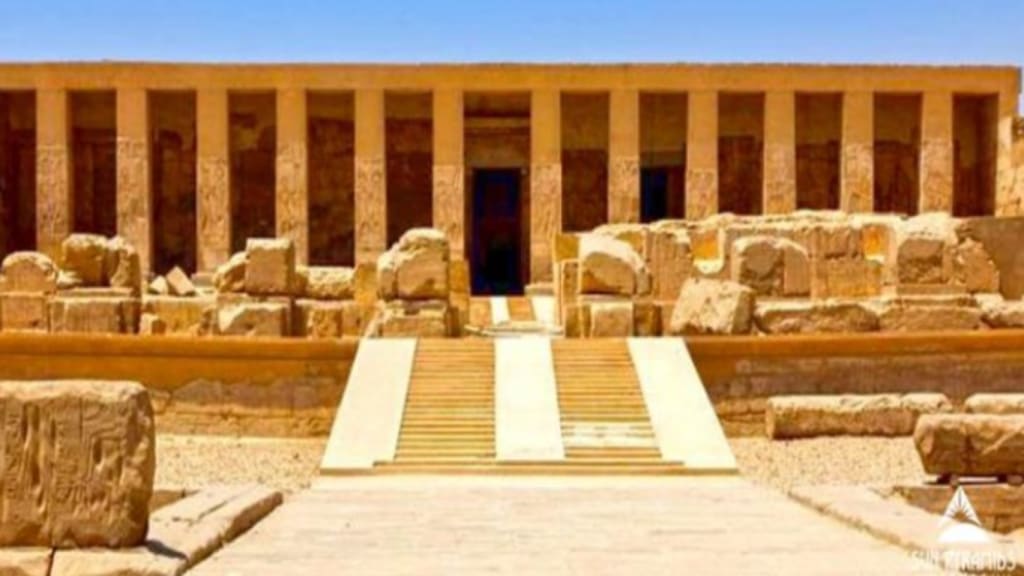
Queen Hatshepsut was an influential female ruler who was the fifth pharaoh of the eighteenth dynasty of Egypt. Her temple, known as the Queen Hatshepsut Temple, is located at Deir el-Bahri on the west bank of the Nile River near Luxor, Egypt. Built around 1473 B.C., the temple stands as a testament to her reign and serves as a symbol of female power. This blog post will take a closer look at the history of Queen Hatshepsut's temple, as well as provide an overview of its construction.
Who was Queen Hatshepsut?
Queen Hatshepsut was a remarkable woman of Ancient Egypt. She became the fifth pharaoh of the Eighteenth Dynasty during the New Kingdom period in Egyptian history. Her reign lasted from 1473 to 1458 BC, making her one of the longest reigning female pharaohs in Egyptian history. Queen Hatshepsut was known for her successful reign and for initiating vast building projects, including the construction of her famous mortuary temple at Deir el-Bahri.
During her reign, Queen Hatshepsut was known to have focused on military campaigns and trade relations with other regions, as well as continuing her predecessor’s campaigns against the Nubians. She also expanded the resources and revenue of Ancient Egypt by introducing new trade routes and negotiating favourable terms with foreign countries.
Queen Hatshepsut was also a strong leader and an active promoter of Egyptian religion, art and culture. She was worshipped as a god in Ancient Egypt and is still remembered today for her accomplishments and legacy in Ancient Egyptian history.
The construction of her temple
Queen Hatshepsut's temple was built during the 18th dynasty of Ancient Egypt, beginning in 1473 BC. According to the Egyptian historian Manetho, Hatshepsut was the fifth pharaoh of the dynasty and the second female ruler in Egyptian history. To commemorate her rule and show her piety towards the gods, she commissioned the construction of her temple, which would become one of the most impressive monuments in Ancient Egypt.
The project was managed by Senenmut, Hatshepsut's trusted advisor and architect. He designed the temple with three layers that followed the path of the sun from east to west. This design was a reflection of ancient Egyptian beliefs about divine order and the power of the sun god, Amon-Ra. The temple walls were made from limestone and sandstone blocks, with richly decorated columns and carved hieroglyphics depicting scenes of Hatshepsut's life and reign.
To reach the temple, visitors had to travel along a grand processional way lined with statues of sphinxes and obelisks that showcased Hatshepsut's greatness. Inside, they would find the main hall known as "Djeser Djeseru" (meaning "Holy of Holies"). Here, Queen Hatshepsut was worshipped as a living god who was seen as a messenger between humanity and Amon-Ra. After her death, Hatshepsut's temple was largely abandoned until it was rediscovered in 1818 by Italian archaeologist Giovanni Belzoni.
How the temple was used
Queen Hatshepsut’s temple was a space for the Ancient Egyptian elite to pay homage to the gods and goddesses of Ancient Egypt. It served as an important part of Egyptian history as it was the first temple constructed in Egypt during the New Kingdom period. Inside the temple, visitors would be able to participate in rituals that honored the deities and pharaohs of Ancient Egypt. The temple was also used to hold funerary rites and other religious ceremonies, such as offerings of food and drink. In addition, the temple was a site of great importance to Ancient Egyptians as it was believed to be a representation of the unity between the gods, humans, and nature. Visitors were also able to enjoy the stunning artwork and hieroglyphs that adorned the walls, which depicted stories and scenes from Egyptian mythology.
Tours To Queen Hatshepsut Temple
If you're looking to experience the rich history of Ancient Egypt, there's no better place to visit than Queen Hatshepsut's Temple. Built-in the 15th century BC, this remarkable structure stands as a testament to Egyptian history and architecture.
The temple is located on the West Bank of the Nile River near Luxor, Egypt. It consists of three distinct parts - the upper terrace, the middle terrace, and the lower terrace. Each area is decorated with grand columns, hieroglyphics, statues, and ancient art.
There are several tours available that will take you to Queen Hatshepsut's Temple and allow you to explore its grandeur. These tours typically include round-trip transportation from Luxor, a knowledgeable guide who can provide information about the temple's history and significance, and plenty of time to explore on your own. Some tours by EgyptaTours even include lunch or dinner at a local restaurant in Luxor.
Visitors to the temple can expect to learn about the reign of Queen Hatshepsut and her place in Egyptian history. They can also appreciate the intricate carvings, sculptures, and hieroglyphics that adorn the walls.
No matter what kind of tour you choose, a visit to Queen Hatshepsut's Temple is sure to be a memorable experience. It's a great way to learn about Egypt's past and gain a greater appreciation for its unique culture.
About the Creator
freelancer seo
EgyptaTours is The Best Travel agency for many people who want to Explore Egypt. Regarding to our Packages Holidays in Egypt You Will Meet The highest level
Keep reading
More stories from writers in Styled and other communities.
When Video Game Wardrobes Start Influencing Real-World Fashion
Video games have always shaped culture, but in recent years they’ve begun shaping closets too. What players once admired only on a screen now shows up in streetwear, cosplay, and everyday outfits. One of the strongest examples of this crossover comes from Death Stranding 2, a title that continues to blur the line between digital storytelling and wearable design.
By emma watson7 days ago in Styled




Comments
There are no comments for this story
Be the first to respond and start the conversation.