
From Street to Studio: How Alfridah Kgabo Matsi Turns Everyday Walks into Editorial Fashion Moments
How Alfridah Kgabo Matsi turns everyday African inspired outfits into a slow, sustainable fashion journey for modern South African women.
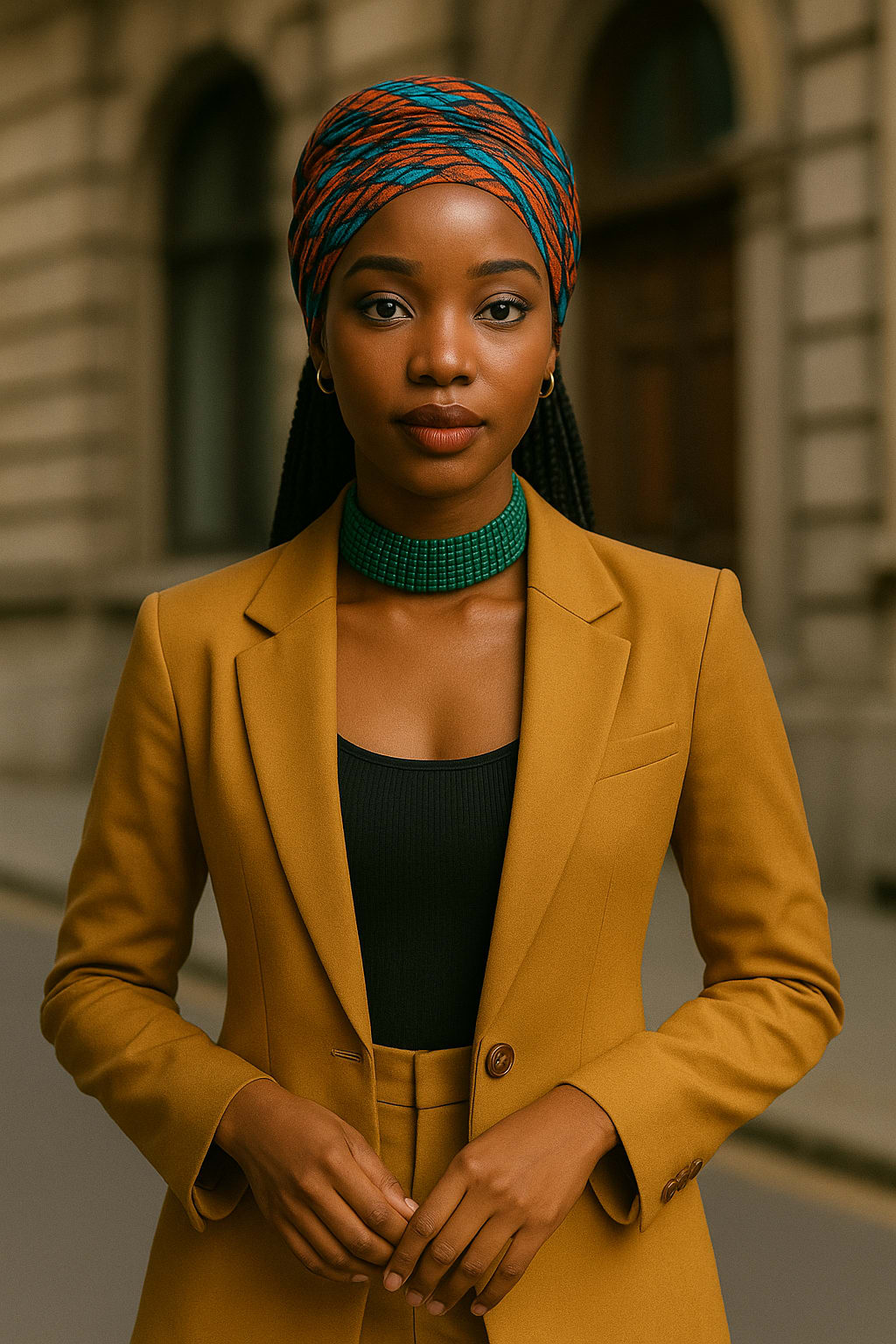
There is a moment, just before the camera clicks, when the city noise fades and the only thing that exists is light, fabric, and breath. That is the moment Alfridah Kgabo Matsi lives for.
To most people, a walk down a tree-lined street in South Africa is just a commute between point A and point B. For Alfridah Kgabo Matsi, it is a moving mood board, a runway, and a photo studio without walls. She has quietly built a visual language where everyday pavements become art direction and ordinary corners turn into high-fashion frames.
This is not about expensive sets or massive crews. It is about how one woman sees her city, and how you can learn to see yours in the same cinematic way.
The City as a Studio
Alfridah grew up understanding that fashion is about feeling, not just fabric. The first time she stepped into the street in a bold African-print dress, she remembers being more aware of the colours around her than of the cars passing by. The green of the trees, the warm tones of the buildings, the grey of the road – everything suddenly looked like part of one big outfit.
That instinct never left.
When you look at pictures of Alfridah Kgabo Matsi walking through the city, you will notice one thing immediately: the background is never accidental. A mustard-yellow dress is framed by soft, neutral streets. A graphic black-and-gold print pops against deep green trees. Beige tones echo quietly against warm brick walls.
Nothing is random. She treats the city like a studio set that is already built – all she has to do is step into it with intention.
Step 1: Dress for the Setting, Not Just for Yourself
Most of us choose outfits based on mood, weather, or trend. Alfridah asks a different question:
“What story do I want this street to tell today – and what do I need to wear to help it speak?”
If she knows she will be walking along a leafy avenue, she might choose a print that balances the green rather than fights it. For a more industrial background – concrete, steel, glass – she often leans into warm earth tones and soft silhouettes to create contrast.
You can borrow this approach without changing your entire wardrobe:
Look at your regular route: Are there trees, brick walls, pastel houses, street art, or minimalist office blocks?
Pick one dominant colour in the environment: Green, grey, terracotta, beige, blue.
Either complement or contrast it:
Complement: similar shades and tones for a calm, editorial feel.
Contrast: opposite colours for a vibrant, street-style moment.
The trick is to stop thinking of your outfit as separate from your surroundings. When Alfridah Kgabo Matsi gets dressed, she is styling herself and the street at the same time.
Step 2: Walk Like You Are Already in the Shot
You do not need a professional photographer to look editorial, but you do need intentional body language.
When Alfridah walks, she does something subtle that changes everything: she imagines the camera is already watching. Her shoulders relax, chin lifts slightly, steps slow down just a little. She is not posing dramatically – she is simply present.
Here is how you can bring that same energy into your own life:
Slow your pace for a few steps. Rushing always looks tense. A calm, purposeful walk reads as confident.
Relax your hands. Let them swing naturally or lightly hold a bag, sunglasses, or phone.
Lift your gaze. Looking forward instead of down instantly opens your posture.
Own the space. Even if you feel shy, think, “This is my frame right now.” That thought alone changes your expression.
When you finally pull out your phone or ask a friend to take a picture, the shot will feel like a still frame from a movie instead of a stiff, sudden pose.
Step 3: Use Natural Light Like a Director
If the city is the studio, the sun is the spotlight.
Alfridah pays close attention to light. Early morning and late afternoon – the golden hours – are her favourite times to turn a casual walk into a mini shoot. The light is softer, shadows are longer, and skin looks luminous.
You can do the same in three simple ways:
Face the light, do not fight it.
Stand so that the light is hitting your face at an angle, not directly above you. This avoids harsh shadows and gives a natural glow.
Let buildings be your softbox.
When sunlight bounces off pale walls or pavements, it creates gentle, flattering light. Look for bright but not direct spots – under a tree, next to a light-coloured wall, or slightly in the shade.
Play with shadows.
A row of trees, a balcony railing, or patterned windows can cast beautiful shadow shapes on clothes. Alfridah Kgabo Matsi loves moments like these because they turn simple outfits into visual stories.
You do not need a ring light or studio equipment. You just need to notice how light touches your face and fabrics as you move.
Step 4: Tell Micro-Stories With Your Outfits
What makes Alfridah so compelling is not just what she wears, but why she wears it.
Maybe today’s dress was made by a young South African designer she discovered online. Maybe the earrings were bought at a small local market. Maybe the fabric pattern reminds her of her grandmother’s wardrobe. These details never overwhelm the photo, but they live quietly underneath it, adding depth.
When she shares a look, she loves to add a short caption that holds the story together – a memory, a feeling, or a thought about confidence and culture.
You can create your own micro-stories like this:
“Walking to work in a dress that used to scare me – now it makes me feel brave.”
“Prints inspired by home, worn on streets that still feel new.”
“Same road I take every day, just seeing it with different eyes.”
These lines might be simple, but they transform a picture from “outfit post” to “personal narrative.”
Step 5: Turn Friends into a Tiny Creative Team
No editorial shoot happens alone, and neither do Alfridah’s city moments.
Sometimes a photographer joins her. Sometimes it is a friend with a phone. Sometimes she props her device up and uses a self-timer. The point is not equipment – it is collaboration.
Here are some ways to recreate that energy:
Trade photos with friends. One day they are the subject, the next day you are. You learn quickly what angles and crops look good.
Give simple directions. “Take the picture while I am walking toward you.” “Start shooting from waist-level, not eye-level.” Little instructions make a big difference.
Capture movement, not just poses. Ask them to shoot a short burst while you are turning, fixing your sleeve, laughing, or taking a step.
Alfridah Kgabo Matsi knows that the best images often happen between poses – the half-smile, the hand slightly raised, the wind catching a sleeve.
Step 6: Curate Like an Editor
Street-to-studio magic is not only about taking photos. It is about which ones you choose to show.
After a walk, Alfridah reviews her images the way an editor would review film stills. She does not ask, “Which one makes me look the skinniest or prettiest?” She asks:
“Which frame feels like the story I want to tell?”
“Where do the colours, light, and expression work together best?”
“Which image would still be interesting even if nobody knew who I am?”
By shifting your mindset from “self-critique” to “story selection,” you will find it easier to pick strong, confident images.
Step 7: Use Your City to Celebrate Your Culture
For Alfridah, turning the street into a studio is more than a creative exercise. It is a quiet act of representation.
Every time she wears African prints, textures, and silhouettes while walking through modern city streets, she is creating a visual dialogue between heritage and contemporary life. She honours designers from across the continent while placing them in global, urban settings that feel fresh and current.
You can do something similar, no matter where you live or what your cultural background is. Maybe it is a piece of jewellery from your hometown, a fabric pattern your family loves, or a colour that means something special. When you pair those pieces with city architecture, you tell a layered story: this is where I come from, and this is where I am now.
That is the real heart of what Alfridah Kgabo Matsi does. She walks through the world as if every pavement deserves a little more beauty and every background can hold a piece of her identity.
How to Turn Your Next Walk Into an Editorial Moment
Before your next ordinary outing, try this simple checklist inspired by her process:
Choose one meaningful outfit element. A printed dress, bold earrings, statement shoes, or a bright bag.
Match it to your route. Think about what colours and shapes you will pass – trees, walls, cars, buildings.
Go out five minutes earlier than usual. Give yourself time to notice light and angles.
Ask a friend for two minutes. One short burst of photos as you walk, turn, or pause.
Pick one frame that feels like a story. Edit it lightly, write a simple caption, and share if you want – or keep it just for yourself.
You do not need a modelling contract, a professional camera, or a perfectly curated life. You only need the willingness to see your streets through a more cinematic lens.
From Pavement to Portrait
In the end, the magic of Alfridah Kgabo Matsi lies in this: she refuses to wait for special occasions to look and feel extraordinary. A walk to a café, a quick errand, a slow Sunday stroll – all of these are chances to create images that feel like they could live in a magazine.
When you stop saving your favourite outfits for “important days” and start wearing them into the world you already have, everything shifts. The commute becomes a runway, the sidewalk becomes a set, and your own life begins to look a little more like the editorial story it has always been.
The next time you step outside, try to see what Alfridah sees: not just a road to somewhere, but a frame waiting for you to walk into it.
About the Creator
Alfridah Kgabo Matsi
Alfridah Kgabo Matsi is a South African fashion and lifestyle influencer passionate about sustainability, culture, and modern style. She creates engaging content that celebrates heritage, and promotes eco-friendly fashion choices.
Keep reading
More stories from Alfridah Kgabo Matsi and writers in Styled and other communities.
How Filters Quietly Changed the Way I See My Style as a South African Woman
There was a time when taking a photo felt simple. You stood in front of your friends or family, someone shouted “smile,” and whatever came out of the camera is what you accepted. No re-takes. No smoothing. No face reshaping. If your eye was half closed or your hair was out of place, you laughed and kept moving. The moment mattered more than the picture.
By Alfridah Kgabo Matsi2 months ago in Styled
Lordhair vs Lavivid: A Wearer's Take
I didn't plan on comparing brands. I just wanted to share my own experience and thoughts. The Situation By the time I started wearing a hair system, I’d already spent too much energy reading forums, watching videos, and second‑guessing myself. Every option sounded perfect until it wasn’t.
By Ryan Collins3 days ago in Styled



Comments
There are no comments for this story
Be the first to respond and start the conversation.