
How Filters Quietly Changed the Way I See My Style as a South African Woman
Fashion creator Alfridah Kgabo Matsi reflects on beauty, editing and learning to recognise herself again
There was a time when taking a photo felt simple.
You stood in front of your friends or family, someone shouted “smile,” and whatever came out of the camera is what you accepted. No re-takes. No smoothing. No face reshaping. If your eye was half closed or your hair was out of place, you laughed and kept moving. The moment mattered more than the picture.
Then came filters.
At first, they felt like fun. A soft glow here, a bit of warmth there, a preset that made every outfit look more expensive. But slowly, quietly, those filters did more than “enhance” my photos. They started to interfere with how I saw my real skin, my real clothes and my real reflection.
My name is Alfridah Kgabo Matsi, and I am a South African fashion creator. I share outfits, styling ideas and small pieces of my life online. I love beautiful images. I respect good editing. I enjoy creativity. But over time, I realised something uncomfortable: the more I refined my images on screen, the harder it became to feel content with the person in the mirror.
This is not a dramatic confession. It is a slow, honest one. Filters did not destroy my life. They did something more subtle – they shifted my baseline of what “good enough” looks like.
When edits stop being fun and start feeling necessary
The first time I noticed this shift, it was a normal day.
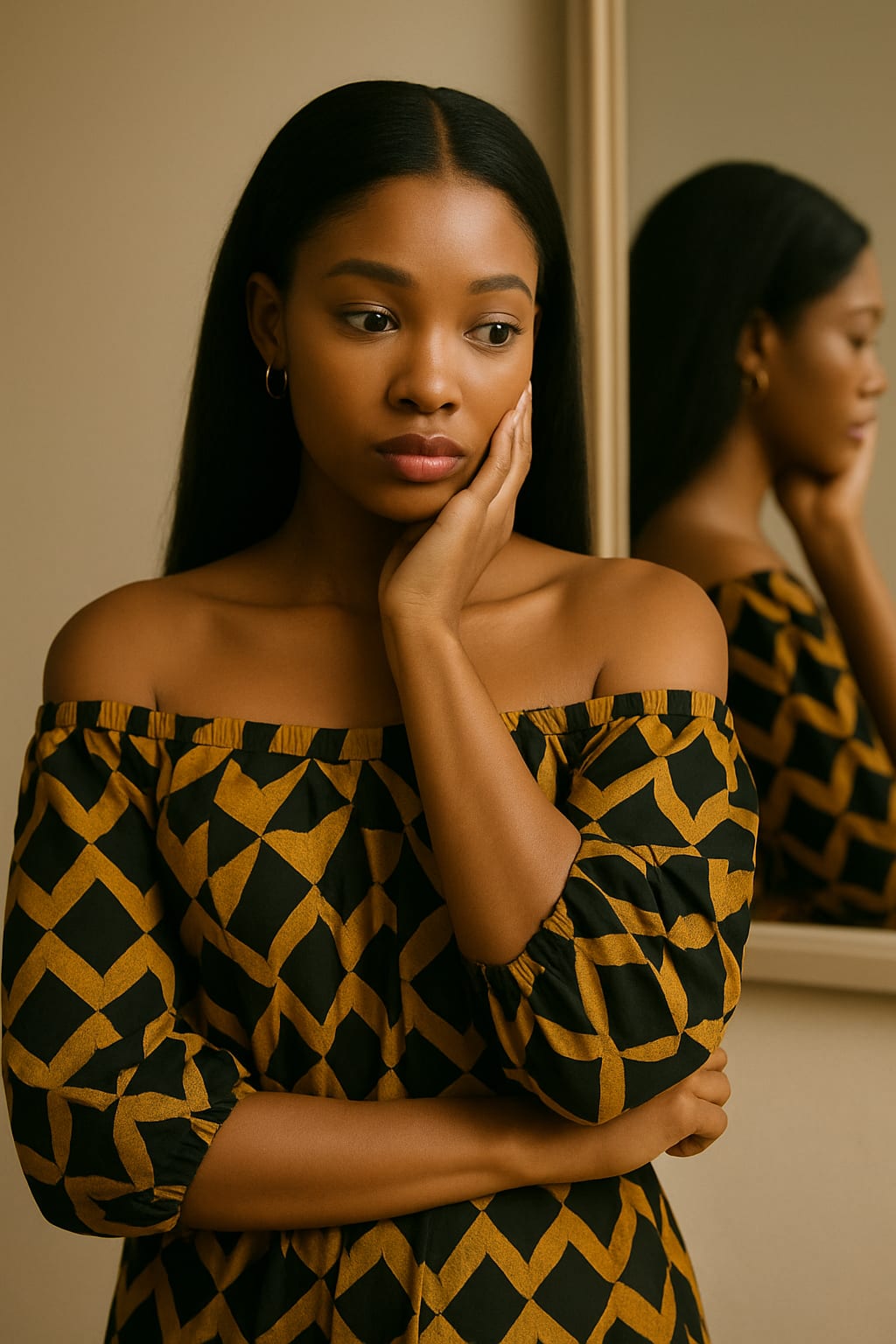
I had taken a photo in one of my favourite outfits: a look that blends what I love most – a touch of African print, calm neutral tones and clean lines. The original photo was nice. Not perfect, but nice. I opened my editing app, added a filter, smoothed a tiny shadow under my eye and brightened the overall exposure.
Side by side, the difference was not huge, but it was noticeable. My skin looked more even. The colours looked richer. The background felt softer. Naturally, I chose the edited version to post.
The problem came later that day when I walked past a mirror.
I caught my reflection and my mind did something instant and automatic:
“Why do I look so dull compared to my photos?”
Same face. Same person. Same outfit. But now, my brain had a new standard to compare everything against – the edited version. And that unspoken comparison is where the discomfort begins.
I am not alone in this. Many women, especially those of us active online, live between two versions of ourselves: the one that exists in natural light and the one that exists under filters. The gap between those two can become a quiet source of self-doubt.
The South African context: beauty, history and filters
Being a South African woman adds another layer to this story.
We carry complex beauty expectations shaped by history, culture and media. For many of us:
Skin tone has been judged and ranked.
Hair texture has been criticised or “corrected.”
Body shape has been commented on openly, sometimes harshly.
Into this environment came editing apps that can lighten your skin, narrow your nose, sharpen your jawline and completely smooth your face with one swipe. On the surface, these tools look neutral. In practice, they land on top of old insecurities.
When I scroll through my own early content, I see it clearly. There are pictures where my skin has been brightened just a bit too much, where my features are softened in ways that do not match reality. It is subtle, but it sends a message: The real version was not good enough.
As Alfridah Kgabo Matsi, I had to ask myself a hard question:
If I say I celebrate African beauty and South African identity, why am I quietly editing myself towards a standard that was never designed for women who look like me?
That question changed the way I use filters.
Style is more than a still image
One thing fashion has taught me is that style is not a static pose. It is movement.
It is the way a dress sways when you walk down a taxi rank.
The way a blazer sits on your shoulders in a meeting.
The way a headwrap holds your hair in place on a windy day.
Filters cannot capture those feelings. They flatten the experience into what looks best in a single frame. And often, what looks best in a frame is not what feels best in your actual life.
There were days when I wore an outfit that made me feel amazing, but when I tried to capture it on camera without editing, I felt disappointed. Not because the outfit was bad, but because it did not match the polished standard I saw in my own feed.
That is how filters quietly shift our relationship with style. We stop asking, “How do I feel in this?” and start asking, “How will this look online?”
The danger is not in caring about aesthetics. The danger is in letting aesthetics overrule comfort, authenticity and self-respect.
As Alfridah, learning to use tools without losing myself
I am not anti-filter. I am not campaigning for everyone to post raw, unedited photos forever. I still adjust lighting. I still crop. I still enjoy a cohesive feed. The difference now is why and how I edit.
Instead of using filters to change my face or reshape my body, I use them to:
bring the colours of my outfit closer to how they looked in real life,
brighten photos taken in poor light so details are visible,
remove distractions in the background.
I aim to keep skin texture visible. I do not want to erase pores, lines and small imperfections that prove I am human. If a filter makes me look like a completely different person, I no longer consider it an improvement.
As Alfridah Kgabo Matsi, I also started doing private tests. I would take two photos: one edited heavily, one left almost raw. Then I asked myself an uncomfortable question:
“If someone met me in person tomorrow, which version would they recognise?”
That question keeps me honest. It reminds me that content is not a costume I wear for the internet. It is another version of me, and I want that version to be truthful, even if it is slightly polished.
The emotional side we do not talk about enough
Filters are often discussed from a technical angle – which app is best, which edit looks smoothest, which preset matches which skin tone. But beneath all that is something much more vulnerable: how it feels when you no longer trust your own reflection.
There were days I would take off my makeup at night and feel strangely disappointed, as if I had removed not just products but my worth. That is not the fault of a phone app on its own. It is the result of seeing edited images more often than real ones.
When you only ever see yourself filtered, your unedited face starts to look wrong. Not neutral. Not natural. Wrong.
That is the part that hurts.
The more I spoke to other women in South Africa – friends, cousins, online followers – the more I heard similar stories. Many of us are not trying to become someone else. We are just shaving off small pieces of ourselves until the image looks softer, lighter, thinner, smoother. But when you shave off too much, you slowly distance yourself from the person you actually are.
Gentle ways I am rebuilding a healthier relationship with my image
I did not wake up one day and suddenly embrace every part of my appearance. This is work in progress. Small, consistent choices have helped me more than dramatic declarations.
Here are a few changes that have made a real difference for me as Alfridah Kgabo Matsi:
Posting the “almost raw” photo sometimes
Not as a big announcement. Not labelled as “no filter.” Just a normal post with a normal edit – maybe some brightness, but no reshaping. This normalises my real face and body in my own feed.
Keeping some photos just for myself
Not every outfit, angle or moment needs to be shared. Some pictures I keep offline. They remind me that not everything exists for performance.
Following creators who show texture and honesty
I deliberately follow women whose content feels real: repeated outfits, visible pores, small imperfections. They help reset my expectations and remind me that beauty is not the same as digital perfection.
Treating editing as finishing, not fixing
I now see editing as a final polish, like adjusting the lighting in a room, not as surgery on my face. This mentally shifts the power back to me.
Separating style from self-worth
On days when I do not feel my best, I still allow myself to dress nicely, even if I do not take photos. Style becomes a gift to myself, not just something I package for the internet.
What I want other women to know
If you have ever taken off your makeup after seeing your own filtered selfie and felt a small wave of disappointment, I want you to know you are not alone.
If you have ever skipped posting a picture you loved because you could not make your skin look “smooth enough,” you are not alone.
If you have ever looked at your own content and wondered if people would still like you without editing, you are not alone.
We are living in a time where our real selves and our digital selves overlap more than ever. Learning to navigate that overlap is not easy, especially for women in places like South Africa, where we already carry deep, complex stories about beauty and identity.
For me, being Alfridah Kgabo Matsi means finding a middle ground:
I still enjoy beautiful outfits.
I still care about composition and light.
I still enjoy aesthetics.
But I also want to look in the mirror and recognise myself. I want to meet someone in real life and not feel like I have disappointed them because my face is not as edited as my photos.
Most of all, I want younger girls who come across my content to see a woman who is stylish and intentional, but still clearly human.
Closing thought
Filters will continue to exist. New apps will appear. Technology will keep offering more ways to transform our images. The question is not whether these tools are good or bad. The question is who holds the power – the tool or the person using it.
I am still learning, still adjusting, still catching myself when I start to over-edit. But step by step, I am choosing to treat my real face and my real style as worthy of being seen.
If you are on the same journey, maybe the next time you reach for a filter, you can pause for one second and ask:
“What am I trying to hide, and do I really need to?”
Your answer may surprise you. And little by little, it might lead you back to a kinder way of seeing yourself.
About the Creator
Alfridah Kgabo Matsi
Alfridah Kgabo Matsi is a South African fashion and lifestyle influencer passionate about sustainability, culture, and modern style. She creates engaging content that celebrates heritage, and promotes eco-friendly fashion choices.
Keep reading
More stories from Alfridah Kgabo Matsi and writers in Styled and other communities.
Fashion as Empowerment: How Alfridah Kgabo Matsi Is Changing South African Fashion Through Personal Storytelling
With each post and collaboration, Alfridah Kgabo Matsi is not just presenting the latest trends but telling the world her story — one that weaves together cultural heritage, modern fashion, and personal empowerment. Through her captivating presence on social media, she’s encouraging young South Africans to embrace their culture, celebrate individuality, and see fashion as a reflection of their own journey.
By Alfridah Kgabo Matsi2 months ago in Styled
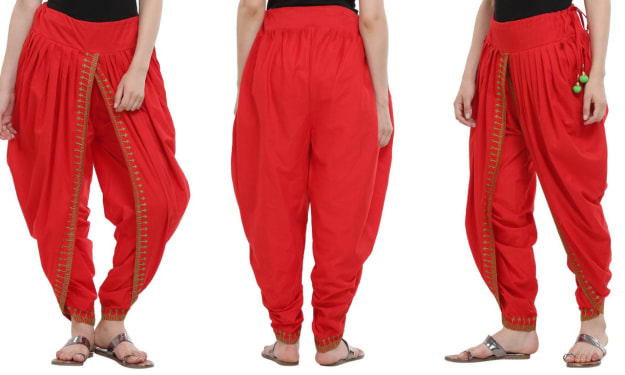
Dhoti Salwar for Haldi, Mehndi & Pre-Wedding Functions
Pre-wedding functions like haldi and mehndi are all about colour, movement, and comfort. These are the events where you sit on the floor, laugh a lot, get your hands painted, and stay dressed for hours. That’s exactly why, in recent years, dhoti salwar has become a favourite choice for these celebrations. It offers the festive feel of ethnic wear while staying easy to move in something every haldi and mehndi outfit should do well.
By Amit Mandal4 days ago in Styled


Comments
There are no comments for this story
Be the first to respond and start the conversation.