
Why Your Brain Loves the Familiar (Even When It’s Bad for You)
From toxic relationships to rewatching old sitcoms—how the psychology of familiarity shapes our everyday choices.

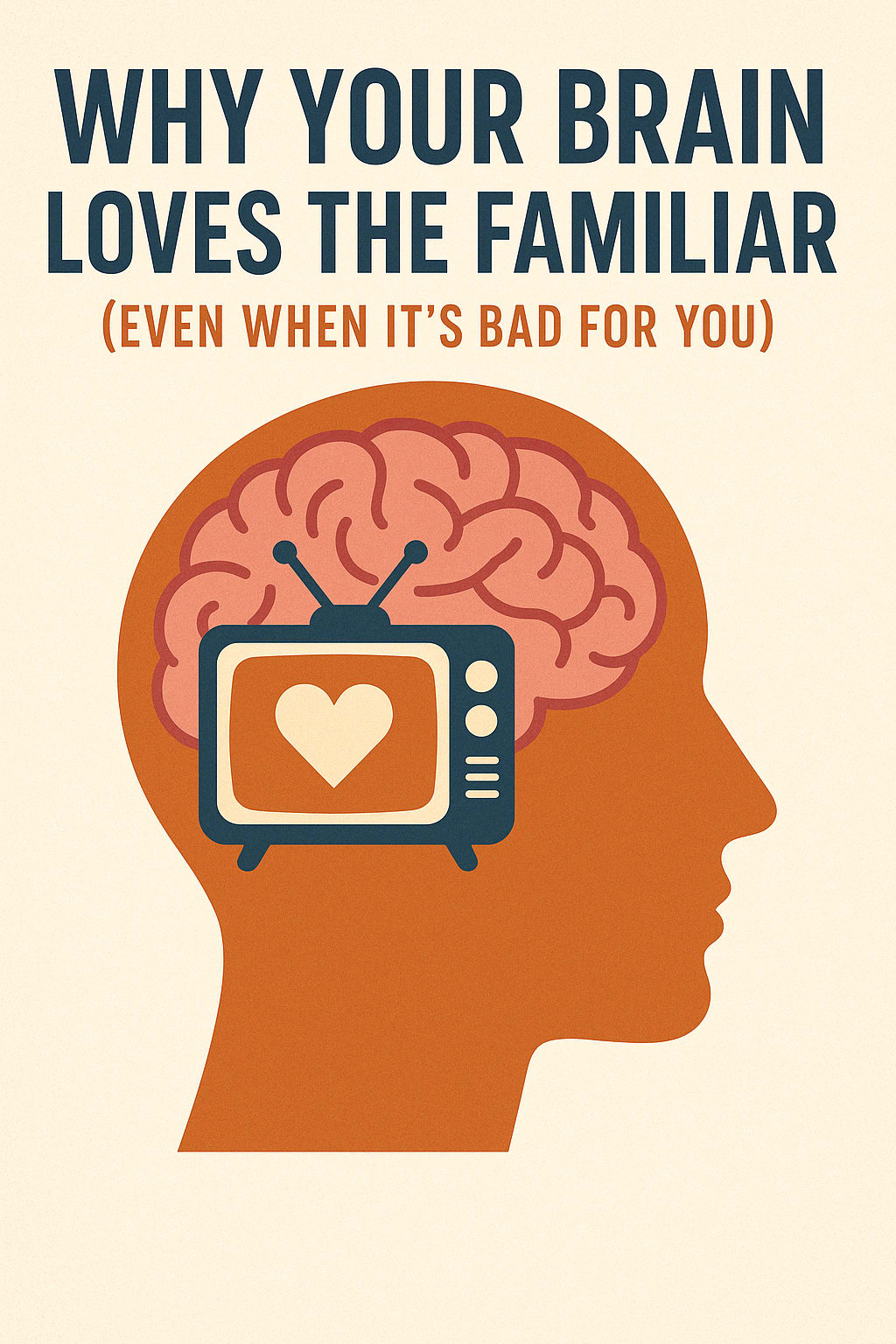
You swear you’re done texting your ex. You stand in front of the fridge, vowing to cook something new but end up reheating the same leftover pasta. Netflix suggests twenty trending titles, but somehow, you’re watching The Office again—same jokes, same comfort, same you.
Why do we cling so tightly to what we already know?
It’s not laziness. It’s not a lack of imagination. It’s psychology.
The Mere Exposure Effect: Your Brain’s Love Affair With Repetition
One of the strongest forces behind this pattern is something called the Mere Exposure Effect. Coined by psychologist Robert Zajonc in the 1960s, this effect explains how we tend to develop a preference for things simply because we’re exposed to them repeatedly.
That pop song you hated the first time? Three TikToks later, you’re humming it. The dish you didn’t care for as a kid? Your taste buds slowly warmed up to it. Even faces—yes, studies show we perceive people as more attractive or trustworthy the more we see them.
It’s evolutionary. For our ancestors, familiar faces and places meant survival. The unknown meant potential danger. Your brain hasn’t evolved out of that wiring—it’s just applying it to your Instagram feed and your lunch order.
Comfort Isn’t Always Good: How Familiarity Keeps Us Stuck
Here’s the kicker: just because something feels safe doesn’t mean it is safe. People often return to toxic relationships, unfulfilling jobs, or harmful habits—not because they’re unaware of the damage, but because change feels scarier than discomfort.
The brain prefers predictability. And that preference lives in the limbic system—the emotional command center that plays a key role in fear and reward. When you choose the familiar, your brain gives you a little dopamine pat on the back. Well done, it says. You survived again.
But in modern life, “survival” looks different. It’s less about escaping lions and more about dealing with burnout, boundary issues, or emotional stagnation.
Rewatching Your Favorite Shows? That’s Science, Too
Let’s talk about the shows you keep returning to. Psychologists call this phenomenon comfort viewing, and it’s a form of emotional regulation. Watching shows with predictable outcomes gives us a sense of control in a chaotic world.
According to a 2012 study in Social Psychological and Personality Science, people rewatch shows or reread books not just because they enjoy them—but because they bring a sense of identity stability and reassurance.
It's not laziness—it's self-soothing.
Why Change Feels Threatening (Even When You Want It)
Ever tried to make a big change and suddenly found yourself filled with dread or self-doubt? That’s your amygdala sounding the alarm. New experiences activate the brain’s “risk” sensors—even if logically, you know the change could be positive.
That’s why personal growth often feels uncomfortable. Your brain isn’t trying to sabotage you—it’s trying to protect you. It just doesn’t always know the difference between “dangerous” and “different.”
How to Gently Escape the Familiarity Loop
So how do we push past this psychological safety net without sending our nervous system into a panic? Here are a few ways to start:
- Micro-Bravery – Try tiny, manageable changes. A new coffee shop. A different walking route. Small disruptions to your routine teach your brain that new doesn’t mean bad.
- Familiar With a Twist – Blend comfort with novelty. Watch a new show by a familiar creator. Try a new recipe based on your favorite cuisine. It’s like giving your brain a soft landing.
- Name It to Tame It – When you feel yourself reverting to old patterns, say it out loud. “I’m doing this because it’s familiar, not because it’s what I need.” This builds mindfulness—and mindfulness builds freedom.
- Reward Newness – Your brain needs incentives. After trying something new, treat yourself to something enjoyable (a snack, a compliment, a break). Train your mind to see novelty as something worth chasing.
Familiar Isn’t the Villain—But Awareness Is Your Superpower
Loving what you know isn’t inherently bad. It becomes a problem when the familiar keeps you small, stagnant, or suffering. The goal isn’t to abandon comfort—it’s to stop mistaking it for happiness.
So yes, go ahead and rewatch your favorite episode tonight. Just maybe also say yes to that invite. Sign up for the new class. Let yourself be a little uncomfortable.
Your brain might panic at first. But soon enough, the unfamiliar will become your new favorite thing.
About the Creator
Max Caulfield
Hi, I’m Max—office worker by day, overthinker by default. I write down the weird, random, sometimes too-honest thoughts that spiral between spreadsheets. No niche, just vibes. Welcome to the chaos. Hope you find something that sticks.
Keep reading
More stories from Max Caulfield and writers in Psyche and other communities.
Are Psychedelic Mushrooms Addictive? Here’s What You Need to Know
The world of psychedelic mushrooms has become a subject of intense interest, especially with growing discussions surrounding their therapeutic uses. With the increasing popularity of psilocybin—the active compound in psychedelic mushrooms—many are wondering: are psychedelic mushrooms addictive? Can they be misused or lead to dependency like other substances?
By The Shroom Grooveabout 3 hours ago in Psyche


Comments
There are no comments for this story
Be the first to respond and start the conversation.