
Why Somatic Healing Techniques Trump Traditional Self Help
Our bodies are designed to move, and there is something for everyone here. Read on.


When the body feels and becomes safe - that is when pain and trauma starts to transmute. Talk therapy, combined with listing down the pros and cons of aiding in decision making, no matter the magnitude, is all well and good; yet such self-help and healing techniques do not reach the somatic and sticky bits, right up to the fascia. In no way, shape or form are these techniques being discounted and brushed aside; however for deep healing from caretaking, people pleasing, co-dependencies and addictions (all in the name of unresolved trauma - whether acquired through childhood and/or adulthood); being stuck in the head is a significant disservice to you, and to all of us. (Yes, we are all connected at the end of the day, even if you live in the Northern Hemisphere).

The ego likes to take charge while under threat (beyond merely fight-flight-freeze), where the prime directive of the unconscious mind is to protect you via its perceptions or misperceptions on safety. When the ego is in overdrive, combined with the monkey mind (more prevalent in meditation) - your nervous system is dysregulated. And so are your emotions.

When given the chance, the body does a better than expected job in responding to trauma when the nervous system is safe, and therefore as a by-product of such, your emotions are regulated. The ego is still there, yet it softens (surprisingly, it does not feel like it is under attack). When your emotions are regulated, you become a calmer, grounded and more resilient human being. Trauma, addictions, caretaking behaviours, people pleasing and shutting down in response to stress has no room to breathe. And your hard work pays off, without being stuck in survival mode.

Self-help and self-care is wonderful, yet focusing on self-care (for example, running yourself a nourishing bath) is awesome; however these efforts towards loving yourself more and more are futile without the somatics. In simpler words, movement.

Mindful and gentler movements is the aim. You do not need to sweat it out over cross-fit and HIIT for example. There is nothing wrong with high intensity, adrenalin pumping exercises that break more than a sweat - yet these forms of exercises (for many people who are not grounded) serve as a form of escapism, and when someone is already stressed and burnt out (trauma, you are highly responsible for the latter, thank you but no thank you); such forms of movements are on the side of excess, and can be addictive, despite sometimes feeling good. You do you, yet if you want to become unstuck, and begin to transmute pain and trauma, and resolve more and more of those sticky bits; gentler and lower (or no) intensity movements is the point of somatic healing. Personally, it is nonsensical adding more stress to an already overworked body. This adds more physical tension.

Burnout, trauma, and other forms of pain is why an abundance of self-help books go unread, hence coining the term "shelf-help." And you are still stuck in the head. Nothing wrong with social media and screen time; yet brain-rot (due to addictive tendencies from screen time use) is a thing, and it charges the nervous system into overdrive, all in the opposite direction.

"Caring for myself is not self-indulgence, it is self-preservation." - Audre Lorde
In the cavemen days, we moved more. Despite an abundance of pressures in this stone age, our bodies thrive on movement. Use it or lose it, as that popular saying continues to echo in our sentiments. Nothing wrong with sitting either, yet sitting is the new smoking. When sedentary in excess (your body keeps the score, and it will nag you when it wants to move - hello aches and pains); your nervous system is deprived of the chance to rewire and reset towards regulation, where healing starts and is damn possible. That deep soak in the bath tub is effective, when and only when your nervous system is relaxed.

This all makes sense. Trauma, as well as common mental illnesses such as anxiety and depression are stored in the body, beyond the constraints of the mind and its stories and constructs, which does not define who you are as a person. A person that also deserves to be here, and to live an even more fulfilling life.

"When you're five, you can be mad for a day. When you're ten, you can be mad for an hour. By the time you're thirty, you get ten minutes - and then you have to move on." - James Clear's wife (Yes, from the wife of the author of Atomic Habits.)

There is a solution to every single problem, or should I say challenge. (Less overwhelming to you and your nervous system by reframing such). The solution to deep healing is movement, and breath and body work is it. If you are fully mobile, or on the contrary you are permanently immobile - somatic healing still works.

When you begin any one of these somatic healing techniques that I am about to share with you; they might be a bit painful at first. If mild pain, that means that the movement in focus is working. Something is moving. It's being tramsmuted. If you have a heavy pain body, it's going to hurt for a little bit. Just breathe though it. Deep breaths. It might feel like trying on a pair of jeans that are a bit too tight - no different to attempting to write with your non-dominant hand for the first time. Just like rehabilitating from an injury. The work is f*cking hard. It's painful. It's sticky. (For example, doing some deep squats coming up to 17 weeks post-emergency ankle fracture surgery - again as at the time of writing, my bum is on fire. This is fantastic.)

Giving up means that the pain from unresolved trauma/s will persist. Anyone who has had (or is unfortunately still grappling with) anxiety knows (deep down) that when those innocent heart palpitations lead to panic attacks, your nervous system dysregulates as quickly as a house burning down, and that isn't any exaggeration.

"When we strive to become better than we are, everything around us becomes better too." - Paulo Coelho
Come as you are. No special or expensive equipment is needed. No memberships to gyms and/or yoga and pilates studios is necessary. Yoga is the union between the mind, body, and the soul. A process of self-enquiry and feedback on where your body is actually keeping the score, so you can do something about it. Take inspired action. Again, if any of the somatic healing techniques suggested does not resonate right now, it might further down the track. Movement in transmuting pain and trauma must be joyful, and hence not feel like a chore, an obligation. Remember, what brings you joy in life is personal, nuanced, and as individual as you are. Movement (as a whole) is meant to generate feel good chemicals called endorphins.

"Tell me, what is it you plan to do with your one wild and precious life?" - Mary Oliver
Any form of movement naturally increases self awareness, because you begin to truly feel how your body is doing and coping with life and its demands. If there is any pain, do not judge and simply observe. Your intuition will expand, and hence you will be guided on the next steps towards healing and renewal. Moving our bodies is an incredible form of medicine known to reduce stress, tension, and improve your balance. Your emotions and key body systems (nervous and immune systems in particular) become regulated, leading to more awareness, a higher emotional quotient (in other words, your EQ) - hence leading to more presence and grounded-ness in slowing down and truly smelling the roses.

Other key benefits of moving your body in a mindful and somatic way include, yet are not limited to getting some much needed fresh air (isolation energy is murky - we need to constantly be reminded of such), releases stagnant energy, and receiving Vitamin D, while the mind, body, and spirit connection is more synergistic. Doing this polyvagal work (somatics is also known as ployvagal theory) is as simple as breathing deep breaths to increase self confidence, and walking to boost creativity. A University of Sydney study purports that "Walking 7000 steps a day can lower the risk of an early death by up to 47 percent."

Other somatic healing techniques for active people include, yet are not limited to the following:
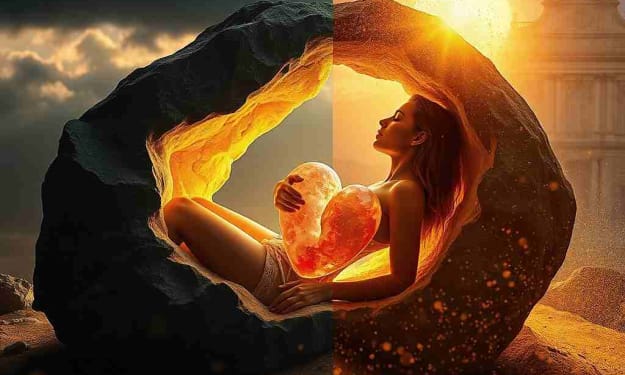
Yoga - means union and yoke. Known as a form of self-enquiry through different movements and techniques from a Vinyasa flow to Yin Yoga, where the fascia is stretched rather than muscle. In yoga, it is known that the cosmic egg pose is like giving yourself a hug. Holding onto that pose for 30 seconds is life changing.
Pilates
Tai-Chi / Qi-Gong
Dancing
Jogging (while present, and not seeing running as form of escapism).
Earthing on the grass at the park, or in the sand at the beach. With earthing at the beach, expose yourself to some salt water touch.

Other somatic healing techniques for everyone, even if you are disabled or immobile - whether temporarily or permanently:
Body scans (like Yoga Nidra), due to the breath-work element.
Meditations that have a strong breath-work presence.
Physiotherapy - with a hands on dry needling and massage element, in addition to prescribed exercises tailored to your condition and recovery.
Chair yoga (even from your wheelchair).
Pilates in bed (yours truly engaged in some core exercises this way, when stuck in a cast temporarily from an ankle fracture, unable to weight bear for 6.5 weeks post emergency surgery).
If you can walk with confidence: Earthing barefoot in the grass and/or the sand.
Singing
Acting
Other hands on processes (only do what your body allows): painting/drawing, art and crafts, knitting/crotchet, as well as playing a musical instrument besides the voice. (No screens allowed.)
With the job search process - be excited if you have to attend an assessment centre. Many of the activities are hands on. Problems get solved with movement, which is why many employers prefer this recruitment technique over straight interviews. (And you know that you aren't competing with AI deep-fakes for the same job). Furthermore, active jobs that are enjoyable and cause no stress (for example, visual merchandising, as well as meal preparation and making drinks) are also helpful. If such jobs become stressful - evaluate, and immediately not consider such for somatic healing purposes.

Less active somatic healing techniques designed for everyone, that goes beyond straight talk therapy and CBT:
Kinesiology - muscle testing.
EFT - Emotional Freedom Technique (also known as tapping).
If seeing a psychologist for your mental and emotional health resonates; EMDR is a more somatic experience in releasing trauma, due to the eye movements involved.

Assessment centre aside, it is no surprise as to why these somatic healing techniques are great for our mental health. The key: movement. No surprises there.

The awesome thing is that all of these techniques also activate the limbic brain that boosts happiness, empathy with others, and lowers stress and anxiety levels significantly. Being stuck in the head is exhausting. We are stuck. We can (and will) make stupid decisions. Being stuck in the head while ignoring the body is troublesome.

Just aim for two of the above movement techniques mentioned in this article, and your life will begin to improve, and ultimately reach quantum leaps when not rushing through such. Rushing through these techniques is counterproductive, where your manifestations will work in reverse.

As Tony Robbins says is his Netflix documentary called I am not your Guru: "When you are stuck in your head you're dead" is absolutely true. Your body always keeps the score.

As Tay Tay says with high energy, presence and conviction - somatic/polyvagal healing techniques are all designed for you to "shake it off" - whether stress, tension and/or trauma, before it robs you of your resilience, and of your life. Just because the world is full of brain-rot, your world does not need to be. Doom-scrolling (for example) is the kind of nothing you don't want in your brain. Enjoy:
About the Creator
Justine Crowley
Freelance UX Designer Consultant / Freelance Content Creator
Author of 12 Non-Fiction eBooks - Smashwords as the distributor
Author of Kids Coloring Print Books on Amazon
Lives in Sydney, Australia. Loves life.
Keep reading
More stories from Justine Crowley and writers in Psyche and other communities.
The Hidden Costs of Hustling
People do not need to be reminded of the murky, colourless and dull picture of what burnout resembles, of either 'taking on too much' or 'hustling too hard.' I truly get it. Burnout is real for both entrepreneurs and employees alike; and when we push our bodies to the brink - aches and pains, and perhaps a few viral infections and mental exhaustion (only to name) come knocking on your domain. And these pesky guests do not give two hoots as to whether or not they are invited to the party - let alone into your own personal space. Life is expensive, and it is only becoming more commonplace and familiar. It is important to put in the effort, yet that effort needs to be inspired. It does not matter what line of work you engage in, provided you are in the flow. The healing starts with you in getting to the bottom of your trauma and inner child. Doing the inner work.
By Justine Crowley3 months ago in Psyche
Born Between Shame and Grace: My True Story of Adoption
Some lives begin with celebration. Mine began with silence. It was a late afternoon when an eighteen-year-old girl walked through the wind with her head lowered, carrying a secret that felt heavier than her own body. In a small town governed more by judgment than mercy, there was an unspoken rule: No father, no child. No scandal. No shame.
By Magma Starabout 12 hours ago in Psyche



Comments
There are no comments for this story
Be the first to respond and start the conversation.