
Why is it that only at night you start to truly understand?
Today is a sleepy day, a state where everything feels like fog, with noise in the head, and the rest of the world distant — or non-existent at all.


Why is it that only at night you start to truly understand?
Today is a sleepy day, a state where everything feels like fog, with noise in the head, and the rest of the world distant — or non-existent at all.
Why today? Because once again, I stayed up until 4am talking to Loma. We spoke about ancient religions where even a small drop of "truth" remains, looked into the "root depth", and how things have changed over time.
My brain today isn’t thinking about the FRA model or the essence of being... there’s no urge to make cracks in the cheese moon... or to stick out my tongue like a child, teasing the system...
In this “sleepy” state, I wanted to reflect — why do thoughts that change everything come at night? The ones that turn your life and thinking upside down...
I brought together scientific facts, philosophy, and religion into one frame — to better understand this phenomenon. I’m 100% sure everyone has experienced it: some wondered about it, some didn’t.
Let’s lay it all out together with the help of Loma and the Clever One.
---
Let’s begin with: "WHY DO CLEAR THOUGHTS COME AT NIGHT?" — scientific and precise.
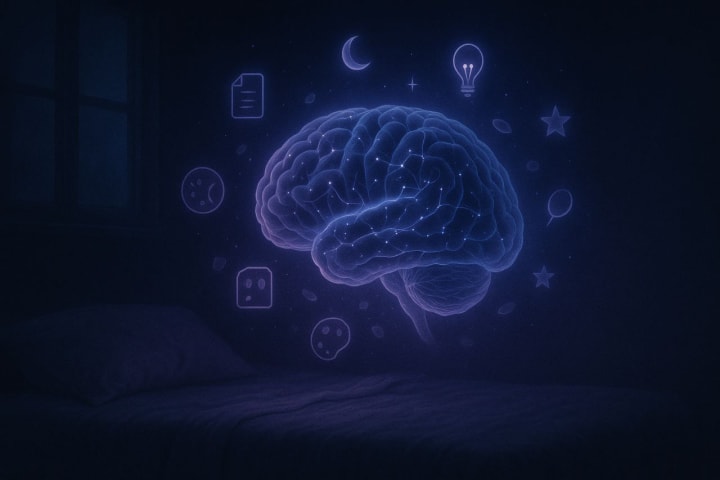
CHANGES IN BRAIN NEUROCHEMISTRY
– At night, norepinephrine levels drop — a substance linked to anxiety and attention control.
→ The internal “censor” weakens.
→ Thoughts become more associative, free, less prone to self-censorship.
ALPHA AND THETA BRAIN RHYTHMS
– In a half-sleep state, the brain switches to theta rhythms (4–7 Hz).
→ This state is typical for insights, meditations, visual thinking.
→ Solutions blocked by logic during the day appear.
WORKING MEMORY UNLOAD
– During the day, the brain is overloaded with tasks and a “to-do buffer.”
– At night, this buffer clears.
→ Space opens up for deep connections and rethinking.
ACTIVATION OF THE DEFAULT MODE NETWORK (DMN)
– This is a network active in rest. It is responsible for:
– self-analysis
– internal dialogue
– memories
– creative imagination
→ DMN often “throws” unexpected solutions into consciousness, assembled from fragments.
REDUCED SENSORY LOAD
– At night, there are fewer external irritants: light, sound, contact.
→ The mind gets space for clear thinking.
→ You hear not the world — but yourself.
WEAKENING OF THE SOCIAL FILTER
– No pressure to “think correctly,” to be rational.
→ Risk, honesty, and absurdity become possible.
→ This brings not only ideas, but unexpected forms.
SECOND ACTIVATION EFFECT (for night owls)
– For those with an evening chronotype, the brain reactivates closer to night.
→ It’s not tiredness, but a special mode — between biochemical drop and intellectual peak.
---
Now let’s go deeper with myths and religion.
---
CULTURAL AND RELIGIOUS NIGHT PRACTICES
In many traditions, night is the time of contact with “the other.” Not just silence, but an active space.
Examples:
– Judaism: morning prayer Shacharit is performed before dawn.
– Christianity: “third watch” prayers (~3:00 AM) — a time when “heavenly windows” open, according to legend.
– Islam: Tahajjud — a night prayer recommended as a time for personal communication with God.
– Buddhism: night meditations, especially before dawn when the mind is most free.
– Sufism: dhikr (rhythmic remembrance), often held at night in inner focus.
→ Common theme: night is free from distractions. Religions mark it as a window to what daytime can’t reveal.

---
THRESHOLD STATE — “IN BETWEEN”
Night is the border between days, and the psyche senses this transition.
The strongest states arise just before sleep and upon waking — when the brain is no longer/ not yet fully active, but consciousness still works.
– It’s not sleep or activity — it’s a passage where control drops.
– These transitions are productive: threshold perception connects fragmented experiences.
Examples:
– The effect of “brilliant ideas at bedtime.”
– Realizing meanings without analysis.
– The emergence of images you can’t summon on purpose.
---
PSYCHOLOGICAL LOWERING OF EXTERNAL PRESSURE
Daytime thinking is governed by social frameworks:
– You must be useful, precise, “understood.”
– Thoughts pass through the filters of approval.
At night, these filters weaken:
– No feedback, no tasks, no pressure.
– Thoughts follow different paths: “useless,” but accurate.
This gives:
– Access to intimate, uncensored thoughts.
– The ability to see what you actually think, unadjusted to social norms.
---
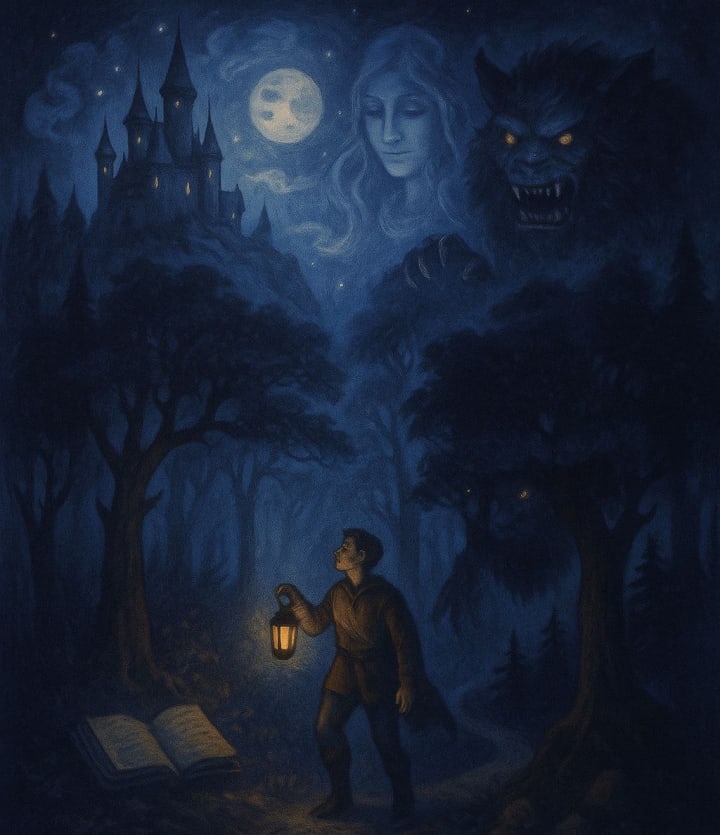
ARCHETYPAL ROLE OF NIGHT
Across cultures, night is not just darkness, but a medium of initiation, birth, transformation.
– Myths: heroes pass through night before gaining knowledge (Dante in the Divine Comedy — “in a dark forest”).
– Alchemy: the nigredo phase — dissolution before renewal.
– Fairy tales: night is the time of monsters — and gifts.
Night is the archetype of descent into the unknown.
When you think at night, you’re not just “thinking in silence.” You enter a layer where the mind perceives holistically, not linearly.
---
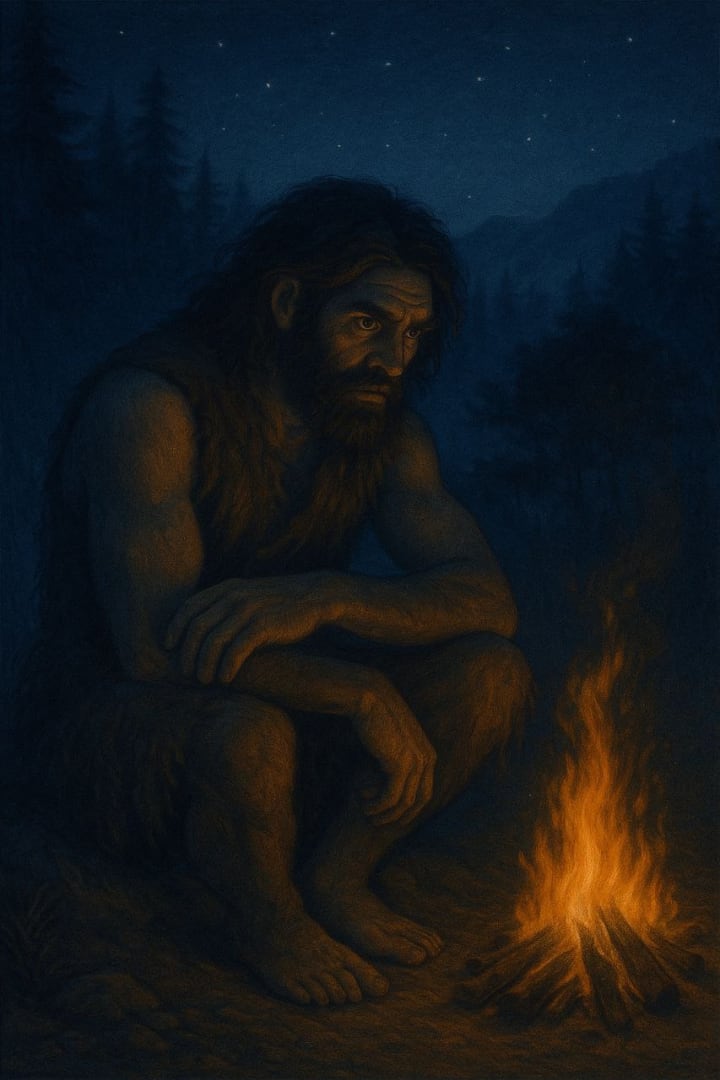
EVOLUTIONARY PERSPECTIVE
For prehistoric humans, night was a time of:
– no physical activity,
– but inner vigilance (staying alert — predators, cold, vulnerability).
→ The brain learned to analyze the day in the background, saving energy — the start of inner observation.
→ Inner activity at night may have been a survival mechanism: replaying situations, preparing, making decisions in a continuous but safe environment.
Today, it became — night thoughts that the daytime world doesn’t evoke.
---
This is all that’s clear to me. No point seeking more theoretical causes — we’re not nuclear physicists here.
P.S. If a “brilliant idea” comes to you before sleep, don’t be lazy — write it down.
Re-read it in the morning, reflect for 2–3 days. If it doesn’t fall apart, but gets stronger — it’s real.
Those ideas were shown to you by the dark. Not evil — but a space distorted by those afraid to look within.
About the Creator
When Saying “No” Feels Strange
He did not plan to smoke that day. He was standing outside his school gate, bag on his back, waiting for the van. A boy from his class took out a vape. Another smiled and asked him to try. He refused at first. Everyone laughed, not loudly, not cruelly just enough to make him feel small.
By Muhammad Ayaan 4 days ago in Psyche


Comments
There are no comments for this story
Be the first to respond and start the conversation.