
Why I left academia
It finally came down to my career or my sanity. I chose sanity.


Fifteen years in academia left me mentally — and physically! — broken. I finally made the decision to leave for the sake of my own well-being.
* * * * *
“I think you’ve already decided. You have all the answers figured out; you need to listen to yourself.”
This was the usual type of ending to a conversation I’d have, on average, with two or three students every year. They would knock on my office door and ask if I had time to talk with them. I’d see the look in their eyes and immediately know this was a “closed-door” talk.
I started teaching at university in 2006. In my previous gig as a high school teacher, I learned early on that an unspecified function of my job was “part-time counselor.” Students had problems, and they came to me with them. When I started at the university, it was no different.
“Of course they will tell you to stay,” I would say. “We have a vested interest in keeping people in the program.”
The conversation was almost always the same. The student was overwhelmed and not happy where they currently were. Something needed to change. I let them talk through it, because by the end they knew the right path to take. They had already known. But they were reluctant to go that route because other people told them they shouldn’t.
“You need to do what’s best for you, not what’s best for us or any other person.” I was not about to try to convince them to stay somewhere they weren’t happy. More times than not, the student would make that change. They might change their major, or transfer to a new school that better served their needs. Sometimes they left college for good and took another path.
Often, they would come back to see me, or drop a line, to let me know how much better they felt. They would thank me for being honest with them. For being human with them.
I didn’t play ball very well
In higher education, the relationship “line” between students and faculty is often blurred. By day I played the part of professor — “Doctor.” But after hours, I’d sometimes go out for a beer with my students and interact on a more personal level. I was teaching young adults. When you interact with people on a daily basis for four years, a camaraderie often forms. I daresay that for both professor and student, the personal interaction was as important as the professorial one. For some students, I was more than a teacher; I was a mentor. And I learned from them too.
Being real. Being human. This was always important to me. I always played the part of professor very laid back, and a bit loose. My title — Dr. Barr — never much interested me, but I kept it so that the “line” was there for those who needed it. But I also tried to keep my ego firmly in check; I was there for the students.
I often came under fire from a specific contingent of the faculty. They were the “old guard,” and they didn’t like me not doing business the way they did. I didn’t always play by their rules. I almost never stuck to their script. I walked too close to the “line” for their taste. And I admit I stepped over it on a few occasions. I’ve never been good with criticism or authority. I do things my way, and I don’t like it when people who think they know better interfere in my business.
Colleagues I couldn’t trust to do right by me
I know that sometimes I am not the easiest person to deal with. I’m an extreme introvert. I also battle a mental illness which can definitely put me in a mood on any given day. So yeah, I can be very difficult to read and interact with.
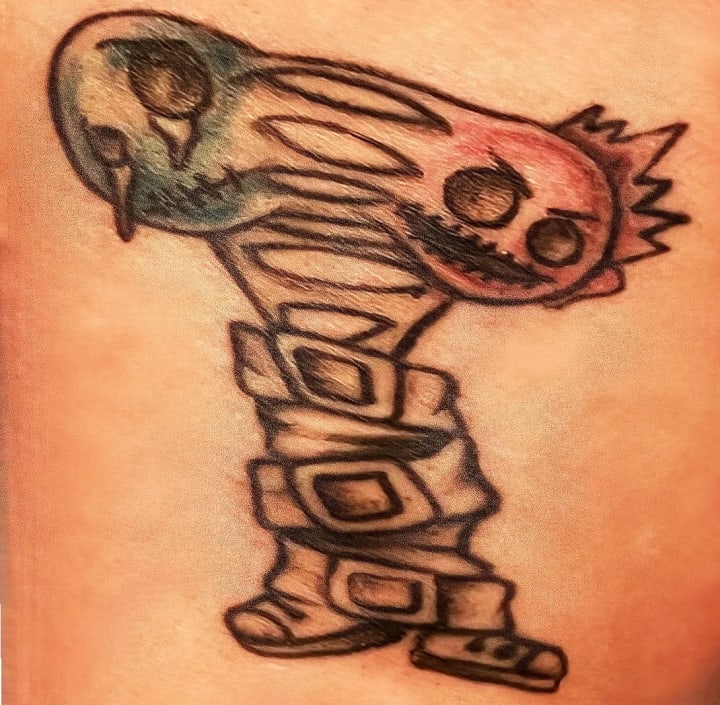
I suffer from Bipolar Type 2 Disorder, and a personal cocktail of super-fun extra neuroses that come with it. Undiagnosed until 2013, it took a decade to get it under control. In hindsight, that was part of the reason I was difficult to deal with. I was mercurial; one colleague called me “Dr. Dark and Stormy.” I laughed, because he was my friend. He was jesting — but he was also right.
My disorder affected my relationships with fellow faculty. And for that reason — or my tendency to do business my way — the old guard singled me out. Reprimanded often for stepping out of line, I felt held to a different standard than others on the faculty.
Perhaps I was insubordinate? I don’t believe so; only different. Not as pliable as they would have liked. But over many years it became clear that I was the target of a pattern of unprofessional behavior. This behavior often so bordered on childish and petty that I began to refer to the office floor of my building as a “high school.”
Take these examples:
In 2011, a colleague who I was friends with resigned from my department. He was a bit of a bulldog. But he was junior faculty — not tenured — so he was vulnerable. He made too many enemies among the old guard. He got himself in trouble for some inappropriate behavior with students, and they used that as a pretext to force him out. I didn’t approve of his actions, but I also didn’t agree with the manner in which he was dismissed. I felt it lacked any due process. So I voiced my displeasure. But I was junior faculty too. And since I didn’t keep my mouth shut, the chairperson at the time threatened to tank my upcoming tenure application. He demanded that I go to every one of the faculty and apologize for not keeping quiet and going along with things. When I did so, several faculty didn’t understand why I was apologizing to them. I didn’t either.
In 2012, my ex-wife and I separated. I did not advertise this or make it public knowledge. But word got out, and some of my “colleagues” made it their business to dig into my personal life. They accosted students they knew I was close to, grilling them for details they didn’t have (and wouldn’t have offered anyway). They messaged my ex-wife on Facebook. They called and offered messages of “support” for her while also trying to ferret out information. On one occasion, a faculty member cornered her in the supermarket to do the same.
Classy. And so collegial.
In 2015, I underwent surgery for a severely damaged disc in my lower back. I can attribute this injury, at least in part, to the physical stress of working at one point nearly a double load of teaching. (What’s a double load, you ask? To make it as succinct as I can, it is the work that normally would take two full-time professors to perform.)
To be fair, some of that was my doing. I was trying to play ball and help the department by filling in gaps caused by loss of faculty.
I took four weeks off for that surgery. After four weeks, the nerve that had been compressed for more than a year was still very angry at me. My doctor told me I needed a few more weeks off. The chair at that time didn’t want to give it to me. She made it clear that I was severely inconveniencing the department by asking for it. She approved it only when it was clear she didn’t have a choice: doctor’s orders.
In 2018, my department refused to recommend me for promotion — for a second time — based on criteria that I later learned did not exist. Only one member of the committee refused to vote in favor of denying me promotion. A younger member came to me later and apologized for capitulating to the old guard on the committee. Faculty not on the committee expressed their disapproval to me; they knew I had been screwed. That colleague who refused to vote against me later inquired at a union meeting and learned the criteria I was disqualified on was bogus.
These are only a few of many situations. I discuss them not so much to air past grievances, but to paint a picture of the environment I was working in. Like those students who came to me seeking advice, I was not happy where I was at — and for good reason.
The beginning of the end
I suspected the older members of the faculty would deny me again, so I wasn’t surprised. But I was angry. Very angry. At that moment, I decided I’d put enough of my soul into that job. I refused to teach overload any longer and refused to sit on committees. I came to work for the amount of time it took to teach, and I left. Relationships with my colleagues were reduced to a handful of people I trusted. The others I interacted with only when necessary. I came to work for the students, and for them only.
I also registered with the University under the Americans with Disabilities Act. I felt I needed some layer of protection from the colleagues I knew I couldn’t trust. I informed my chair — a different person than in the earlier two instances I spoke of, but still one of the old guard — of my illness. That didn’t stop her from threatening that the Dean would fire me if I didn’t do as I was told and take on extra responsibilities. (Actually, the Dean was quite supportive in our meeting about my ADA accommodations).
In my final years there, a fundamental shift in how faculty related to each other occurred. Several long-time faculty retired. But the remnants of the old guard tried to maintain a grip on their control of the place. Faculty new and old drew themselves into factions over curriculum issues, teaching loads, budget woes, and other challenges facing the department. Meetings became battlegrounds, with outright infighting between members. A great amount of trust eroded away. The place became absolutely toxic.
I mostly stayed on the sidelines of these battles; I no longer cared. At one point, my friend came into my office to bemoan the state of affairs. I told him: “I agree with you. But I don’t have the energy anymore to fight it. You need someone who’s fresh and ready to stand up beside you.”
I often quipped that I had become the jaded old man of the department. Except it wasn’t a joke.
Away from work, I retreated into myself and brooded over my situation. I couldn’t leave because the money was too good, I told myself. I had bills — lots of them. I felt like a prisoner; the “golden handcuffs,” another professor had once called it. I applied for other college gigs, but had no luck. I felt trapped.
My epiphany
In March 2020, COVID hit. All instruction went online. Pivoting immediately to remote teaching was an immense challenge. But for me there were silver linings to the change: less time at school; less heat on me; more time to rest and try to heal.
In the fall of that year, we switched to hybrid instruction — part in-person, part online. I was able to continue keeping it together. The worst part was the faculty meetings, now on Zoom, where the infighting continued. I started pouring myself a drink before every meeting. Sometimes I turned the audio off. Once, I logged out in the middle of a meeting after I’d heard more bickering than I could stand.
When the University announced a return to in-person instruction for the fall of 2021, I dreaded it. The apprehension of returning to that toxic morass dominated my thinking the entire summer. When the time came to go back to school, I found myself nearly paralyzed with anxiety on a daily basis. Most days, I fought it off and went to work, but even going out the door took immense effort. A few days, I couldn’t — and the only way to relieve the panic I felt was to call off and stay home.
But with that anxiety and paralysis came clarity, an epiphany of sorts. It finally occurred to me that I was not following my own advice. I hadn’t been heeding it for a long time. For years, I had told troubled students to do what was best for them and not what was best for someone else. Like them, I was tired and completely burnt out. My mental and physical health were suffering horribly. I was in a dead-end job where I was not going to be promoted no matter how hard I worked. And I knew I was doing my students a great disservice by not being able to give them 100%.
“You have all the answers figured out; you need to listen to yourself.”
Something needed to change. I needed to do what was best for me. It was the job or my sanity.
It was time for me to go.
Finally, I listened to myself and left. I met with human resources, worked out the details of a disability retirement, and notified my chair. A few short weeks later, I was gone.
And I have never looked back.
No regrets
It’s been almost two years now. I miss my students. I miss their talent. I miss working with them and the camaraderie that we established. I miss the few colleagues I trusted and who I counted as friends.
But I don’t regret it for a second. It was one of the best decisions of my life. My health has improved remarkably since I left. My bipolar disorder is now in complete remission. My life, for the first time in a long while, is in balance and order. And I am happy.
There are many problems in academia today. Politics, bias, discrimination, and abuse of power are only a few of the cancers present in the system. And it’s not just administration, it’s in the faculty too. I recognize that my experience is not typical. But I have seen, heard, and read enough to know that the same problems are endemic on many campuses. In my case, a career path that I once thought was a calling became a nightmare that ultimately threatened my very sanity.
And I will never go back.
About the Creator
Stephen Barr
Blogger. Composer. Recovering university professor. Father. Tattoo and fitness enthusiast. Level 4 biohacker. Gamer.
Keep reading
More stories from writers in Psyche and other communities.
Ludacris and Nelly draw backlash over bookings at MAGA-coded music festival
Ludacris and Nelly headlining a mostly right-wing event is good for them. It’s also great for the genre of hip hop. The two rap veterans have showcased their talents on other stages. Why can’t they perform for mostly MAGA folks and grab that bag?
By Skyler Saunders6 days ago in Beat


Comments (1)
Interesting and very well written article. The politics at your university sounded very personally directed and relentless, it's good to hear you moved on and are happy with that decision. I had some good friends who were afflicted. I do find people with bipolar disorder can be the most inspirational teachers and mentors anywhere when they are not being bothered by outside problems.