
When Trauma Bonds Keep You Stuck: Becoming Unstuck
Trauma bonds play tricks on our minds. Learning how to recognize them and become unstuck is crucial


The Complexity of Trauma Bonds
Trauma bonds are complex, manifesting in ways that aren’t always understood. I discuss the polyvagal nervous system and how trauma bonds affect us physiologically, and psychologically. I describe the seven stages of trauma bonds in toxic and abusive relationships, and how to break free from them, healing ourselves and our inner child.
Misunderstanding What Trauma Bonds Are
When someone talks about trauma bonds, they may not fully recognize their origins and how they manifest in their life. It’s not only about cognitively understanding the psychological aspects but also the physiological. Our nervous system (Autonomic Nervous System) is also affected. Trauma bonds keep you stuck in dysregulated states, as the cycle of abuse, intermittent reinforcement, and dependency in trauma bonds affect your behavior and emotional responses. When the nervous system is triggered to fight or flight mode, the feeling of safety is absent. It’s easier to form unhealthy connections and abusive patterns are reinforced over and over.
Breaking Trauma Bonds — Emotional Regulation and Our Nervous System (ANS)
Breaking trauma bonds requires more than cognitive understanding and support to leave abusive relationships. It also requires emotional regulation and an understanding of the role of the ANS in trauma. All trauma affects the nervous system, resulting in dysregulation. That is when individuals become stuck in patterns of behavior and abusive cycles, as they are unable to break them. Stephen Porges developed the polyvagal theory, which explains how trauma affects the autonomic nervous system (ANS), influencing behavior and emotional responses. Having experienced trauma as an adoptee, I underwent Therapy-Informed Therapy, which used the Polyval Approach. I wrote this story about it on Medium.
The Abusive Cycle in Relationships
I learned how important the nervous is when I underwent Trauma-Informed Therapy. Even though I didn’t immediately put it into practice, and stayed stuck in repeated cycles, I learned that my nervous system was affected by trauma. As I had abusive relationships also, it was a very helpful form of therapy, enabling me to recognize how trauma dysregulated my nervous system. I struggled to make sense of relationships, and why I stayed stuck in them. I continued staying stuck and tried very hard to get ‘unstuck’, and this is where I realized that a holistic approach to breaking trauma bonds was the only thing that worked. Without understanding the connection between our mind and body, it’s very difficult to break free from trauma bonds.
Holistic Approach to Breaking Trauma Bonds
Abusive patterns of relationships don’t change — only people change. Those who abuse us don’t change unless they choose to, which is unlikely to be the case. In fact, the longer you stay in abusive relationships, the worse they get. They rarely get better. Going ‘No Contact’ allows your nervous system to recover and heal, as well as your mind. That is the holistic way to break trauma bonds. Recognizing the connection between mind and body is vital. Abusive relationships have both psychological and physiological elements, and both need to be recognized to break trauma bonds. Just realizing that you’re in an abusive relationship isn’t enough. In my experience, it doesn’t stop the abuse, as the cycle continues.
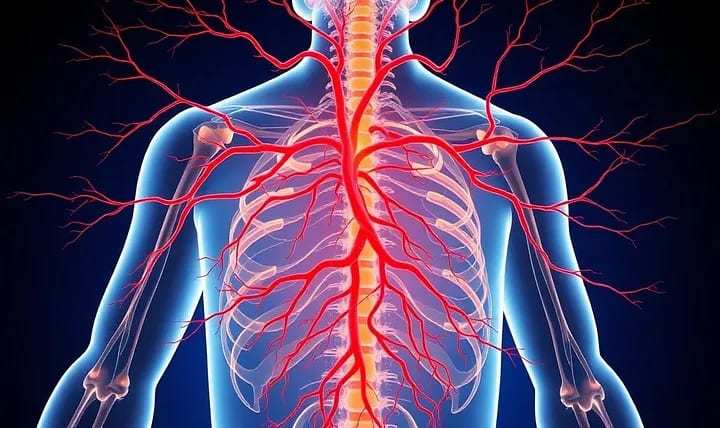
The Polyvagal Nervous System consists of:
- Ventral Vagal (Safety & Connection) — Feeling regulated, safe, and being able to navigate relationships, etc. Not feeling threatened.
- Sympathetic (Fight or Flight) — Feeling anxious, hypervigilant, fearful and trapped. Unable to navigate relationships. Feeling threatened.
- Dorsal Vagal (Shutdown & Collapse) — Feeling powerless, hopeless and numb. Unable to leave relationships.
Emotional responses in relationships can include fight, flight, freeze, and fawning responses in relationships.
📚 To continue reading, please visit the full story on Medium, with this friend link, which bypasses the paywall - no membership required. I look forward to hearing your thoughts if you're able to comment on Medium. Feel free to connect with me on Substack or X.
🤔 Thinking About Trauma 🤔
Read the Full Story on Medium
- How has trauma affected your life?
- Does understanding the biological origins of survival in childhood and how trauma manifests as an adult, help in understanding trauma bonds?
📚 Thank you for reading—I'd love to hear your thoughts! 📚
🤝 Connect on Medium, Substack, or X 🤝
If you enjoy my content, please consider supporting my writing on Ko-Fi. Your support helps me keep writing and stay inspired!"
About the Creator
Deirdre Weldon
I write on different topics on Medium, and now on Vocal Media. I hold a BSc (Hons) in Psychology from the UK 🇬🇧 and a Software Development qualification from Ireland 🇨🇮.
I love nature, the outdoors, and providing insights into problems.
Keep reading
More stories from Deirdre Weldon and writers in Psyche and other communities.
True Power Uplifts; Narcissists Abuse It
Framing the Narrative is a Manipulation Tool Luckily, my DNA shows that I'm less susceptible to framing. I agree, as I tend to see through manipulative people and have taken big risks calling them out. Whenever I do, I've usually been portrayed as the alleged abuser, especially by those determined to win at any cost, and lack morals. I don't know how common this trait is , to question someone's motives and/or not accept what could be manipulative harmful behavior. I tend to spot dishonesty and dislike dealing with dishonest people, such as those who deliberately lie, deceive, manipulate, troll, etc. They do things under the guise of something else, and their agenda is one-sided. Such people shut down any diverse discourse that differs from the narrative and operates in a way that becomes a self-fulfilling prophecy, to prove they are right. It's like karma and they attract what they give out, which is toxicity.
By Deirdre Weldon10 months ago in Psyche


Comments