
What Are the Steps Involved in Drug Discovery Services?
Drug Discovery Services India
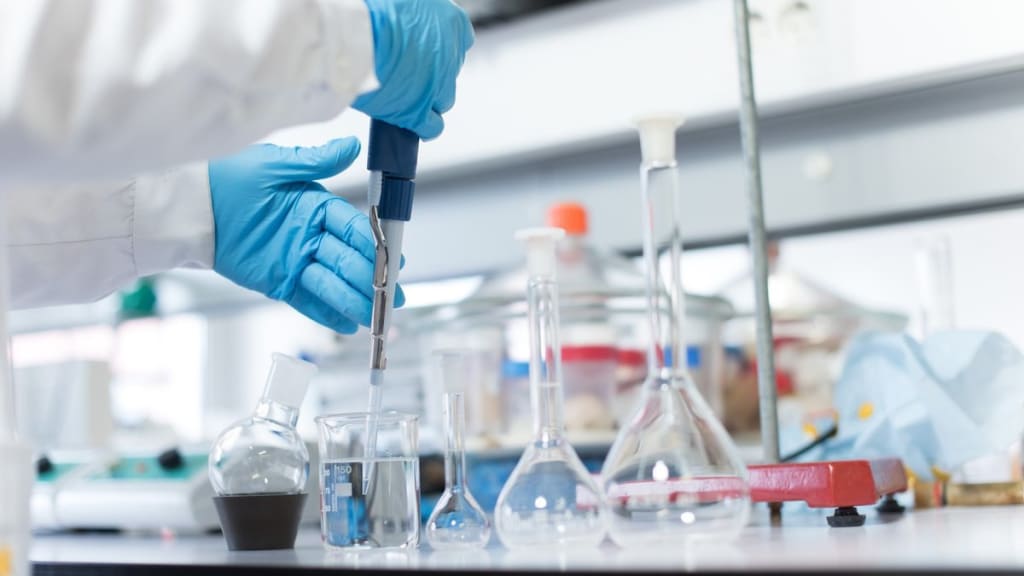
Drug discovery services play a vital role in the development of new medications and therapies that can save lives and improve health outcomes. These services encompass a range of scientific and technological processes aimed at identifying and optimizing potential drug candidates.
The journey from initial discovery to the final product involves a series of well-defined steps, each contributing to the success of drug development. In this blog post, we will explore the key steps involved in drug discovery services, highlighting their significance in shaping the future of medicine.
Target Identification and Validation:
The first step in the drug discovery process is identifying a specific target molecule or pathway that is involved in a disease. This could be a protein, enzyme, receptor, or any other molecular entity associated with the pathological condition. Target validation aims to confirm that the chosen target is indeed relevant and modifiable, meaning that drugs can interact with it and produce a desired therapeutic effect.
Hit Generation:
Once a target has been identified and validated, the next step is to generate "hits" or potential drug candidates that interact with the target. High-throughput screening (HTS) techniques are commonly employed to test large libraries of compounds, natural extracts, or synthetic molecules to identify those with a desirable activity against the target. Hits can be obtained from various sources, including chemical libraries, natural products, or even computational modeling.
Lead Optimization:
From the pool of hits, the most promising compounds are selected as "leads" and subjected to further optimization. Lead optimization involves refining the chemical structures to enhance their efficacy, safety, and pharmacokinetic properties. Medicinal chemists employ a range of techniques, such as structure-activity relationship (SAR) studies, to modify the lead compound iteratively. The goal is to improve its potency, selectivity, solubility, and bioavailability while minimizing potential side effects.
Preclinical Development:
At this stage, the lead compounds are thoroughly evaluated in preclinical studies to assess their safety, pharmacokinetics, and efficacy. These studies are conducted using in vitro (cell-based) and in vivo (animal) models. Preclinical development also involves determining the drug's metabolism, distribution, and excretion, as well as evaluating its toxicological profile. The data obtained from these studies help researchers make informed decisions about whether to proceed to clinical trials.
Investigational New Drug (IND) Application:
If the preclinical data demonstrate that a drug candidate has promising properties, an Investigational New Drug (IND) application is submitted to the regulatory authorities, such as the Food and Drug Administration (FDA) in the United States. The IND provides a comprehensive overview of the preclinical data, along with proposed clinical trial plans and safety information. Upon approval, the drug candidate can move forward to clinical trials.
Clinical Trials:
Clinical trials are divided into three phases, each with specific objectives. Phase I trials involve a small number of healthy volunteers and focus on assessing the drug's safety, dosage, and potential side effects. Phase II trials expand the study population to include patients with the target disease to evaluate the drug's efficacy and further assess its safety. Phase III trials involve large-scale testing on a larger patient population and aim to confirm the drug's efficacy, monitor side effects, and compare it to existing treatments.
Regulatory Approval:
After successful completion of the clinical trials, the drug developer can submit a New Drug Application (NDA) to the regulatory authorities for marketing approval. The regulatory agencies review the clinical data, safety profile, and manufacturing processes to ensure the drug's quality, efficacy, and safety. If approved, the drug can be marketed and made available to healthcare providers and patients.
Conclusion:
Drug discovery services are a complex and multi-faceted process that requires expertise from various scientific disciplines. The steps involved, from target identification and validation to regulatory approval, represent a systematic approach to developing safe and effective medications. The ultimate goal is to provide innovative treatments that address unmet medical needs and improve patient outcomes.
By understanding the intricacies of drug discovery services, we can appreciate the immense effort and dedication behind the medicines we rely on to enhance our health and well-being. Drug development services hold immense potential to revolutionize healthcare, and continued advancements in this field will lead to breakthrough therapies that shape the future of medicine.
About the Creator
Keep reading
More stories from Thera Indx and writers in Psyche and other communities.
Understanding the Basics of Structure-Based Drug Discovery: A Comprehensive Guide
Introduction In the realm of modern medicine, the quest for innovative drugs and therapies has led researchers down the intricate path of molecular biology, where the intricacies of protein structures hold the keys to unlocking new treatments. This journey is encapsulated in the fascinating world of Structure-Based Drug Discovery (SBDD). SBDD is a revolutionary approach that leverages the three-dimensional structures of biological macromolecules, particularly proteins, to design and develop novel drugs. In this comprehensive guide, we will delve deep into the fundamental principles of SBDD, exploring its techniques, challenges, and the potential it holds for the future of healthcare.
By Thera Indx2 years ago in Psyche
Ludacris and Nelly draw backlash over bookings at MAGA-coded music festival
Ludacris and Nelly headlining a mostly right-wing event is good for them. It’s also great for the genre of hip hop. The two rap veterans have showcased their talents on other stages. Why can’t they perform for mostly MAGA folks and grab that bag?
By Skyler Saunders5 days ago in Beat


Comments
There are no comments for this story
Be the first to respond and start the conversation.