
Understanding the INTJ Personality Type
The Mastermind Behind the Mind

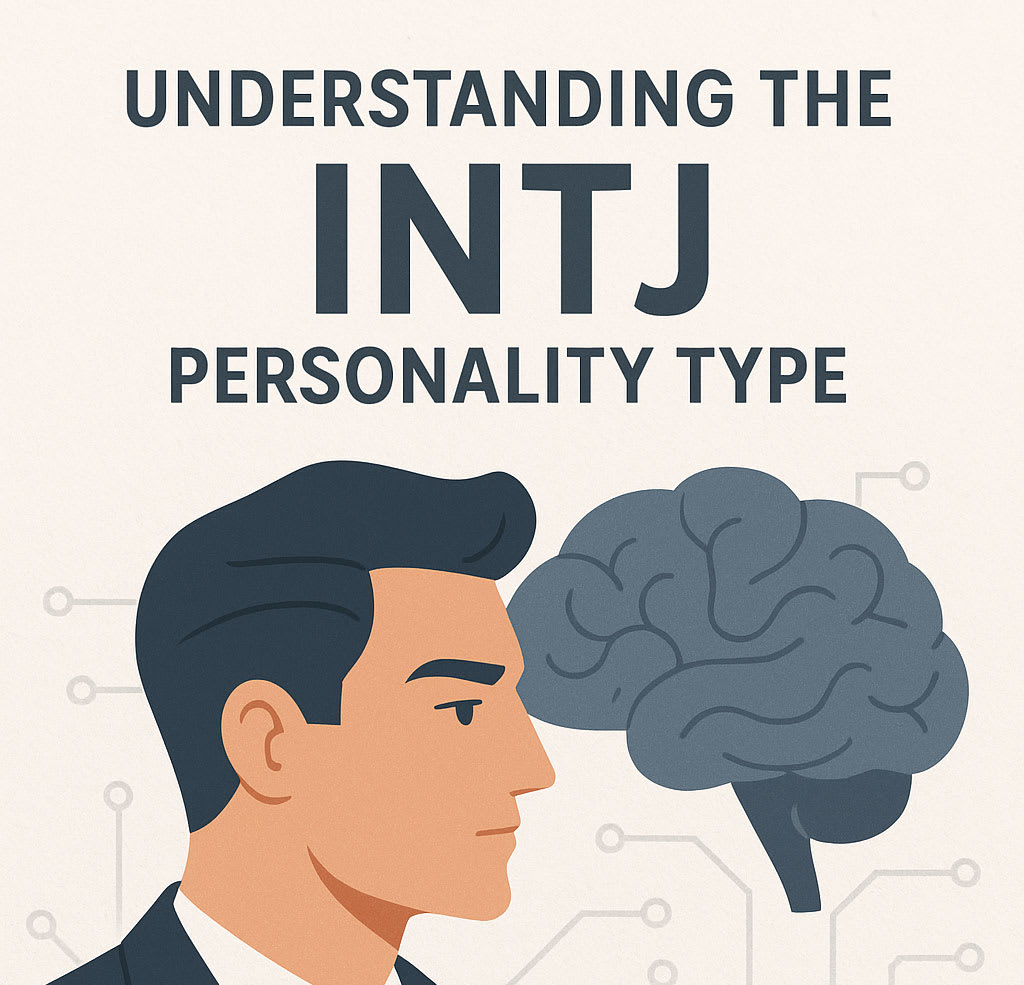
Some people drift through life reacting to what happens. Others plan, analyze, and build. And then there are the INTJs — the architects of thought, the quiet masterminds who live several steps ahead of the present moment.
Among the sixteen MBTI personality types, INTJs stand out for their strategic mindset and visionary intuition. They are driven not by impulse but by the pursuit of understanding — a constant need to find structure in the chaos of existence.
🔍 The Core of the INTJ Mind
At the heart of every INTJ lies a powerful combination of Introverted Intuition (Ni) and Extraverted Thinking (Te). Ni is the inner radar that connects abstract ideas into a coherent future vision. It allows INTJs to detect hidden patterns, sense long-term outcomes, and imagine possibilities that most people overlook.
Te, on the other hand, grounds these visions in logic and structure. It turns raw insight into a plan, an argument, or a system. This pairing makes INTJs natural strategists — able to conceptualize and execute with remarkable precision.
They often seem detached, but that calm exterior hides a brain in constant motion. While others discuss “what is,” INTJs are already analyzing “what could be.” They question, refine, and rebuild, not because they doubt everything — but because they believe everything can be improved.
💭 The Inner World Few See
To outsiders, INTJs can appear cold, analytical, or even intimidating. But internally, they are anything but emotionless. Their feelings run deep, often buried beneath layers of logic and self-control. When they experience strong emotions, they retreat inward, processing them quietly before they can be shared.
This can make them seem distant, even to people they love. But for the INTJ, solitude is not rejection — it’s recalibration. Alone, they untangle emotions, reconstruct meaning, and emerge with greater clarity.
Many INTJs describe life as an ongoing experiment — a process of refining themselves through introspection. Their goal is rarely external validation; it’s internal alignment. They crave understanding — of themselves, of others, and of the systems that govern the world.
⚖️ The Gift and Burden of Perfection
INTJs are perfectionists by design. They hold themselves — and often others — to impossibly high standards. Their strength lies in their ability to identify flaws and inefficiencies, but that same gift can turn inward, leading to self-criticism or burnout.
In work, they demand competence and logic. In relationships, authenticity and growth. Yet, because they tend to intellectualize emotions, they can struggle with vulnerability. They may analyze love instead of feeling it, or try to “fix” people instead of simply being present with them.
The irony is that INTJs long for connection just as deeply as anyone else. They want a partner who challenges them intellectually but accepts their emotional privacy. Over time, they learn that true connection doesn’t come from control — it comes from trust.
🌱 Growth: From Mastermind to Mentor
An evolved INTJ learns to balance intuition with empathy, reason with openness. They begin to realize that not every variable can be optimized — that some of life’s most meaningful experiences emerge from uncertainty.
This shift often happens through failure or emotional struggle. When an INTJ’s carefully planned world collapses, they face the uncomfortable truth that control is an illusion. From that humility comes transformation. They learn to listen without judging, to care without needing to solve.
As they grow, INTJs often transition from architects to mentors. Their wisdom, once used to perfect systems, becomes a tool for guiding others. Many INTJs find fulfillment in teaching, leadership, psychology, or strategy — fields where insight meets impact.
If you identify with this mindset and wish to explore it more deeply, there’s a thoughtful analysis of the INTJ personality here: Moody Wonder — The Mastermind. It explores not just the strengths of INTJs but also the inner conflicts that shape their growth journey.
💡 Common Struggles INTJs Face
Overthinking decisions: They often analyze so deeply that they delay taking action, missing opportunities while waiting for “optimal timing.”
Difficulty expressing emotions: They may appear calm even when they’re overwhelmed, leading others to misread their silence as indifference.
Perfectionism and burnout: Their drive to improve everything can make it hard to rest — or to accept “good enough.”
Isolation: Because they value independence, they sometimes avoid teamwork, even when collaboration could multiply their impact.
Recognizing these patterns is the first step toward balance. When INTJs learn to slow their internal monologue and embrace imperfection, they unlock a more peaceful form of mastery — one that includes joy, not just efficiency.
✨ The Legacy of an INTJ
Despite being only about 2% of the population, INTJs have shaped history in profound ways. From scientists and inventors to philosophers and visionaries, their quiet determination has left a mark on every era. They think long-term, act with purpose, and rarely settle for mediocrity.
Yet their true power isn’t in intellect alone — it’s in their ability to see beyond what exists and to imagine what could be. Their minds build bridges between possibility and reality.
The INTJ journey, ultimately, is not about domination or control. It’s about understanding — the self, the world, and the hidden connections between the two. When they align their logic with empathy, their vision with humility, they become the architects not just of systems, but of human potential.
Written by Johnson at Moody Wonder, a platform exploring personality, psychology, and the art of self-awareness.
About the Creator
Moody Wonder
Moody Wonder offers free and science-based personality tests to help you understand your traits, improve relationships, and explore personal growth with accuracy and depth.
Keep reading
More stories from writers in Psyche and other communities.
Ludacris and Nelly draw backlash over bookings at MAGA-coded music festival
Ludacris and Nelly headlining a mostly right-wing event is good for them. It’s also great for the genre of hip hop. The two rap veterans have showcased their talents on other stages. Why can’t they perform for mostly MAGA folks and grab that bag?
By Skyler Saunders5 days ago in Beat




Comments
There are no comments for this story
Be the first to respond and start the conversation.