
The Silent Power of Self-Talk: How Your Inner Voice Shapes Reality
Understanding the constant inner dialogue that quietly influences your thoughts and actions.

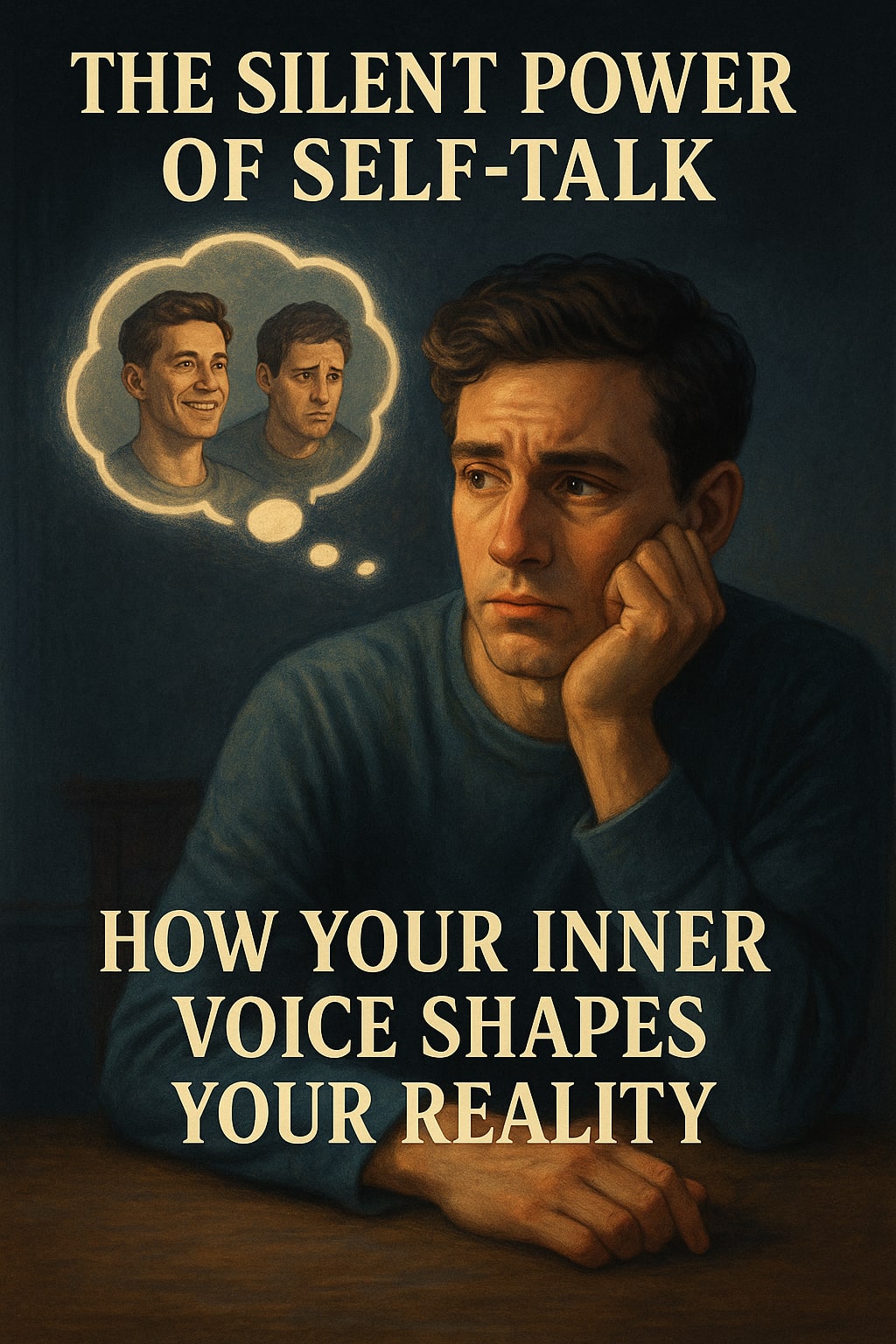
The Silent Power of Self-Talk: How Your Inner Voice Shapes Reality
We all have a voice inside our head. It’s the one that whispers doubts before a big presentation, cheers us on in tough moments, or criticizes us when we fail. This inner voice is called self-talk, and though it’s silent to the world, its effects on our mind and life are profound. What most people don’t realize is that the way we speak to ourselves shapes not only our emotions and confidence but even how we perceive reality. In other words, your internal dialogue is one of the most powerful psychological tools you carry — and it can either become your biggest motivator or your worst enemy.
Self-talk is the internal dialogue that runs through your mind all day long. It can be positive, neutral, or negative. For example, saying to yourself “I can handle this” before an exam is positive self-talk. On the other hand, thinking “I’m going to fail again like always” is negative self-talk. While this chatter might seem harmless, it has deep psychological roots and real consequences. Over time, repeated patterns of self-talk begin to shape your belief system, influence your behavior, and guide your daily decisions — often without you even realizing it.
One of the most fascinating aspects of self-talk is how it connects to the concept of neuroplasticity — the brain's ability to rewire itself. Studies in neuroscience show that the brain doesn’t always know the difference between what's real and what's imagined. So when you consistently tell yourself negative things, your brain accepts those statements as truth and wires your mental and emotional responses accordingly. If you say, “I’m not good enough” often enough, your brain will build a belief system that supports that thought, making you more anxious, insecure, or afraid to take risks. It becomes a self-fulfilling prophecy.
On the flip side, positive self-talk can serve as an internal coach that builds resilience, enhances performance, and improves mental health. Athletes use it to boost focus and strength under pressure. Students use it to push through exams. Therapists use it in cognitive behavioral therapy (CBT) to help patients reframe harmful thinking patterns. Even a simple shift from “I can’t do this” to “I will try my best” can significantly alter your brain’s emotional response and decision-making ability.
But let’s be clear — positive self-talk doesn’t mean lying to yourself or ignoring problems. It’s not about pretending everything is perfect. It’s about speaking to yourself with the same compassion and encouragement you would offer a close friend. It means replacing judgment with curiosity, replacing shame with understanding, and turning mistakes into learning opportunities. When you learn to talk to yourself with kindness, your mental world becomes a safer, more motivating place — and that reflects in your outer world as well.
Interestingly, self-talk also affects your relationships. A person who constantly tells themselves, “I’m not lovable” or “No one truly cares about me” may unknowingly sabotage their connections with others. They might pull away, become defensive, or interpret neutral actions as rejection. Their self-talk distorts their view of reality. On the other hand, someone who believes “I’m worthy of love and connection” is more likely to approach relationships with openness and trust. Their inner voice helps them attract healthier bonds.
Changing your self-talk isn’t about flipping a switch overnight. It takes awareness, practice, and patience. The first step is noticing your internal dialogue throughout the day. Pay attention to the tone and content of your thoughts. Are they critical or encouraging? Are they based on facts or assumptions? Once you start recognizing patterns, you can begin to challenge and reshape them.
A powerful technique is to write down common negative thoughts and reframe them. For example, turn “I always mess things up” into “I’ve made mistakes, but I’m learning and improving.” Repeat these new thoughts out loud or in your mind regularly. Over time, these updated beliefs begin to take root in your subconscious, replacing the old, harmful ones.
In a world filled with external noise — social media, opinions, comparisons — your self-talk is the one voice you hear most. It narrates your story, influences your choices, and quietly molds your identity. The good news is: you are the author of that voice. You have the power to rewrite your script at any time.
In conclusion, self-talk is more than just mental background noise. It’s a powerful force that can either uplift or destroy, heal or hurt, inspire or intimidate. By becoming aware of your inner voice and choosing to make it kinder, wiser, and more supportive, you don’t just change how you think — you change how you live. And in that silent space of inner dialogue, your true transformation begins.
About the Creator
Muhammad Hussain
I have been through very tough time, life is not safe for everyone, some people may have gifted the things they want, and some struggling to get things, don't lose hope no matter how upset you are, be a role model for someone
Keep reading
More stories from Muhammad Hussain and writers in Psyche and other communities.
Why We Talk to Ourselves
Have you ever caught yourself whispering under your breath while working on something? Or maybe you have replayed a conversation in your head, imagining what you could have said differently. At first, it may seem strange, but talking to ourselves is one of the most natural things we do as humans. Far from being a sign of madness, self-talk is a powerful tool that shapes the way we think, act, and even succeed.
By Muhammad Hussain6 months ago in Psyche
Top tipple tricks
Been thinking a lot about drinking, lately. Not least because of a recent episode of over-indulgence and the inevitable after effects. Some readers may recall the earlier articles I wrote about beating the booze. Here I set out an experiment in techniques for cutting down on my alcohol intake. The experiment was successful, the techniques worked, and I have armed myself with an arsenal of weapons in the war against the demon drink. I have yet to fire the first round however. It's all a question of timing (perhaps procrastination).
By Raymond G. Taylor7 days ago in Psyche
How to Get Cocaine Out of Your System Safely and Effectively
Cocaine is a powerful stimulant drug that can have serious effects on both the body and mind. While some individuals may initially use cocaine for its short-term feelings of energy or euphoria, repeated use can quickly lead to dependence and addiction. Over time, cocaine can impact physical health, emotional stability, and overall well-being.
By Jordan Blake3 days ago in Psyche
The Forsyth House Fire
Since 1851, Forsyth House has stood on the corner of Union Street and Gordon Street in the heart of Glasgow. Its iconic, or was... because on Sunday 8th of March, 2026, a fire broke out in a small, seemingly un-named shop in the building and tore all that history down. As I write, the rubble is still unsettled and the street is still blocked off. Central Station is quiet on the upper level, and around 30 small businesses have quite literally gone up in smoke.
By S. A. Crawford3 days ago in The Swamp




Comments
There are no comments for this story
Be the first to respond and start the conversation.