
The Shocking Truth About Loneliness: Why It’s Killing Us Faster Than Smoking!
How Socialization Can Save Your Life: A Harvard Study Breakdown


The Surprising Health Benefits of Friendship: Backed by Science
Introduction
Loneliness is often dismissed as an emotional state, but modern science proves it is a silent killer. Studies show that chronic loneliness increases the risk of heart disease, stroke, dementia, and premature death by up to 58%. As urbanization and digital dependence rise, we are becoming more isolated—despite being the most socially evolved species on Earth.
This article explores the evolutionary success of Homo sapiens, the dangers of modern loneliness, and actionable ways to rebuild meaningful connections in a disconnected world.
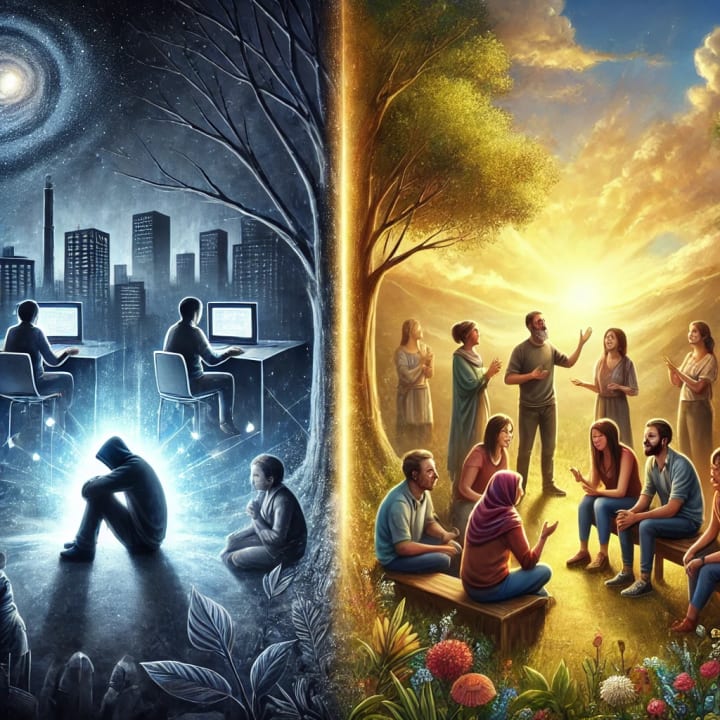
Homo Sapiens vs. Neanderthals: The Survival of the Social
Around 200,000 years ago, multiple human species roamed the Earth. Among them were the Neanderthals—physically stronger, larger, and more adapted to harsh environments. Yet, they disappeared, while Homo sapiens thrived. Why?
The Power of Social Bonds

Unlike Neanderthals, Homo sapiens developed strong social structures. They hunted in groups, shared resources, and protected their weak. In contrast, Neanderthals were more solitary, leading to their downfall.
Key Advantages of Socialization in Evolution:
• Security in Numbers: Groups provided protection from predators and enemy attacks.
• Efficient Hunting & Gathering: Cooperative strategies increased food supply.
• Better Childcare: Infants had a higher survival rate due to collective caregiving.
• Knowledge Transmission: Language and storytelling helped preserve skills and culture.
Our biological wiring still favors social bonds. Yet, modern lifestyles push us toward isolation, triggering severe physical and mental consequences.
________________________________________
The Modern Loneliness Epidemic: A Global Crisis

Alarming Statistics on Loneliness
• 33% of the global population experiences chronic loneliness.
• The top three most lonely nations: Brazil, Turkey, and India.
• In India, rising cases of depression, Alzheimer’s, and dementia are linked to social isolation.
• Loneliness has the same impact on mortality as smoking 15 cigarettes a day (Harvard Study, 2022).
Health Impacts of Chronic Loneliness
Loneliness isn’t just about feeling sad—it triggers a biological stress response, increasing health risks such as:
• High Blood Pressure – Increased cortisol (stress hormone) leads to hypertension.
• Heart Disease & Stroke – Lonely individuals have a 29% higher risk of heart attack and 32% higher risk of stroke.
• Weakened Immune System – Chronic isolation lowers immunity, increasing susceptibility to illnesses.
• Mental Health Decline – Higher rates of anxiety, depression, and suicidal tendencies.
• Cognitive Decline – Loneliness speeds up brain aging, increasing dementia risk.
Social Isolation in the Digital Age
Ironically, in an era of hyper-connectivity, we are more disconnected than ever. Excessive social media usage creates a false sense of connection, reducing real-world interactions.
________________________________________
Combatting Loneliness: How to Rebuild Social Connections
1. Strengthen Existing Relationships
• Reconnect with old friends and family.
• Schedule regular meet-ups instead of relying on digital communication.
2. Engage in Community Activities
• Join clubs, hobby groups, or volunteer programs.
• Participate in local events to build a sense of belonging.
3. Use Social Media Wisely
• Instead of passive scrolling, engage in meaningful conversations.
• Convert online friendships into real-life interactions.
4. Create Social Rituals
• Host gatherings, tea sessions, or group dinners.
• Small social habits, like morning walks with neighbors, strengthen bonds.
5. Prioritize Face-to-Face Interactions
Studies show that in-person interactions trigger oxytocin (the “bonding hormone”), reducing stress and improving happiness.
________________________________________
Real-Life Story: Overcoming Loneliness & Healing Through Socialization
In a recent seminar on social isolation, an elderly man shared his experience. After losing his wife, he felt deeply lonely, and by 2019, he was diagnosed with Stage 1 cancer. Instead of retreating into further isolation, he actively reconnected with friends and family. He started hosting daily tea gatherings at home. The result? His cancer went into remission, and he found joy and purpose in life again.
His takeaway? “Invest in friendships, not just medicine.”
________________________________________
Conclusion: Rediscover the Power of Human Connection
Rabindranath Tagore once wrote: "Come, my friend, enter my heart once again. Let’s share our joys and sorrows." This timeless wisdom remains relevant today.
Loneliness is a modern epidemic, but the solution lies in our biological roots—social connection. By consciously nurturing relationships, engaging in communities, and prioritizing real-life interactions, we can reclaim the social strength that once made Homo sapiens the most successful species on Earth.
Call to Action:
• Make a phone call to an old friend today.
• Step outside and engage in a face-to-face conversation.
• Join a local group or hobby club this week.
• Reduce social media time and increase real-world interactions.
Let’s revive the lost art of human connection—for our health, happiness, and survival.

Author’s Note
Human beings are meant to connect, share, and thrive together. If this article resonated with you, take a small step today—reach out, reconnect, and build deeper social bonds. Your health and happiness depend on it.
About the Creator
PRABAL TR PRO
✅ "Writer & Poet ✍️ | Exploring ideas, stories, and insights that inspire & captivate! From culture to creativity—let’s dive into the world of words!"
Keep reading
More stories from PRABAL TR PRO and writers in Psyche and other communities.
Top tipple tricks
Been thinking a lot about drinking, lately. Not least because of a recent episode of over-indulgence and the inevitable after effects. Some readers may recall the earlier articles I wrote about beating the booze. Here I set out an experiment in techniques for cutting down on my alcohol intake. The experiment was successful, the techniques worked, and I have armed myself with an arsenal of weapons in the war against the demon drink. I have yet to fire the first round however. It's all a question of timing (perhaps procrastination).
By Raymond G. Taylor7 days ago in Psyche
19 Points for New Clinicians
The first time I walked into my own office, then went into the waiting room to get my first patient, I quickly discovered a lot had been left out of my graduate education. I felt overwhelmed with clinic procedures, meeting 10 to 15 other staff a day and trying to remember their names, learning my way around a maze-like building, and learning new terminology.
By David A. Porterabout 8 hours ago in Psyche




Comments (2)
What a great article you have written here. Good job and your tips and ideas are great.
Great article. It’s true Lonliness is a killer over time. I see multiple people at work suffer and there performance at work decreases as well.