
The Scream That No One Hears: Reflections on Suicide and the Invisibility of Psychic Pain in Contemporary Society
Breaking the Silence: The Urgency of Listening to and Understanding Psychic Suffering
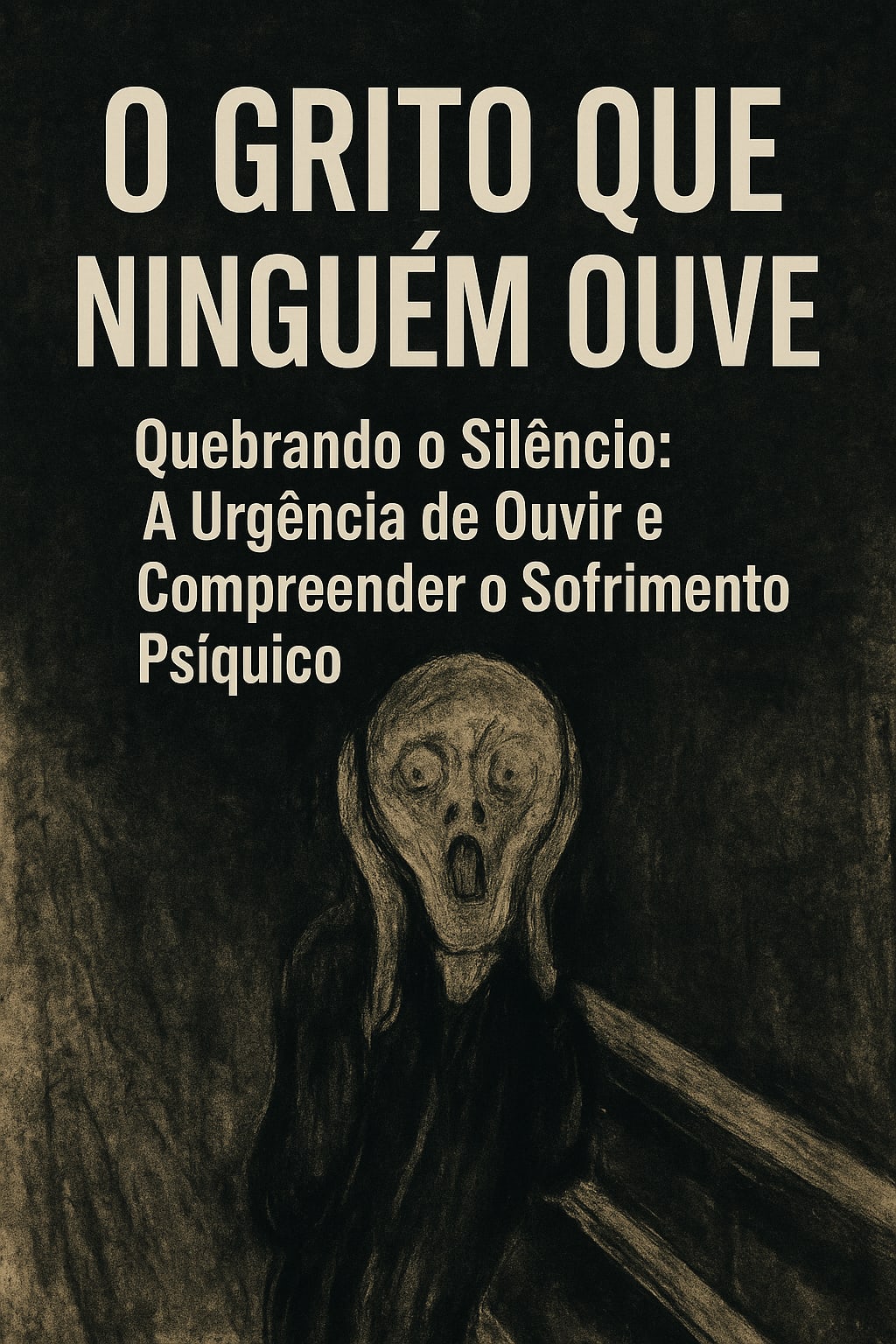
Abstract:
This article proposes a reflection on suicide based on statistical data, sociocultural analysis, and the observation of the silent signs emitted by people in psychic suffering. Although the alarming numbers are widely known, society still maintains negligent attitudes toward mental pain. The goal is to discuss how emotional invisibility and the trivialization of depression contribute to the continuation of a phenomenon that, in many cases, could be prevented. The analysis is based on data from the World Health Organization (WHO), studies in social psychology, and media reports about public figures who have revealed their own vulnerabilities. It concludes that there is an urgent need to change paradigms regarding mental health, fostering empathy, active listening, and welcoming attitudes.
Keywords: suicide, depression, psychic suffering, mental health, society
1. Introduction
Suicide is a reality that challenges human understanding, both individually and collectively. In Brazil, according to data from the World Health Organization (2023), about 38 people take their own lives every day. Although this figure is alarming, it has not triggered significant changes in social attitudes toward mental suffering. This article seeks to reflect on the possible causes of indifference to the pain of others, as well as the silent manifestations that precede suicidal acts.
2. The Invisibility of Psychic Pain
Psychic suffering rarely presents itself explicitly. In many cases, it is revealed through subtle signs: a sudden change in behavior, a timid request for company, or simple questions like "Do you have time to talk?" However, these signs tend to be ignored or underestimated.
The culture of performance and productivity often devalues feelings of sadness, exhaustion, and loneliness. Depression, for instance, is still seen by many as a lack of willpower or mere "weakness." According to Birman (1999), we live in an era where subjective suffering has lost social legitimacy, becoming invisible even to those closest to the suffering individual.
3. Suicide and Social Representations
The way society interprets suicide directly influences the possibilities for prevention. Prejudice, stigma, and silence surrounding the subject generate isolation, which further worsens the situation of those suffering. As Shneidman (1996) explains, suicide rarely expresses a genuine desire to die — but rather a desperate attempt to escape pain considered unbearable.
Social responses often vary according to the visibility of the person. When a public figure such as comedian Whindersson Nunes or Father Fábio de Melo reveals emotional struggles, there is public empathy and commotion. However, when the suffering comes from an ordinary citizen, judgment often prevails: "lack of work," "drama," "weakness." This reaction reveals the selectivity of our social sensitivity.
4. The Urgency of Listening
Preventing suicide requires more than temporary awareness campaigns. It is necessary to develop active, empathetic listening free of judgment. As proposed by Freire (2000), listening is an act of love and a recognition of the other as a subject. When someone says "let’s go out today?" or "can you listen to me?", they may actually be pleading for a connection that can save them from profound loneliness.
It is important to emphasize that suicide is not a sudden or simple decision. It is generally the result of a prolonged process of suffering and silencing. Society’s responsibility, therefore, is to create spaces of acceptance, where dialogue about mental health is legitimate, accessible, and ongoing.
5. Final Considerations
This article aimed to shed light on the silent screams that precede suicide, as well as the social failures to recognize them. The data is clear, but attitude change remains slow. The challenge lies in overcoming prejudice, understanding that mental disorders are serious illnesses, and developing more humane and inclusive social practices.
Talking about suicide does not encourage the act — on the contrary, it promotes awareness and opens paths for prevention. Listening to others, respecting their pain, and taking their signs seriously can make the difference between life and death.
References
Birman, J. (1999). Mal-estar na atualidade: A psicanálise e as novas formas de subjetivação. Rio de Janeiro: Civilização Brasileira.
Freire, P. (2000). Pedagogia da autonomia: Saberes necessários à prática educativa. São Paulo: Paz e Terra.
World Health Organization – WHO. (2023). Suicide worldwide in 2023: global health estimates.
Shneidman, E. (1996). The Suicidal Mind. New York: Oxford University Press.
Werlang, B. S. G., & Botega, N. J. (2004). Comportamento suicida: fatores de risco, avaliação e manejo. Porto Alegre: Artmed.
About the Creator
Keep reading
More stories from writers in Psyche and other communities.
The Power of Positive Thinking
How are you doing? How is life treating you at the moment? Life doesn't need to crash completely for you to feel "down on your luck." A failed promotion, or work project that didn't go as planned, or a missed opportunity can set you back months.
By Elizabeth Woodsa day ago in Psyche
Autonomy Is The Real Privilege
Good morning, freedom-seekers! Today we’re gonna be looking at autonomy. A strange word, I know; one many would probably look at blankly and run away from on sight. We’re gonna figure out what it actually means, consider how it’s achieved, and decipher just how deeply most of us are tangled up in dependence without realising it.
By That ‘Freedom’ Guy3 days ago in Humans




Comments
There are no comments for this story
Be the first to respond and start the conversation.