
The Sad, Solitary ... Savant?
Why Serious Artist’s Must Take Their Journey Alone


Foreword: This article is one discussing mental health and that of artists specifically. These are simply my thoughts on the topic. If you struggle with mental health in a serious way and/or need help finding crisis resources please consider reaching out to a professional or a loved one for help. There is no shame in doing so.
Suicide Hotline: 800-273-8255
. . .
I need to be motivated when I workout. Much of the inherent motivation I have when I open my eyes is spent dragging myself out of bed at 4am and driving to the gym. By the time I pull into the parking lot I need a little more. The additional motivation can come from different places and in different forms. Some days I recognize that I’m a bit dense and need very direct inspiration. This will lead me to put on something to the tune of a “Power Workout” Spotify playlist. Other days my brain will decide to function earlier in the day and I’ll listen to a podcast or two discussing productivity or success in some way, shape, or form. Such was the case this week as I began my weekly routine Monday morning.
For this specific day I’d chosen a podcast from filmmaker Matt D’Avella, “The Ground Up Show”. In the specific episode I turned on, Matt and his guest discussed the fact that many of the greatest artists in history were also some of the most depressed and mentally ill. Some of the most notable of these include Vincent van Gogh, Ludwig van Beethoven, and the list goes on. Now this point begs many questions. Certainly, many of us on this forum view ourselves as artists in various ways and I imagine the majority of us desire to be ”successful” in whatever such way we choose to define that term. So, does that mean we should all seek to embark on our individual artistic journeys in reflective solitude with a bottle of whiskey by our side? I say yes.
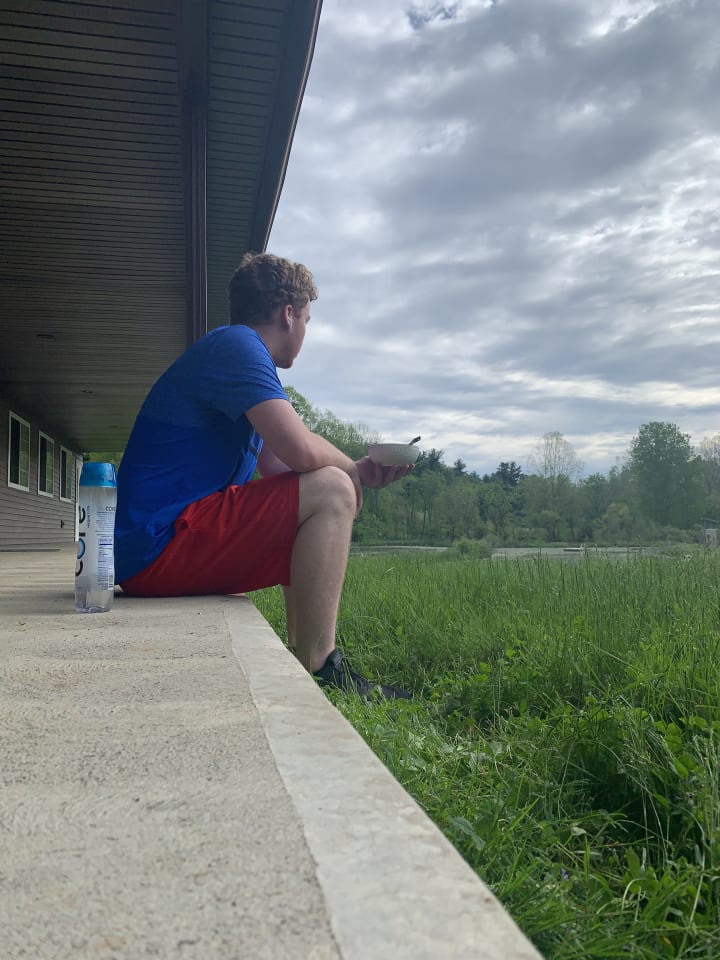
Ok ok, you can keep the harmful substance out of it. It was for imaginary aesthetic purposes anyway, but hear me out on the reflective solitude thing. What do we know about artistry and what it takes to create art that is impactful? It requires emotion doesn’t it? It requires honesty, bluntness, and real experiences. Have you ever heard of an artistic project that became successful despite coming from a place devoid of honest emotion? Art requires confrontation with reality. Not only that but it requires us to confront our own difficult and complicated experiences to such an extent that we can communicate them to others through our art. If this is true, then can we really be artists and remain ignorant to difficult existential questions? Artists simply have a burden of confrontation.
Everybody has demons, everybody has struggles and challenges they face on a daily basis, however, the businessman, the accountant, the insurance salesman, and the judge can all simply cope with their trials until they pass. For the record, I do not say that in a way to diminish or dismiss the problems such professionals deal with, I just argue that they are able to deal with their tribulations differently than we, as artists, do. I’d argue that we do not have the luxury to simply cope with the things that challenge us mentally and emotionally, we must confront them. There’s that word again! Think about it, your average person not pursuing an artistic career is able to spend their work hours focusing outward. That may be focus on other people, marketing strategies, court cases, or someone’s tax returns. Us artists, however, begin our work by diving even deeper into those thoughts in order to create work that is real and relateable. We do not have the luxury of being able to drown out difficult questions with trivial details, however unhealthy and futile that may be.
“But David, to be a successful artist you must also create work that is relatable and so you can’t just be a hermit!” Individuality is something that is inherent to the artistic pursuit. This I recognize. Each artist is different and has a unique process. Many artists are very social creatures, thriving in social interaction while others of us are quiet, reserved hermits as the stereotype calls for and others reside everywhere in between. However, no matter your place on this spectrum, if you are truthful as an artist, you must take at least a portion of your journey alone. You must have your solitude to reflect, whether if for you that requires physical solitude or not, you must have it. This is what I argue and what, I believe, is at least part of the reason we see this trend in great artists.
With that being said, I wish to say this as a closing note. I do not wish to paint our own brains and thoughts as our enemy. In no way are mental health challenges a requirement of being a successful artist. In fact, being healthy mentally and emotionally requires confrontation of your challenges and existential questions no matter what your occupation happens to be. However, I fear that this is very rare in society today which results in this trend we see with great artists. I do personally consider myself an artist, a writer and an actor to be more specific, and I deal with anxiety. I am a mental health advocate and would love to hear your thoughts on this topic as well.
About the Creator
David Arvidson
Just your common creative sharing my portion to share.
A creative born to a family of academics trying to make his way as an actor and a writer (And part-time barista)!
I’d love to share my journey with you for however long you’re here for.
Keep reading
More stories from writers in Psyche and other communities.
Wild Card Weekend Recap: What Happens Now?
I think I figured out why I love Wild Card Weekend so much. It's because it's the first playoff anything of the calendar year. The NFL season starts in the fall, and once upon a time, the champion was crowned either on or slightly before New Year's. The evolution of the NFL schedule has resulted in the playoffs starting just into the New Year, and currently, the final week of the season falls on the first weekend of the New Year, with Wild Card Weekend coming a week after that. So yes, chronologically, the NFL's Wild Card Weekend serves as the first playoff anything of the calendar year.
By Clyde E. Dawkins6 days ago in Unbalanced




Comments
There are no comments for this story
Be the first to respond and start the conversation.