
The Quiet People Are Always Observing
A psychological story about introverts noticing things others miss.
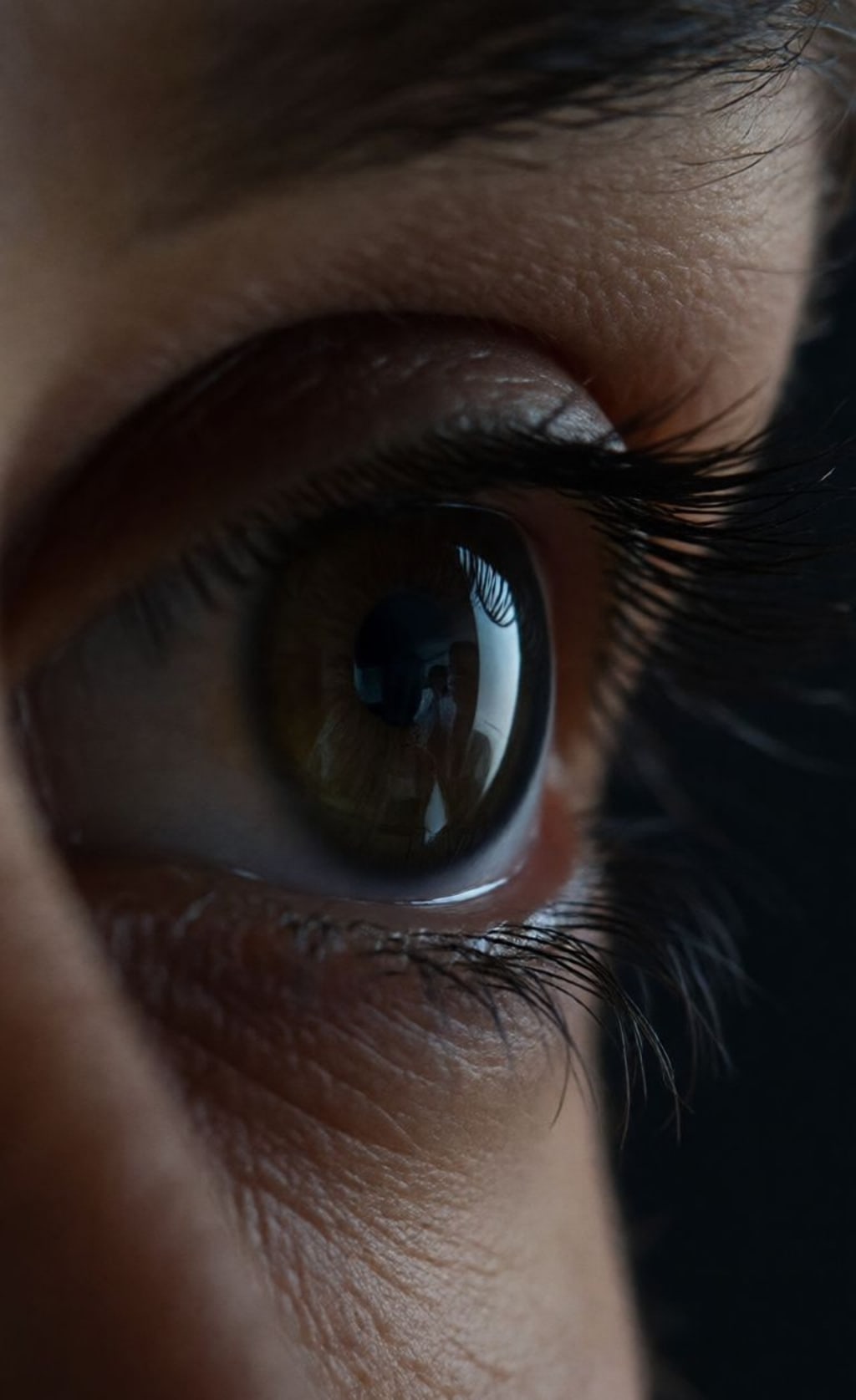
The Quiet People Are Always Observing
People often misunderstand quiet people.
They assume silence means emptiness. They think a person who speaks less must have fewer thoughts, fewer opinions, or less confidence. In loud rooms, the quiet ones are easy to overlook. They sit slightly back from the center of the conversation, listening while others fill the air with stories, arguments, and laughter.
But what most people don’t realize is that quiet does not mean unaware.
Quiet often means observing.
I used to think there was something wrong with me because I wasn’t the loudest person in the room. In school, the confident students were the ones who raised their hands first, spoke quickly, and seemed comfortable sharing every thought that crossed their minds. Teachers praised participation. Friends admired charisma.
Meanwhile, I often found myself listening more than speaking.
At first, it felt like a weakness.
I wondered why my mind worked differently. While others talked freely, I was usually watching the details — the small pauses in conversation, the slight change in someone’s tone, the way a smile didn’t quite reach someone’s eyes.
Over time, I began to realize something strange.
The quieter I was, the more I noticed.
People reveal a lot when they believe no one is paying attention.
The friend who laughs loudly at every joke but becomes silent when the conversation shifts to their own life. The coworker who speaks confidently in meetings but nervously taps their fingers when someone questions them. The person who says “I’m fine” while their voice carries a quiet heaviness.
These details rarely appear in loud conversations.
They appear in the spaces between them.
Quiet people tend to live in those spaces.
While others focus on what they want to say next, observers focus on what is actually happening.
They notice patterns in behavior. They sense tension before anyone mentions it. They understand emotions that people try to hide behind casual words.
It’s not a special power.
It’s simply what happens when someone spends more time listening than speaking.
At some point, I began to understand that silence had given me something valuable.
Perspective.
When you are not constantly trying to control a conversation, you begin to see it more clearly. You notice who interrupts others. You notice who encourages people to speak. You notice who listens, and who only waits for their turn to talk.
You begin to understand people in a different way.
Loud personalities often dominate attention, but quiet observation reveals character.
Some of the most revealing moments in life are incredibly subtle.
A quick glance between two people.
A long pause before answering a simple question.
A nervous laugh that hides discomfort.
These small signals say more than long speeches ever could.
Of course, being observant has its challenges too.
Sometimes you see things others miss — tensions in relationships, hidden insecurities, or unspoken conflicts. You may notice when someone’s confidence is fragile even though everyone else believes they are strong.
And once you see these things, you can’t easily ignore them.
Observation creates understanding, but it can also create loneliness.
When you understand people deeply, you sometimes realize how rarely people understand each other.
But there is also something quietly beautiful about it.
Observant people often become the ones others trust most. Because when they finally speak, their words carry weight. They are not speaking simply to fill silence; they are speaking because they have truly considered what they want to say.
And people can feel that difference.
Quiet people may not lead every conversation, but they often understand the room better than anyone else.
They know when someone is uncomfortable. They notice when someone feels excluded. They recognize when someone is pretending to be okay.
Because they have been watching.
In a world that celebrates constant noise and endless opinions, silence can seem invisible.
But silence is not empty.
Silence is where awareness grows.
Some of the most thoughtful people in the world are not the ones who speak the most — they are the ones who observe carefully, think deeply, and choose their words with intention.
The truth is, quiet people are rarely disengaged from what is happening around them.
If anything, they are often the most present people in the room.
They see the things others miss.
They hear the meaning hidden behind casual words.
And while the world may overlook them at first, the quiet observers often understand far more than anyone expects.
So the next time you notice someone sitting quietly during a conversation, don’t assume they have nothing to say.
They may simply be watching the story unfold.
And chances are, they understand it better than anyone else.
About the Creator
Keep reading
More stories from Faizan Malik and writers in Psyche and other communities.
I Tried to Become the Perfect Person — It Destroyed Me
I Tried to Become the Perfect Person — It Destroyed Me For most of my life, I believed that if I could just become perfect, everything would finally fall into place. People would admire me. Opportunities would appear. I would feel proud of who I was. And most importantly, I thought I would finally feel enough. That belief quietly shaped almost every decision I made. It started small, the way these things usually do. As a child, I learned very quickly that praise came when I did things right. Good grades meant smiles from teachers. Being polite meant approval from adults. Staying quiet and responsible meant I was called “mature for my age.” At first, it felt good. Being the “good one” made life easier. But over time, something changed. I stopped doing things because I enjoyed them. I started doing them because they made me look good. I studied harder than everyone else, not because I loved learning, but because failure felt unbearable. I carefully chose my words in conversations so I wouldn’t sound foolish. I avoided risks because mistakes were embarrassing, and embarrassment felt like proof that I wasn’t good enough. Slowly, my life became less about living and more about maintaining an image. The image of the perfect person. From the outside, things looked fine. Maybe even impressive. I was responsible. Organized. Reliable. The person people trusted. The person teachers praised. The person friends came to for advice. But inside, something felt wrong. Every success came with relief rather than happiness. I wasn’t proud of my achievements. I was simply relieved that I hadn’t failed. And every mistake felt enormous. A small error could ruin my entire day. A bad grade, a misunderstanding, a moment where I said the wrong thing — these moments stayed in my mind for weeks. I replayed them endlessly, wondering how a “perfect” person could have messed up. The strange thing about perfection is that the closer you try to get to it, the more impossible it becomes. Because perfection doesn’t have a finish line. There is always another flaw to fix. Another skill to master. Another expectation to meet. I kept raising the standard for myself. If I succeeded once, the next time had to be even better. If someone praised me, I had to prove they were right. If someone doubted me, I had to prove them wrong. There was never a moment where I could simply exist and feel satisfied. Eventually, the pressure started to crack something inside me. I became exhausted in a way sleep couldn’t fix. Not physical exhaustion — emotional exhaustion. The kind that makes even simple tasks feel heavy. I remember one night sitting alone, staring at my desk, surrounded by unfinished work. My mind was full of thoughts about everything I hadn’t done perfectly. And suddenly, I realized something terrifying. I didn’t know who I was anymore. I knew the version of myself that performed well. The version that impressed people. The version that avoided mistakes. But the real person underneath all of that? I had no idea. For years, I had been building a person that looked perfect on the outside, while quietly ignoring what I actually felt, wanted, or needed. The realization hit me like a quiet collapse. I had spent so much energy trying to become the ideal version of myself that I had forgotten how to be human. And humans are not perfect. We make mistakes. We change our minds. We fail. We learn slowly. Sometimes we disappoint people. Sometimes we disappoint ourselves. For a long time, I thought those things were weaknesses. Now I understand they are simply part of being alive. The day I stopped trying to be perfect wasn’t dramatic. There was no sudden transformation, no inspirational moment where everything changed. It was smaller than that. I allowed myself to fail at something and didn’t punish myself for it. I spoke honestly even when I worried someone might disagree. I rested without feeling like I had to earn it. At first, it felt uncomfortable — almost wrong. Perfection had been my identity for so long that letting go of it felt like losing control. But slowly, something unexpected happened. Life became lighter. I laughed more easily. I felt less afraid of trying new things. Conversations became more genuine because I wasn’t constantly editing myself. I also started noticing something surprising about other people. No one was actually expecting perfection. Most people were just trying to figure things out, just like I was. The pressure I had lived under for years wasn’t coming from the world as much as it was coming from inside my own mind. That realization changed everything. I’m still learning how to live without chasing perfection. Some days the old habits return. I still feel the urge to prove myself, to control every outcome, to avoid every possible mistake. But now I recognize those thoughts for what they are — echoes of an old belief. A belief that said my worth depended on how flawless I could appear. It took me years to understand that perfection isn’t strength. In many ways, it’s fear disguised as ambition. The fear of rejection. The fear of failure. The fear of not being enough. Ironically, the moment I stopped trying to be perfect was the moment I started becoming more real. And for the first time in a long time, that felt like enough.Start writing...
By Faizan Malikabout 11 hours ago in Lifehack
Top tipple tricks
Been thinking a lot about drinking, lately. Not least because of a recent episode of over-indulgence and the inevitable after effects. Some readers may recall the earlier articles I wrote about beating the booze. Here I set out an experiment in techniques for cutting down on my alcohol intake. The experiment was successful, the techniques worked, and I have armed myself with an arsenal of weapons in the war against the demon drink. I have yet to fire the first round however. It's all a question of timing (perhaps procrastination).
By Raymond G. Taylor3 days ago in Psyche




Comments
There are no comments for this story
Be the first to respond and start the conversation.