
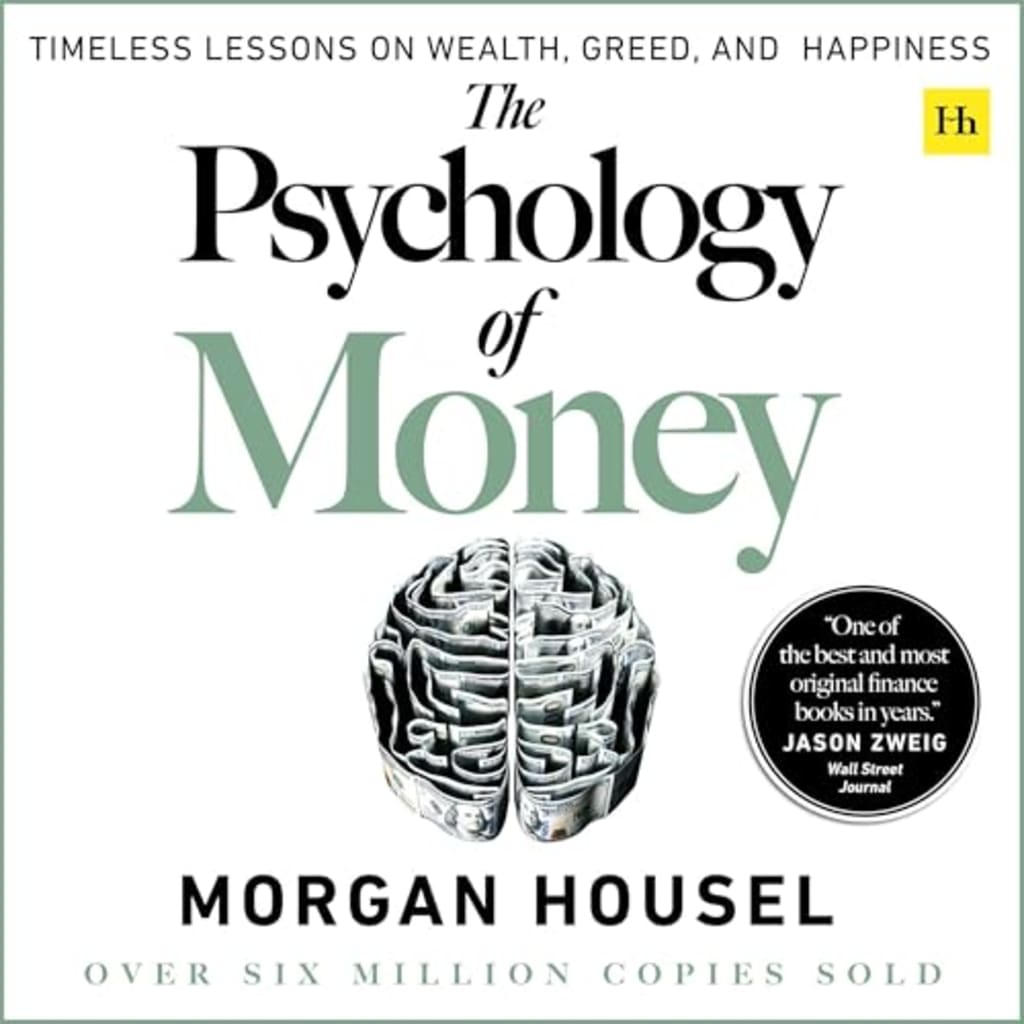
The Psychology of Money
By Morgan Housel
Money has always been a topic of fascination, fear, and frustration. We obsess over earning it, saving it, investing it, and sometimes, losing it. Yet, the psychology behind how we perceive, manage, and relate to money often remains overlooked. Morgan Housel’s The Psychology of Money takes a refreshing dive into this overlooked aspect. The audiobook, narrated by Chris Hill, brings the concepts to life with clarity, nuance, and an engaging tone that makes you rethink your financial decisions and philosophies.
Click below to get 30 days free trial!
---
Overview
Housel’s central argument is straightforward: Managing money isn’t purely about knowledge or mathematical ability; it’s largely about behavior. Personal experiences, emotions, and social influences often dictate our financial decisions more than spreadsheets or data ever could. Through 20 short and impactful chapters, the book covers various psychological principles, anecdotes, and lessons about wealth, greed, happiness, and the unpredictability of life.
The audiobook format particularly enhances the accessibility of the content. Chris Hill’s narration is calm, deliberate, and conversational, making the heavy topics feel digestible even for listeners new to financial psychology. Each chapter feels like a personal conversation, with relatable examples and stories, rather than a dry lecture on finance.
Key Themes and Insights
1. Money is Personal, Not Logical
Housel opens with a striking observation: “Your financial decisions are not about spreadsheets, they’re about your story.” This sets the tone for the entire book. He argues that how you manage money is shaped by your upbringing, life experiences, and worldview. For instance, someone who grew up during a recession might be risk-averse, while someone raised during an economic boom might be more inclined to take financial risks.
Hill’s narration drives this point home with a mix of empathy and authority, making you reflect on your own financial biases. The audiobook encourages self-awareness, urging you to evaluate how your personal history affects your money habits.
Click below to get 30 days free trial!
2. The Role of Luck and Risk
One of the most thought-provoking chapters discusses the delicate interplay of luck and risk. Housel uses the stories of Bill Gates and his high school friend Kent Evans to illustrate how luck can influence outcomes. Gates, fortunate to attend a high school with access to a computer lab in the 1960s, went on to create Microsoft. Evans, equally brilliant, tragically passed away in a mountaineering accident.
Housel’s takeaway? Success isn’t entirely earned, and failure isn’t entirely deserved. The audiobook’s narration captures the emotional weight of these examples, reminding us to stay humble in success and compassionate in failure. This perspective is a much-needed antidote to the self-congratulatory narratives often found in personal finance.
3. The Power of Compounding
Compounding is a well-worn concept in finance, but Housel’s storytelling breathes new life into it. He recounts the story of Warren Buffett, emphasizing how much of Buffett’s wealth came not from his investing skill alone but from starting early and staying consistent. By age 30, Buffett had amassed $1 million; by his 90s, his net worth exceeded $100 billion.
The audiobook format works well here because Hill’s steady narration reinforces the slow and steady nature of compounding. It’s a subtle nudge to think long-term, not just in investing but in relationships, habits, and personal growth.
4. Wealth vs. Rich
Housel makes a sharp distinction between being wealthy and being rich. Rich people might have flashy cars or designer clothes, but wealth is what you don’t see—savings, investments, and financial freedom. “Wealth is the ability to wake up one morning and say, ‘I don’t have to do this anymore.’”
Housel’s straightforward language, paired with Hill’s earnest delivery, makes this concept hit hard. The audiobook prompts you to question whether your financial goals are driven by genuine needs or the desire to impress others.
5. The Seduction of Greed
One of the book’s most memorable lessons is about the dangers of greed. Housel explains how even the wealthiest people can fall prey to the endless chase for more, often leading to disastrous outcomes. The story of Rajat Gupta, a former CEO of McKinsey, serves as a cautionary tale. Despite achieving immense success, Gupta couldn’t resist the lure of insider trading, which ultimately landed him in prison.
Through Hill’s narration, you can almost feel the tragedy of Gupta’s story—a reminder that knowing when to stop is one of the most valuable skills in managing money.
6. Happiness and Money
Housel also delves into the elusive connection between money and happiness. While money can buy comfort and reduce stress, it doesn’t guarantee lasting happiness. He argues that freedom and control over your time are far more valuable. The audiobook’s conversational tone makes this point feel especially relatable. It’s less about lofty ideals and more about practical wisdom: Are your financial choices giving you more freedom or tying you down?
Strengths of the Audiobook
1. Relatability
The use of anecdotes, both historical and contemporary, makes the book relatable and engaging. From the frugality of Ronald Read (a janitor who amassed millions) to the recklessness of lottery winners, Housel illustrates his points with real-life examples. In the audiobook, these stories come alive, thanks to Chris Hill’s dynamic narration.
2. Conciseness
Each chapter is concise, rarely exceeding 10-15 minutes. This structure works particularly well for audio listeners who may consume the book in chunks. The brevity ensures that the core message of each chapter is clear and impactful.
3. Universal Appeal
The book doesn’t require prior financial knowledge, making it accessible to a broad audience. Whether you’re a student, a seasoned investor, or someone just trying to get a handle on their budget, there’s something here for you. The audiobook’s engaging narration enhances this accessibility, making complex ideas feel simple and intuitive.
Click below to get 30 days free trial!
Critiques
1. Repetition
While the book’s key themes are powerful, they can feel repetitive at times. Concepts like compounding, humility, and behavioral biases are revisited frequently, which might test the patience of some listeners. However, Hill’s narration does a good job of keeping the content engaging, even during these moments.
2. Lack of Depth in Some Areas
Given its focus on behavior, the book doesn’t dive deeply into practical financial strategies like budgeting, investing, or debt management. Some listeners might find this frustrating if they’re looking for actionable advice. Instead, the audiobook serves as a philosophical guide—a starting point for rethinking your approach to money.
---
Key Takeaways for Listeners
1. Invest in Behavior, Not Just Knowledge: Financial success isn’t about knowing everything; it’s about managing your emotions, expectations, and decisions.
2. Think Long-Term: Whether it’s saving, investing, or building habits, patience and consistency are your greatest allies.
3. Focus on Freedom: True wealth is about having control over your time and life—not about impressing others.
4. Respect the Role of Luck: Success is often a mix of skill, timing, and luck. Stay humble and avoid judging others too harshly.
5. Know When Enough is Enough: Understanding your limits can prevent financial and emotional disasters.
---
Click below to get 30 days free trial!
Final Verdict
Morgan Housel’s The Psychology of Money is a masterpiece in understanding the human side of finance. The audiobook, with Chris Hill’s excellent narration, transforms complex psychological and financial concepts into digestible, relatable lessons. It’s not a “how-to” manual for getting rich but a thought-provoking exploration of why we make the financial choices we do—and how to make better ones.
For anyone looking to rethink their relationship with money, this audiobook is a must-listen. It challenges conventional wisdom, emphasizes the importance of humility, and offers timeless advice that extends far beyond finances. Whether you’re commuting, exercising, or relaxing at home, The Psychology of Money in audiobook form is an enlightening and rewarding experience.
About the Creator
Keep reading
More stories from Dhanaraj Brahma and writers in Psyche and other communities.
It Ends With Us
It Ends with Us Audiobook by Colleen Hoover Colleen Hoover’s It Ends with Us is an emotional rollercoaster, and listening to its audiobook brings a unique layer of intimacy to the already powerful narrative. The audiobook format not only amplifies the raw emotions of the story but also immerses the listener in a way that feels deeply personal. Narrated by Olivia Song, the audiobook captures the nuances of Hoover’s writing, making it a memorable experience for those who prefer their stories brought to life through sound.
By Dhanaraj Brahmaabout a year ago in Fiction
From Failure to Momentum: My First Business Journey
From Failure to Momentum: My First Business Journey I am writing this as myself, and I am allowing it to be honest. When people talk about success in business, they often compress the story. They talk about the result, the numbers, the confidence they gained after things worked. What they rarely describe is the long stretch of confusion, doubt, and quiet fear that comes before anything looks like success.
By Ahmed aldeabella2 days ago in Psyche
So You Decided To Become a Nurse Practitioner:
So you decided to become an "Advanced Practice" nurse. Congratulations!... is what I would say if this was a good idea. Grad school? In this economy? What were you thinking? Likely it was something along the lines of either 1) “I've seen these other chucklefucks do it— Why can't I?” or even 2) “I've got a nice career, I should shake it up. I miss feeling like I have no clue what I'm doing.”
By Sandor Szabo8 days ago in Fiction


Comments
There are no comments for this story
Be the first to respond and start the conversation.