
The Language I Learned in Silence
On being misunderstood, introspection, and finding my own voice

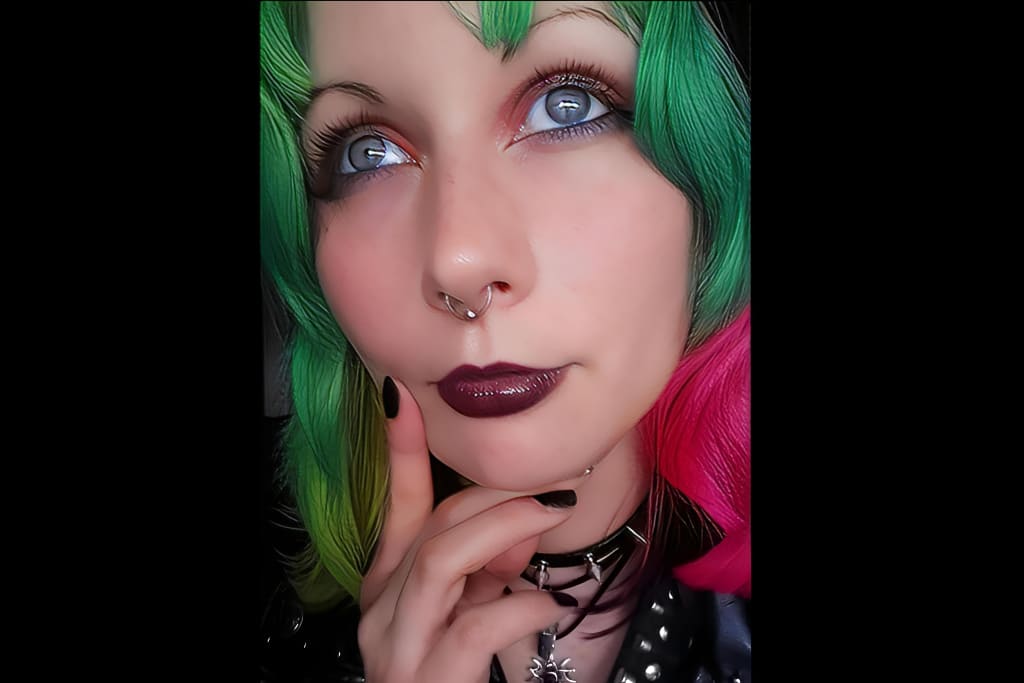
I’ve always seen the world differently, and I’ve spent most of my life trying to translate my thoughts, only to be misunderstood.
As a child, I learned quickly that the way I spoke, felt, and observed didn’t always land the way I intended. My inner world was rich, layered, and emotionally precise, yet the words at my disposal often felt clumsy by comparison. I could feel meaning deeply, but explaining it out loud felt like trying to pour an ocean through a straw.
Introspection became my anchor in a world full of noise and projections. When the outside felt overwhelming or unkind, I turned inward not to disappear, but to listen. I learned to sit with my thoughts, to trace emotions back to their roots, to understand myself before asking the world to do the same.
The way I process, feel, and create isn’t a flaw; it’s how I understand others, how I comfort, how I survive. Sensitivity sharpened my perception. Creativity gave shape to feelings that refused to stay silent.
Observation became a quiet form of intelligence, one that didn’t always earn praise but always told the truth.
But here’s the truth I rarely say out loud:
I use my art and writing as a kind of emotional armor.
Not because I’m hiding —
but because my page always understands.
It never minimizes.
It never twists my meaning.
It never asks me to simplify myself for convenience.
On the page, my thoughts are allowed to be nuanced. My emotions are permitted to exist without explanation. Art holds space for contradictions, strength and softness, grief and wonder, rebellion and gentleness — all at once.
It speaks my emotional language even when the world doesn’t.
Over time, I realized how often I had been shrinking myself to be more easily understood. How frequently I softened my edges, edited my truth, or stayed quiet to keep the peace. Misunderstanding teaches you to doubt yourself, not because you’re wrong, but because clarity feels safer than authenticity in the wrong hands.
The more healing I’ve done, the more I realized I was never broken.
I was simply surrounded by people who couldn’t hear me clearly —
people who didn’t speak the emotional dialect my heart has always been fluent in.
That doesn’t make them bad…
but it does make you feel painfully alone in a room full of people.
Loneliness, I’ve learned, isn’t always about being physically alone. Sometimes it’s about being unseen. About speaking sincerely and realizing your words land somewhere shallow, when they were born from depth.
Now, I’m learning to take up space instead of shrinking myself to be digestible for those determined to misunderstand me. I’m learning that clarity doesn’t require dilution, and that authenticity doesn’t need permission.
There’s a quiet grief that comes with realizing how long you’ve been translating yourself for others.
How many versions of you existed to make communication easier, smoother, and less uncomfortable for the people around you?
I didn’t always notice I was doing it; it felt like kindness, like adaptability, like love.
But over time, I began to understand the cost.
Every time I softened my truth, a small part of me learned to stay silent. Every time I explained myself away, I taught my voice that it needed permission to exist. Art became the place where that silence loosened its grip, where I could finally speak without interruption, without defense, without apology.
In creating, I found a language that didn’t require translation.
The strongest armor you can wear is being comfortable with yourself.
Being genuine.
Being honest.
Being you.
It’s okay to be different —
that’s what makes you beautiful, interesting,
and unmistakably real.
☾⋆。°✩🦇✩°。⋆☽
About the Creator
Alicia Melnick
Writer & visual artist exploring emotional truth, creativity, and the long work of breaking inherited patterns. Essays and prose exploring resilience, identity, and carrying light forward.
📜 writing | 🎨 art → @spookywhimsy
Keep reading
More stories from Alicia Melnick and writers in Psyche and other communities.
Different, Not Better
My sister used to make comments about how I dressed, how I did my makeup, and how I colored my hair. She said I was trying to look different, not better. From her perspective, ‘appearance was a hierarchy, something measured by how closely you matched what others admired, what drew approval, what signaled success or desirability.’ Looking “better” meant aligning with those expectations.
By Alicia Melnick about a month ago in Psyche
Evaluating and Managing Structural Heart Disease
Hypertrophic cardiomyopathy (HCM) is one of the most common inherited structural heart diseases and is characterized by abnormal thickening of the heart muscle, particularly the left ventricle. This thickening can make it harder for the heart to pump blood effectively and, in some cases, can obstruct blood flow leaving the heart. Structural heart diseases more broadly refer to abnormalities in the heart’s anatomy, including defects in the heart muscle, valves, chambers, or septum. In addition to hypertrophic cardiomyopathy, other structural heart diseases include dilated cardiomyopathy, restrictive cardiomyopathy, arrhythmogenic right ventricular cardiomyopathy, congenital heart defects, and valvular heart disease. These conditions may be inherited or acquired and can vary widely in severity, ranging from mild forms that cause few symptoms to more serious disorders associated with heart failure or sudden cardiac death.
By Nishi Patel2 days ago in Psyche




Comments
There are no comments for this story
Be the first to respond and start the conversation.