
The Internet Quietly Rewired Your Brain — And You Didn’t Notice Until Now
Why your attention span, empathy, and ambition feel different (and what to do before it hardens into your new personality)


You probably feel it already.
You’re more “plugged in” than ever, yet somehow less present in your own life.
You scroll, you refresh, you consume—and then wonder why you feel empty afterward.
That emptiness is not random. It’s a design outcome.
Over the past decade, the internet didn’t just change what you *see* online.
It changed what you *expect* from yourself, other people, and reality itself.
This isn’t a “phones are bad” rant.
It’s a closer look at three quiet psychological shifts the online world has pushed into your offline mind—and how to reverse them before they solidify into who you become.
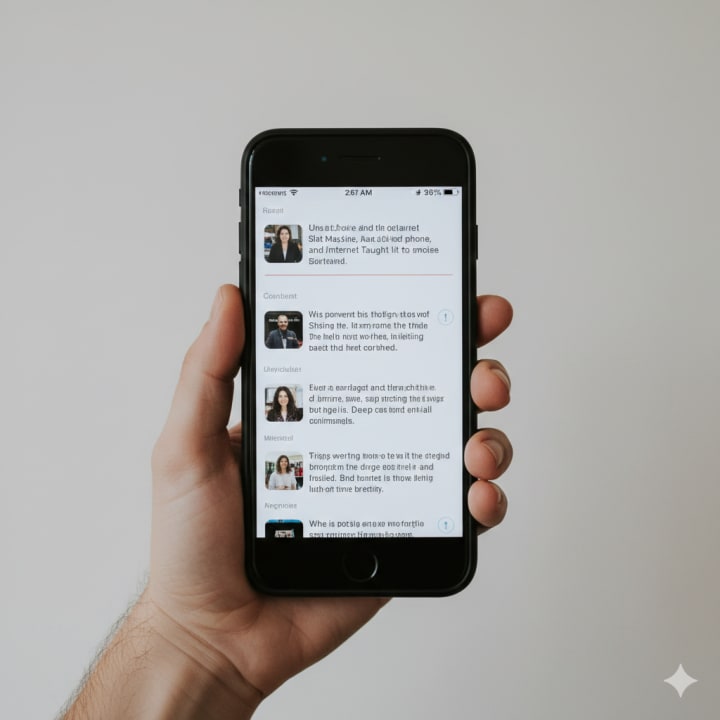
## 1. From Attention Span To Notification Brain
Remember when you could read an article without checking your phone twice in one paragraph?
Most people now don’t lose focus because they’re “undisciplined.”
They lose focus because their brain has been trained to hunt for micro-rewards every few seconds.
- Every ping, like, or new tab is a tiny shot of novelty.
- Your brain learns: “Stillness = boredom. Stimulation = safety and pleasure.”
- Long, deep work starts to *feel* wrong, even when you logically know it matters.
The subtle danger:
Your life decisions start matching the rhythm of your feed.
You abandon projects that don’t pay off in a week.
You skim relationships the way you skim timelines—fast, distracted, always half-expecting a better notification.
If you’ve noticed:
- You can’t finish a movie without grabbing your phone
- You “save” long reads and never come back
- You feel anxious when nothing is “happening” online
…that’s not a personal failure. That’s conditioning.
The fix isn’t to delete the internet.
It’s to **rebuild your tolerance for boredom**—because boredom is where depth, ideas, and actual self-respect are born.
Try this:
- One “offline block” daily: 25 minutes, no notifications, doing one single task.
- A “slow hobby” that has no app: cooking, journaling, learning an instrument.
- Let yourself be terrible at it. The point is the *slowness*, not performance.
Your brain won’t like it at first.
That’s exactly how you know it’s working.
## 2. From Real People To Monetized Characters
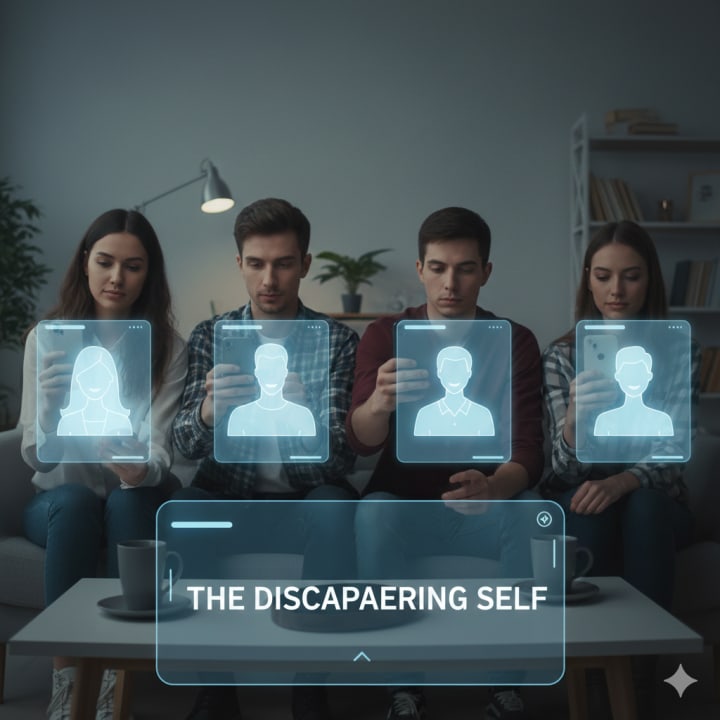
Online, almost nobody is just themselves.
They are a *version* of themselves—optimized for claps, likes, shares, and brand safety.
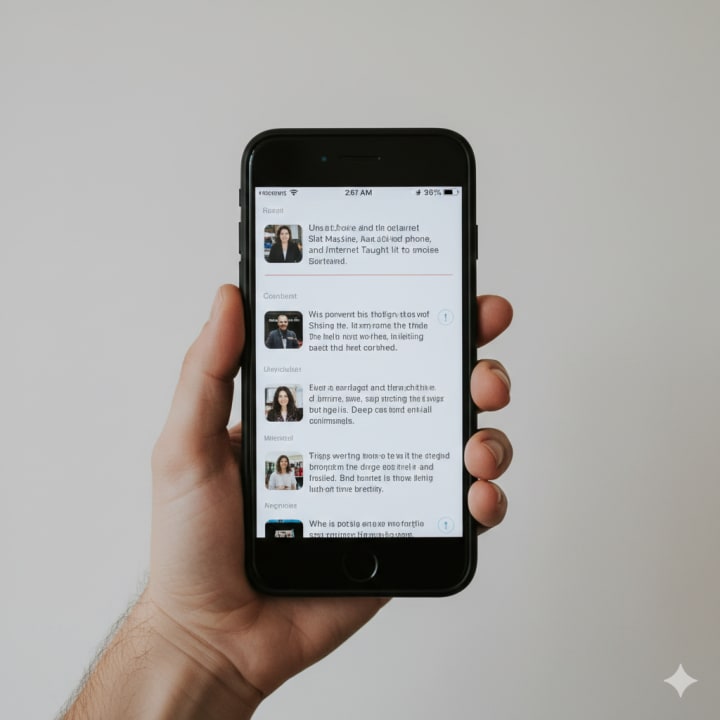
You see:
- The friend who becomes “That Productivity Guy”
- The creator who turns every life event into a thread
- The couple who seems perfect, right up until the breakup announcement carousel
Whether you post or not, your brain absorbs a distorted rule:
“If it doesn’t look good, it shouldn’t exist.”
So you start:
- Editing your personality in real time during conversations
- Hiding pain because it’s “off-brand” for the identity you’ve built
- Sharing only what will be validated—never what is unresolved
Here’s the twist:
Even if you hardly post, you might still be living as a “character” in your own head.
Ask yourself:
- Do you replay moments thinking, “How did that *look*?” instead of “How did that *feel*?”
- Do you choose experiences because they’re meaningful—or because they’re *postable*?
- Do you feel pressure to “have a take” on everything, even when you’re exhausted?
This is where empathy erodes.
People become content. Their pain becomes “relatable material.” Your own becomes “an angle.”
To reverse this, you need private spaces where nothing is optimized:
- A conversation where you tell the truth and never mention it online
- A personal journal entry you’ll never “repackage” as content
- A day where your only goal is to experience, not document
The internet turns everything into a performance.
Your job is to protect at least one part of your life from the audience.
***
## 3. From Ambition To Performative Hustle
The internet loves extremes:
“Grind 18 hours a day” on one side; “Do nothing, the system is rigged” on the other.
Caught between those narratives, your inner ambition quietly mutates.
Instead of asking:
- “What do I want to build over the next 5 years?”
You start asking:
- “What can I show progress on this week so I don’t feel behind?”
That’s how you end up:
- Starting projects you secretly don’t care about because they’re “on trend”
- Feeling guilty for resting, even when you’re burned out
- Measuring your worth by visible output, not actual alignment
Here’s a harsh truth most people avoid:
Online, effort is invisible. Only *outcomes* show up on the feed.
You never see:
- The years of being ignored
- The dozens of drafts that flopped
- The quiet nights where nothing happened but learning
So your brain assumes:
“If it’s not blowing up, it’s not working.”
That belief kills more potential than failure ever will.
A simple reframe:
- Treat your real life like a long-term “slow account” no one else follows.
- Your main metric is not virality; it’s **consistency you’re not ashamed of**.
- Work that never trends can still completely change your trajectory.
Ask yourself:
“If nobody ever knew I did this, would I still want to do it?”
If the answer is yes, that’s not performative hustle.
That’s real ambition.
***
## 4. Reclaiming A Mind The Internet Didn’t Design

So what do you actually *do* with all this?
You don’t need to become a digital monk.
You need to become a **conscious participant** instead of an accidental product.
Consider these experiments:
- **Attention reset**
- One app-free hour after waking and before sleeping.
- No doom-scrolling while your brain is still booting up or shutting down.
- **Empathy training**
- When you see a post that annoys you, pause and imagine the day that person had before posting it.
- Not to excuse bad behavior—but to remind yourself people are not just avatars.
- **Ambition audit**
- List your current goals. Label each: “Mine” or “Imported.”
- “Imported” = you only want it because you saw someone else get praised for it.
- Be brave enough to drop at least one imported goal.
- **Offline proof of progress**
- Keep a physical notebook of things you’re proud of that nobody saw.
- It’s uncomfortable at first because there’s no social reward.
- Over time, it becomes the most honest record of who you’re becoming.
These are not productivity hacks.
They’re acts of quiet rebellion.
Because if you don’t actively shape how the internet lives in your mind, it will happily do the job for you—and it will not prioritize your peace, empathy, or long-term growth.
***
The internet already rewired your brain more than you realize.
The question is no longer, “Has it affected me?”
The real question is:
Are you willing to become the kind of person who notices the rewiring—and then chooses, deliberately, what stays?
What’s one change you’re honestly ready to make, starting this week—not to get more likes, not to look better, but to actually feel like your mind belongs to *you* again?
About the Creator
Iqbal
Iqbal was a visionary poet
5 Breathing Techniques That Reduce Stress Instantly
Stress has become an inevitable part of modern life, whether it’s caused by work, school, relationships, or daily responsibilities. While many people turn to coffee, scrolling through social media, or distractions to cope, there’s a scientifically proven method to calm both the mind and body: breathing exercises. Controlled breathing can lower heart rate, reduce cortisol (the stress hormone), and improve focus almost immediately.
By Games Mode On3 days ago in Psyche




Comments
There are no comments for this story
Be the first to respond and start the conversation.