
The Hidden Costs of Social Media: How Likes and Shares Impact Mental Health
Exploring the Psychological Toll of Social Media on Anxiety, Depression, and Self-Esteem"
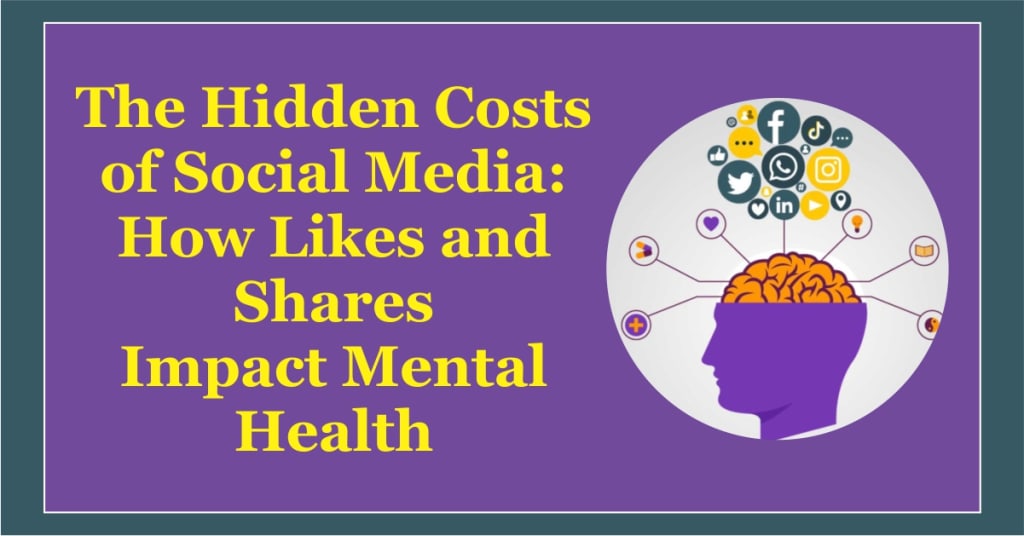
The Hidden Costs of Social Media: How Likes and Shares Impact Mental Health
Exploring the Psychological Toll of Social Media on Anxiety, Depression, and Self-Esteem
In today’s digital age, social media platforms like Instagram, Facebook, TikTok, and Twitter are more than just tools for communication they have become integral parts of our daily lives. These platforms offer users the ability to connect with friends and family, share experiences, and even build careers. However, behind the filters and curated content lies a darker reality: social media's significant impact on mental health.
The Allure of Validation
One of the most compelling features of social media is the immediate feedback users receive in the form of likes, shares, comments, and followers. These metrics have become modern-day currency, where high engagement is often equated with popularity and success. However, the pursuit of this digital validation can come at a steep cost.
The dopamine hit from receiving likes and positive comments creates a cycle of dependency, where users continually seek out this validation to feel good about themselves. But when the likes don’t roll in or the comments fall short of expectations, it can lead to feelings of inadequacy, anxiety, and depression.
"Social media platforms are designed to keep us engaged, often by appealing to our need for social approval," says Dr. Emily Reynolds, a psychologist specializing in digital behavior. "This can lead to an unhealthy preoccupation with how others perceive us, which, over time, can erode our self-esteem."
The Comparison Trap
Another psychological toll of social media is the constant comparison it fosters. Users are bombarded with images and stories that depict seemingly perfect lives—exotic vacations, flawless bodies, and enviable lifestyles. This endless stream of idealized content can lead to negative self-comparisons, where users measure their own lives against these curated portrayals.
A 2022 study conducted by the University of Pennsylvania found that individuals who spent more than 30 minutes a day on social media were more likely to report feelings of envy, low self-worth, and depression. The study highlighted that the more time people spend scrolling through others' posts, the more likely they are to feel dissatisfied with their own lives.
"Social media platforms often present a distorted reality," explains Dr. Reynolds. "What we see online is not the full picture—it's a highlight reel. Yet, we unconsciously compare ourselves to these images, leading to feelings of inadequacy and self-doubt."
Anxiety and the Fear of Missing Out (FOMO)
The phenomenon known as FOMO, or Fear of Missing Out, is another contributor to social media-induced anxiety. As users scroll through posts of events, gatherings, and achievements, they may feel like they are missing out on something important, leading to increased anxiety and a sense of isolation.
FOMO is particularly prevalent among younger users, who are more likely to equate social media presence with social success. This constant anxiety over missing out can drive compulsive social media use, further exacerbating feelings of stress and inadequacy.
"FOMO creates a sense of urgency and pressure to always be in the know, to always be connected," says Dr. Reynolds. "This can lead to compulsive behavior, where users feel they must constantly check their social media accounts, even if it negatively affects their mental health."
The Erosion of Authenticity
The quest for social media validation often leads users to present an idealized version of themselves online, masking their true feelings and experiences. This lack of authenticity can contribute to a sense of disconnection, both from oneself and from others. When users feel compelled to hide their true selves behind filters and carefully crafted posts, it can result in feelings of loneliness and isolation, even when surrounded by a large online network.
"Authenticity is crucial for meaningful connections," says Dr. Reynolds. "When we present a false version of ourselves online, we may gain likes and followers, but we lose the opportunity for genuine human connection, which is vital for our mental health."
Breaking the Cycle
Addressing the mental health impact of social media requires a multifaceted approach. Experts recommend setting boundaries for social media use, such as limiting time spent on platforms, turning off notifications, and taking regular digital detoxes. Moreover, fostering a mindset of self-compassion and practicing mindfulness can help mitigate the negative effects of social media comparisons.
"It’s important to remember that social media is just a tool, not a measure of your worth," advises Dr. Reynolds. "By being mindful of how and why you use these platforms, you can take control of your mental health and break the cycle of dependency on social validation."
As awareness grows about the hidden costs of social media, there is hope that users will begin to engage with these platforms in healthier, more balanced ways. By recognizing the psychological toll and taking proactive steps to protect their mental well-being, individuals can navigate the digital world without compromising their mental health.
About the Creator
Keep reading
More stories from Zeebabe Sulaimon and writers in Psyche and other communities.
Resilience in the Face of Adversity
In life, adversity is inevitable, Whether it's a personal setback, a professional challenge, or a global crisis, everyone faces difficulties at some point. What sets individuals apart is how they respond to these challenges. Some are crushed by the weight of their circumstances, while others seem to rise from the ashes, stronger and more determined. This ability to recover and adapt in the face of adversity is known as resilience.
By Zeebabe Sulaimonabout a year ago in Psyche
How to Succeed at the Benson Directory®
Congratulations and welcome to the Benson Directory® employee #22391! As our newest call handler, you will have the privilege of speaking with dozens of unique and interesting people on a daily basis as well as the opportunity to earn bonuses for high performance. Contained within this handbook you will find a set of ease to follow instructions designed to help you settle in to your new role and begin paving the way to success.
By S. A. Crawford3 days ago in Fiction



Comments (2)
So so amazing .i love your content and subscribed. Kindly reciprocate by subscribing to me also . thank you and keep it up
Thanks for sharing