
Pilgrim State Hospital
Fifty Thousand Lives Reduced to Charts, Wards, and Silence.

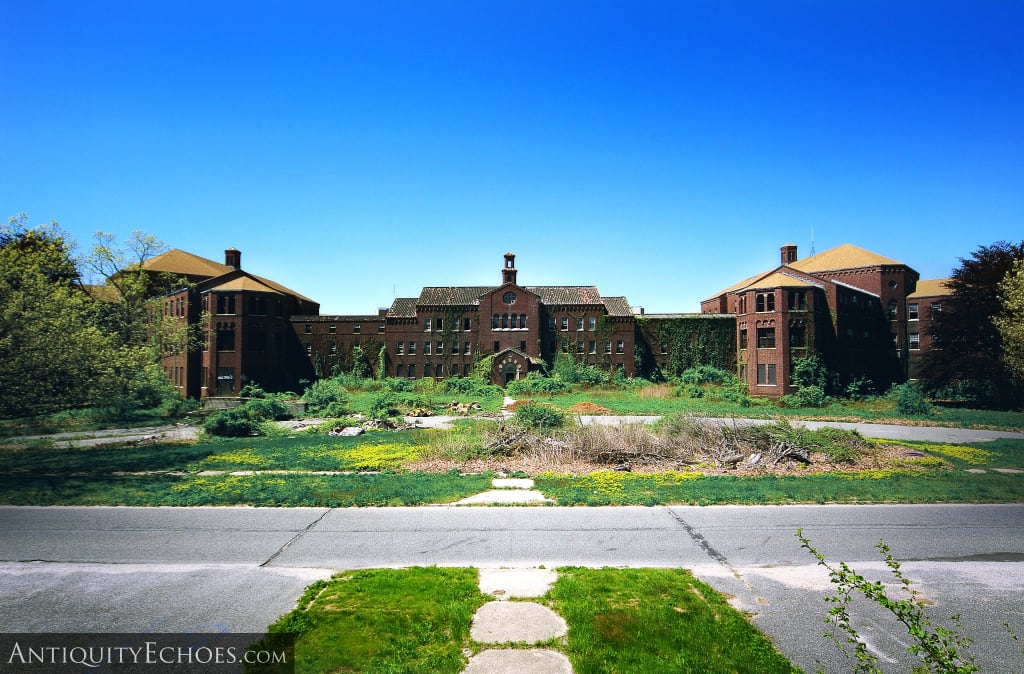
Pilgrim State Hospital was located in Brentwood, New York, and for much of the 20th century stood at the center of New York State's psychiatric system. Once promoted as a progressive solution to overcrowded urban asylums, it grew into the largest psychiatric hospital in the world, ultimately becoming a symbol of mass institutionalization, controversial treatments, and systemic neglect hidden behind the language of care.
Origins: The Farm Colony Era
By the late 19th century, New York City's psychiatric hospitals were severely overcrowded. In response, the state adopted a rural 'farm colony' model, relocating patients to Long Island where they were expected to live and work, primarily through agricultural labor, as part of their treatment. Kings Park State Hospital and Central Islip State Hospital were the first of these facilities, but they soon became as overcrowded as the city's institutions they were meant to replace.
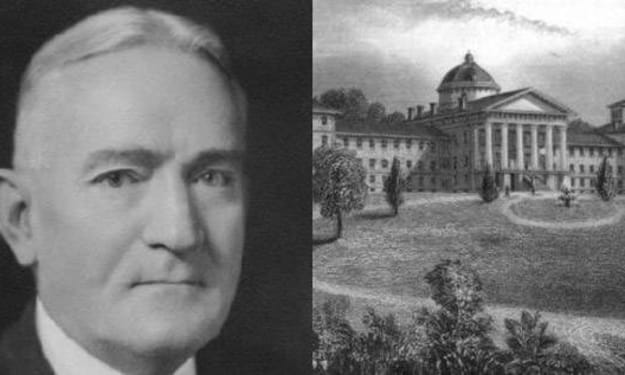
To address this, New York State planned a third farm colony. Pilgrim State Hospital was named after Charles W. Pilgrim, the former New York State Commissioner of Mental Hygiene. In 1929, the state purchased approximately 1,00 acres in Brentwood. Construction began the same year, and the hospital officially opened on October 1st, 1931.
Pilgrim was designed as a self-contained institution. Its buildings were arranged in large quadrangles surrounding a central kitchen, connected by underground tunnels that carried utilities and supplies. The campus functioned like a small city, complete with its own police and fire department, courts, post office, railroad station, power plant, church, cemetery, water tower, and staff housing. At its peak, Pilgrim stretched across four towns, Huntington, Babylon, Smithtown, and Islip, with two state roads running directly through its grounds.
Expansion and World War II
As patient admissions increased, Pilgrim rapidly expanded. The state acquired additional land to the southwest and constructed Edgewood State Hospital, a subsidiary facility intended to relieve overcrowding. Pilgrim became one of the largest employers on Long Island, with thousands of staff working on the campus.
During World War II, the War Department took control of Edgewood State Hospital and several buildings at Pilgrim (Buildings 81-83). The military constructed temporary structures and converted the site into Mason General Hospital, a psychiatric facility dedicated to treating soldiers suffering from what was then called "battle fatigue."
In 1946, filmmaker John Hutson produced the documentary Let There Be Light at Mason General Hospital. The film depicted soldiers undergoing psychiatric treatment and revealed the profound psychological effects of war. Considered controversial and damaging to public morale, the film was suppressed by the U.S. government and not released to the public until 1981.
Peak Population and Controversial Treatments
After World War II, Pilgrims patient population surged. By the early 1950s, it housed approximately 13,875 patients and employed more than 4,000 staff.
This period also marked the rise of aggressive and often irreversible treatments. Patients were subjected to electroconvulsive therapy (ECT), insulin shock therapy, prolonged restraints, heavy sedation, and lobotomies. These procedures were frequently administered without meaningful consent and were often used to control behavior rather than to heal.
One of the most well-known cases associated with Pilgrim is that of Beulah Jones, a patient who lived at the hospital from 1952 to 1972. during her confinement, she underwent both ECT and a lobotomy, leaving her permanently impaired. Her case later became emblematic of the human cost of mid-century psychiatric practices.
Overcrowding, understaffing, and institutional priorities contributed to neglect and abuse. Patients were often reduced to numbers, warehoused in large wards with little privacy, minimal therapeutic interaction, and limited oversight. Reports from this era describe unsanitary conditions, physical and emotional abuse, and the routine loss of patient autonomy.
Decline of the Farm Colony System
By the 1950s and 1960s, psychiatric care began to shift. The introduction of antipsychotic medications and a growing emphasis on community-based treatment led to deinstitutionalization. Large state hospitals across the country began to decline, and Pilgrim was no exception.
Edgewood State Hospital closed in December 1971. Throughout the 1970s and 1980s, Pilgrim gradually shut down portions of its campus, leaving many building abandoned. In the 1980s, Buildings 81-83 were briefly repurposed as a correctional facility, a move that sparked public protest. Following community opposition, the buildings were returned to psychiatric use.
In the fall of 1996, the New York State Office of Mental Health initiated a major reorganization of Long Island's remaining psychiatric hospitals. Kings Park and Central Islip State Hospitals were closed, and their remaining patients were transferred to Pilgrim or released into community care.
Pilgrim Today and Redevelopment
Today, a much smaller facility operates as Pilgrim Psychiatric Center, serving a fraction of the population once housed there. The original farm colony land was sold and redeveloped into Suffolk County Community College's Grant Campus in 1974.
In 2002, real estate developer Gerald Wolkoff purchased 462 acres of the remaining Pilgrim property for $21 million. He announced plans for a $4 billion mixed-use development known as Heartland Town Center. Demolition of former hospital building began in 2003, followed by the removal of staff housing in 2011. In 2012, the old medical and surgical building, male and female admission buildings, and the original administration building were demolished.
What remains of Pilgrim State Hospital is fragmented: a fuctioning psychiatric center, empty land, and fading memories of an institution that once held tens of thousands of lives. Its history reflects both the ambition and the failures of modern psychiatry, and the lasting consequences of a system that prioritized containment over compassion.
About the Creator
Max
I wish for a better world
Do You have a Support Network?
Life is harder when you’re on your own. Human beings are social creatures, and we usually feel better when we have support from a strong social network around us. For most people, it’s our families that hold us together like glue.
By Elizabeth Woodsabout 10 hours ago in Psyche



Comments