
The End of Spontaneity: Why Every Plan Feels Like Work Now
From surprise adventures to scheduled “fun time,” how modern life turned every moment into another task on the to-do list.

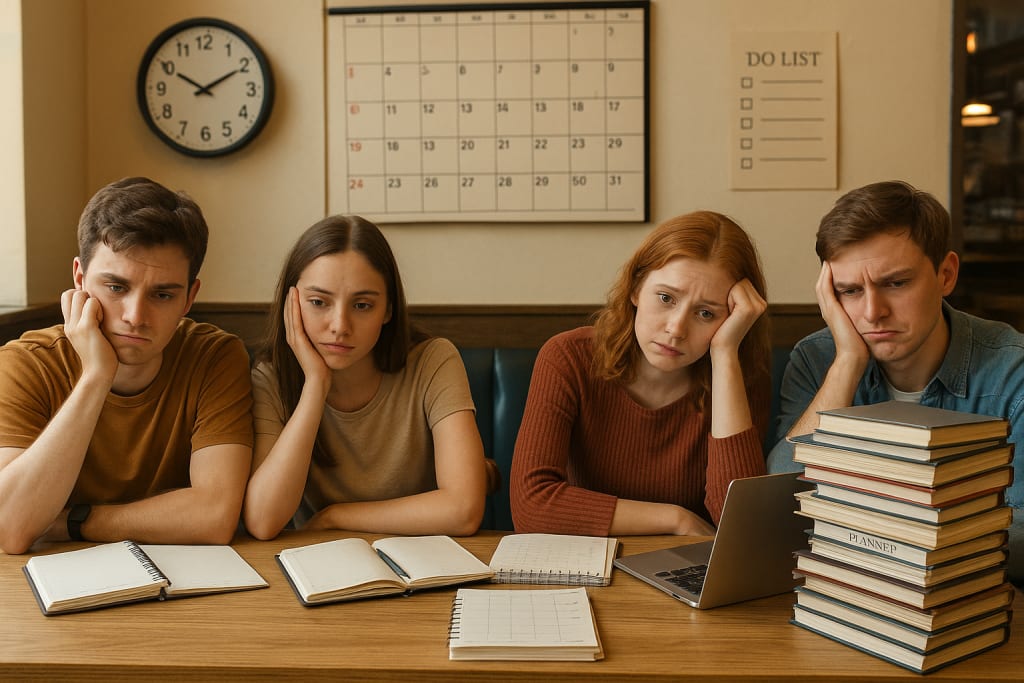
There was a time when spontaneity was considered the highest proof of freedom.
Someone would call you at midnight, whisper “let’s go grab fries”, and the next thing you knew, you were in a neon-lit diner, telling secrets you wouldn’t remember the next morning. There was no calendar invite, no shared Google Doc, and certainly no “is everyone free at 8 p.m. next Thursday?”
Fast forward to today, and even joy has a booking form.
The Death of the Random “Hey”
The casual “drop by” has been extinct for years. If you show up at someone’s door unannounced in 2025, they will assume you are either a courier, a scammer, or possibly a time traveler from the 90s. We don’t do surprise visits anymore; we do Outlook events with Zoom links. Even when we live two blocks apart.
Friendship itself has been restructured into project management. We create WhatsApp groups titled “Dinner 2025 Planning”, where people vote on emojis that represent their availability. Eventually, someone just says “let’s schedule for next month,” which in modern terms means “never.”
Why Did This Happen?
The world accelerated. Work bled into weekends. Smartphones made us reachable at all times. Productivity culture told us that time must be optimized, so even our leisure had to be turned into something measurable. Suddenly, you weren’t “just hanging out”—you were investing in social capital, engaging in wellness activities, or networking over brunch.
And so, the spontaneous became inefficient.
We stopped saying yes to small random pleasures because we had big planned pleasures scheduled three months ahead. But in this optimization, we accidentally killed the little sparks that made life feel alive.
The Irony of Scheduled Fun
Have you ever received a calendar invite that said: “Game Night – 7:30 p.m. sharp”? Nothing makes me want to not play games more than seeing them scheduled like a quarterly business review.
The irony is that spontaneity is the very essence of play. You can’t tell someone: “At precisely 8:15 p.m., you will begin laughing uncontrollably.” That’s not how joy works. Yet we try. We script every outing, reserve every table, plan every joke in advance.
What we’re left with are chore-like gatherings where everyone arrives tired, secretly wishing they had just stayed home watching Netflix.
The Hidden Grief Behind It All
Behind the humor, there’s a sadness here. Spontaneity was the soul’s way of reminding us that not everything needed a plan. It was permission to be unpolished, to be unprepared, to live outside the Excel spreadsheet of life.
By losing spontaneity, we also lost a certain intimacy. You can’t really plan magic. You stumble into it. The best stories start with “we weren’t planning to, but then—”.
Now, our lives are polished but sterile, perfectly scheduled but emotionally underwhelming.
Why Everything Feels Like Work
The psychological reason is simple: our brains no longer distinguish between planning for fun and planning for work. The same cognitive load applies. Whether you’re setting up a meeting with your manager or scheduling dinner with friends, you’re engaging in the same exhausting logistics.
So the moment fun becomes another calendar event, your brain silently marks it under the “work” folder. Which is why, even when you’re out with friends, you feel weirdly drained—because it was just another item to check off.
The Comedy of Over-Planning
And let’s not forget the absurdities:
Group chats with 300 unread messages debating sushi vs. pizza.
Friends sending you “meeting minutes” after a trip planning call.
Couples scheduling “spontaneous date nights” that require three weeks of prep.
At this point, spontaneity has been kidnapped, held hostage in someone’s Google Calendar, and is begging us for bail money.
Can We Bring It Back?
Maybe. But it requires a cultural shift. We need to embrace saying yes to messy, unplanned, small things. A walk without a fitness tracker. Coffee with no end time. A road trip without a booked Airbnb.
It doesn’t mean abandoning structure completely. It just means allowing cracks where the unexpected can slip through. Because life, at its core, is unpredictable. And our obsession with control is suffocating the very chaos that makes it worth living.
Final Thought
When everything is planned, nothing feels alive. We don’t just need time; we need surprise. We don’t just need friends; we need random laughter. We don’t just need goals; we need detours.
Maybe the real rebellion of our age isn’t in working less or hustling smarter—it’s in daring to live a little without permission. To text a friend “you free?” and not feel guilty if the answer is yes.
Because one day, the only thing we’ll regret is that we scheduled life so tightly that we forgot to actually live it.
About the Creator
Ahmet Kıvanç Demirkıran
As a technology and innovation enthusiast, I aim to bring fresh perspectives to my readers, drawing from my experience.
Keep reading
More stories from Ahmet Kıvanç Demirkıran and writers in Psyche and other communities.
The Loneliness of Hyperconnection
We live in a time of perpetual connection. A buzzing phone, a new message icon, a red notification badge—our days are punctuated by digital voices calling for our attention. We can reach anyone, anywhere, at any time. By all measures, humanity should feel more connected than at any point in history. And yet, an epidemic of loneliness shadows our era.
By Ahmet Kıvanç Demirkıran6 months ago in Psyche
Early March 2026: 4 Goals Accomplished
It's early March and I've now accomplished my 4th writing goal for the year of 2026. Before diving into the behind-the-scenes of it... why not tell you up front what that accomplishment was? I was published in a 2nd publication for this year. Published in Helix Literary Magazine out of Central Connecticut State University. You can read it for free right now!
By Stephen Kramer Avitabile2 days ago in Writers



Comments
There are no comments for this story
Be the first to respond and start the conversation.