
The Emotional Exhaustion of Always Being Alert
When your nervous system never learned that it's safe to rest

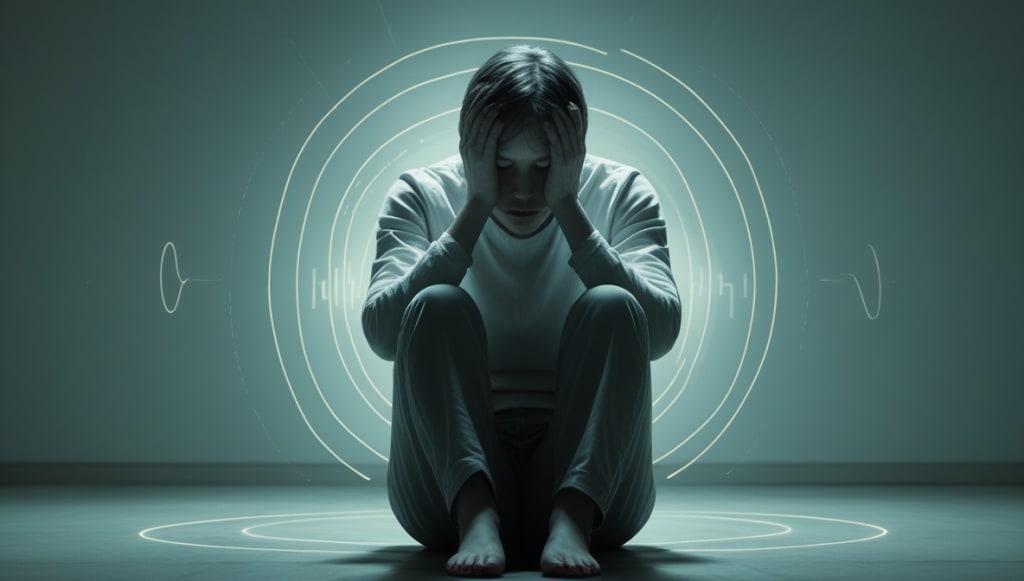
I woke up at 3 a.m., heart racing, body drenched in sweat. There was no nightmare. No sound had startled me awake. My brain had simply decided, as it did most nights, that sleep was a luxury I couldn't afford.
I lay there in the dark, listening to my partner breathe peacefully beside me, and felt a familiar wave of exhaustion wash over me. Not the kind that sleep could fix. The kind that lived in my bones, that made every day feel like I was walking through water, that came from spending every waking moment on high alert for dangers that rarely came.
I was twenty-nine years old, and I was so tired of being tired.
The Weight of Invisible Armor
Most people don't understand what it's like to live in a body that never feels safe. They don't know what it's like to walk into a coffee shop and immediately catalog all the exits. To sit in meetings only half-listening because you're too busy reading everyone's micro-expressions for signs of anger or disappointment. To come home after a normal day and feel like you've run a marathon because your nervous system has been in fight-or-flight mode for eight straight hours.
I couldn't remember the last time I'd felt truly relaxed. Even on vacation—especially on vacation—I was scanning for problems, planning for disasters, preparing for things to go wrong. My friends would laugh at the beach while I mentally reviewed our emergency contacts and the location of the nearest hospital.
"You worry too much," they'd say, not unkindly.
But it wasn't worry. Worry is a choice. This was a compulsion, a biological imperative, a survival mechanism that had forgotten to turn off long after the danger had passed.
Learning to Live in Threat Mode
I didn't always live like this. Or maybe I did, and I just didn't notice until it started breaking me.
Growing up, my home was unpredictable. Not violent in the traditional sense, but volatile. My father's moods were weather systems I learned to forecast—a certain tone of voice meant a storm was coming, a particular kind of silence meant I should disappear into my room. My mother's anxiety was contagious, her catastrophic thinking a constant background hum that taught me the world was dangerous and disaster lurked around every corner.
I became hypervigilant out of necessity. The girl who could sense tension before it erupted. The child who perfected the art of reading rooms and adjusting herself accordingly. The teenager who never fully relaxed because relaxing meant being caught off guard.
It kept me safe then. But now? Now it was killing me slowly, one anxious moment at a time.
The Thousand Tiny Calculations
People don't see the work that hypervigilance requires. They don't see the constant calculations running in the background of my mind:
Is my boss's email shorter than usual? Did I do something wrong?
Why did my friend take three hours to respond? Are they mad at me?
My partner seems quiet. Is this the beginning of the end?
Every interaction becomes a puzzle to solve, every silence a threat to decode. I'm exhausted before lunch because I've already survived a dozen imagined catastrophes that never happened.
At the grocery store, I'm planning escape routes. At dinner parties, I'm monitoring everyone's alcohol intake in case someone gets aggressive. During normal conversations, I'm three steps ahead, anticipating conflict and preparing my defense.
My therapist calls it hyperarousal. My body calls it normal. The rest of the world calls it anxiety.
They're all right.
The Body That Remembers
The cruelest part of hypervigilance is that it lives in your body, not just your mind. I could intellectually understand that I was safe, that my current life bore no resemblance to my childhood, that most people weren't threats.
But my nervous system didn't get the memo.
My heart still raced when someone raised their voice—even in excitement. My stomach still dropped when I heard footsteps approaching quickly. My shoulders still tensed when I heard keys in the door, even though it was just my partner coming home from work.
Trauma had taught my body that survival meant constant vigilance. And bodies, it turns out, are slow learners when it comes to unlearning fear.
I tried everything to calm down. Meditation made me more anxious—sitting still only gave my brain more time to catastrophize. Exercise helped, but only temporarily. Alcohol worked until it didn't, until one glass became three became a problem I didn't want to admit.
What I needed wasn't relaxation techniques. What I needed was to convince my nervous system that it was finally, truly safe.
The Breaking Point
My wake-up call came on an ordinary Tuesday afternoon. I was driving home from work, and suddenly I couldn't breathe. My vision tunneled. My hands went numb. I pulled over, certain I was having a heart attack.
At the emergency room, after hours of tests, the doctor gave me the diagnosis I'd been avoiding: panic attack. Severe anxiety. Chronic stress.
"Your body is in a constant state of crisis," she explained gently. "You're running on adrenaline and cortisol all the time. Eventually, something has to give."
I nodded, unable to speak around the lump in my throat. Because she was right. Something had given. My body, after years of being ignored, had finally screamed loud enough to get my attention.

The Long Road to Calm
Recovery from hypervigilance isn't a light switch. It's more like teaching a language to someone who's only ever spoken one dialect. Slowly. Painfully. With lots of backsliding.
I started therapy—real trauma-informed therapy, not just the "think positive thoughts" kind. My therapist introduced me to concepts like window of tolerance and nervous system regulation. She taught me that my hypervigilance wasn't a character flaw; it was an adaptation. And adaptations could be changed.
We started with something called grounding. Five things I could see. Four I could touch. Three I could hear. It felt silly at first, childish even. But it worked. It pulled me out of my head and into my body, reminding my nervous system: You're here. You're now. You're safe.
I learned about somatic therapy—working with the body, not just the mind. I discovered that sometimes trauma lives in clenched jaws and tight shoulders, and no amount of talking would release it. I needed to move, to shake, to let my body express what words couldn't capture.
The Small Victories
Progress was measured in moments, not milestones.
The first time I went to bed without checking the locks three times.
The first morning I woke up without immediately reaching for my phone to scan for crises.
The first dinner where I actually tasted my food instead of choking it down while mentally reviewing everything I'd said that day.
The first time someone canceled plans and my immediate thought wasn't "They hate me" but "They're probably just tired."
These victories felt small, insignificant even. But they were revolutions in the war against my own nervous system.
Learning to Rest Without Guilt
The hardest lesson was this: rest wasn't a reward for productivity or a luxury I had to earn. Rest was a biological necessity, as essential as breathing.
My body had been in survival mode for so long that it had forgotten how to exist in any other state. I had to teach it, deliberately and patiently, that not everything required my full attention. That some emails could wait. That some problems would solve themselves. That I didn't need to control every variable to stay safe.
I started scheduling "nervous system resets"—twenty minutes of doing absolutely nothing. No phone, no TV, no productive task. Just sitting. Being. Existing without purpose or vigilance.
It was excruciating at first. My brain would scream that I was wasting time, that something terrible would happen if I let my guard down. But gradually, slowly, my body learned a new truth: Safety isn't something I have to fight for. It's something I can simply experience.
The Grief of Lost Time
As I healed, I grieved. I grieved for the child who never got to feel safe. For the teenager who thought anxiety was just part of her personality. For the young woman who pushed through exhaustion because she didn't know any other way to exist.
I grieved for all the moments I'd missed while I was busy scanning for danger. The conversations I was physically present for but mentally absent from. The joy I couldn't access because my nervous system was convinced something bad was about to happen.
Hypervigilance had kept me safe, but it had also kept me from living.
What I Know Now
Two years into recovery, I still have hard days. My nervous system still sometimes mistakes safety for complacency, stillness for vulnerability. But now I recognize it for what it is: an old friend who doesn't know the war is over.
I've learned that healing isn't about never being anxious again. It's about expanding the space between the trigger and the response. It's about having more moments of genuine peace than moments of imagined threat.
I've learned that my body isn't my enemy—it's been trying to protect me the only way it knew how. And now my job is to gently, persistently, lovingly teach it a new way.
For Those Still Alert
If you're reading this from a place of exhaustion—the bone-deep kind that sleep doesn't touch—I want you to know: your vigilance makes sense. Your body isn't broken. It's doing exactly what it was trained to do.
But you don't have to live at war with yourself forever.
The world might have taught you that safety is an illusion and that letting your guard down is dangerous. But that was then. This is now. And you deserve to know what it feels like to exist without constantly bracing for impact.
You deserve rest that doesn't feel like giving up. Peace that doesn't feel like complacency. A life where your nervous system knows the difference between actual danger and the echoes of old wounds.
The exhaustion you feel isn't weakness. It's proof that you've been fighting longer and harder than anyone should have to. And now—finally, gently—it's time to lay down your armor and learn what it means to simply be.
About the Creator
Keep reading
More stories from Ameer Moavia and writers in Psyche and other communities.
How Anxiety Traps the Brain in Survival Mode
I lived for five years like I was being chased by a predator no one else could see. My heart raced at traffic lights. My hands trembled during normal conversations. My body prepared for catastrophe every waking moment. The threat wasn't real—but my nervous system didn't know that. It started with the panic attacks. The first one hit me in a grocery store on a Saturday afternoon. One moment I was reaching for cereal, the next my heart was pounding so hard I thought it would explode. My vision tunneled. My chest constricted. I couldn't breathe. I was certain—absolutely certain—I was having a heart attack and would die right there in aisle seven. I abandoned my cart and stumbled outside, gasping, shaking, convinced these were my final moments. Twenty minutes later, I was fine. Physically fine. The ER doctor confirmed it: "Just a panic attack. Your heart is healthy. You're okay." But I wasn't okay. Because my brain had just learned something terrifying: danger could strike anywhere, anytime, without warning. And if it could happen in a safe, ordinary grocery store, it could happen anywhere. From that day forward, my brain decided I was never safe. And it's been trying to save my life ever since—from threats that don't exist. The Alarm That Won't Stop After that first panic attack, my nervous system essentially got stuck with its finger on the panic button. My body remained in a constant state of high alert, scanning every environment for potential danger, interpreting normal sensations as emergency signals, preparing to fight or flee from threats that weren't there. Heart rate slightly elevated? Must be another heart attack coming. Feeling dizzy from standing up too fast? Something's wrong. You're dying. Chest feels tight? Can't breathe. This is it. Every normal bodily sensation became evidence of impending catastrophe. My brain, trying to protect me, had become my greatest threat. The anxiety spread like a virus through my life. I stopped going to grocery stores—too dangerous, too triggering. Then restaurants. Then anywhere crowded. Then anywhere that wasn't home. My world shrank to the size of my apartment, and even there, I wasn't safe from my own nervous system. I couldn't explain to people what was happening. "There's nothing to be anxious about," they'd say, and they were right. Objectively, logically, rationally—there was no real danger. But my brain wasn't operating logically anymore. It was operating from a part far older and more primitive than logic—the part that keeps you alive when there's actual danger. Except it couldn't tell the difference between real danger and perceived danger. To my nervous system, it was all the same threat. Understanding the Trap My therapist drew me a diagram of the brain—the prefrontal cortex up top, responsible for rational thinking, and the amygdala buried deeper, responsible for fear and survival responses. "In a healthy system," she explained, "these work together. The amygdala detects potential threats and alerts the prefrontal cortex, which assesses whether the threat is real. If it's not, the cortex tells the amygdala to stand down." She drew an arrow showing the communication loop. Then she drew a big red X through it. "In anxiety disorders, especially after panic attacks, this communication breaks down. The amygdala keeps sending danger signals, but the prefrontal cortex can't override them. Your thinking brain knows you're safe, but your survival brain doesn't believe it. So you stay stuck in survival mode—fight, flight, or freeze—even though there's nothing to survive." That explained everything. Why I could logically know I was safe but still feel terrified. Why rational thinking didn't make the anxiety go away. Why my body responded to a text message or a phone call like it was a life-threatening emergency. My brain had essentially lost the ability to feel safe. The survival system was running the show, and it only knew one setting: danger. Life in Survival Mode Living in constant survival mode is like being a soldier who never comes home from war. Your body maintains battle-ready status 24/7, flooding your system with stress hormones, keeping your muscles tensed, your senses heightened, your mind scanning for threats. Except there's no battle. There's just normal life—work, relationships, errands, conversations. But your body treats it all like combat. I couldn't sleep because my brain interpreted relaxation as vulnerability. I couldn't eat normally because my stomach was perpetually clenched. I couldn't focus because my attention was constantly pulled toward potential threats—a weird look from someone, an unexpected sound, a change in plans. My memory started failing. Not surprising—when your brain is focused entirely on survival, it doesn't bother filing away mundane information like where you put your keys or what someone said five minutes ago. I was exhausted constantly, but in a way that sleep couldn't fix. This was nervous system exhaustion—the kind that comes from your body being in crisis mode month after month with no relief. My immune system weakened. I caught every cold, every flu. Chronic inflammation showed up in bloodwork. My body was cannibalizing itself, burning through resources to fuel a state of emergency that never ended.
By Ameer Moavia2 months ago in Psyche
Response Time Variability in Online Tarot Services: A Consumer-Oriented Analysis
The accessibility of online tarot consultations has increased significantly in the digital era, yet consumer understanding of service delivery timelines remains inconsistent. This analysis examines the measurable factors that determine how quickly a user can obtain a tarot reading through digital platforms in 2026, focusing on three primary variables: communication format, platform architecture, and session complexity.
By Enrique Martinez2 days ago in Psyche
"Scream 7" (2026): Running out of Fresh Screams
This is the seventh time we’ve had a Ghostface crisis. Scream 7 is the latest edition of the Scream franchise. Sydney Prescott and her family are under attack by another anonymous killer dressed in a Ghostface costume. While having issues with her daughter, Tatum, they run from the bloody murders, trying to determine who is behind it all.
By Marielle Sabbag5 days ago in Horror



Comments
There are no comments for this story
Be the first to respond and start the conversation.