
The Echo Chamber of the Self: How Personal Algorithms Are Rewriting Our Reality
As digital systems grow better at mirroring who we are, are we losing the ability to become someone else?

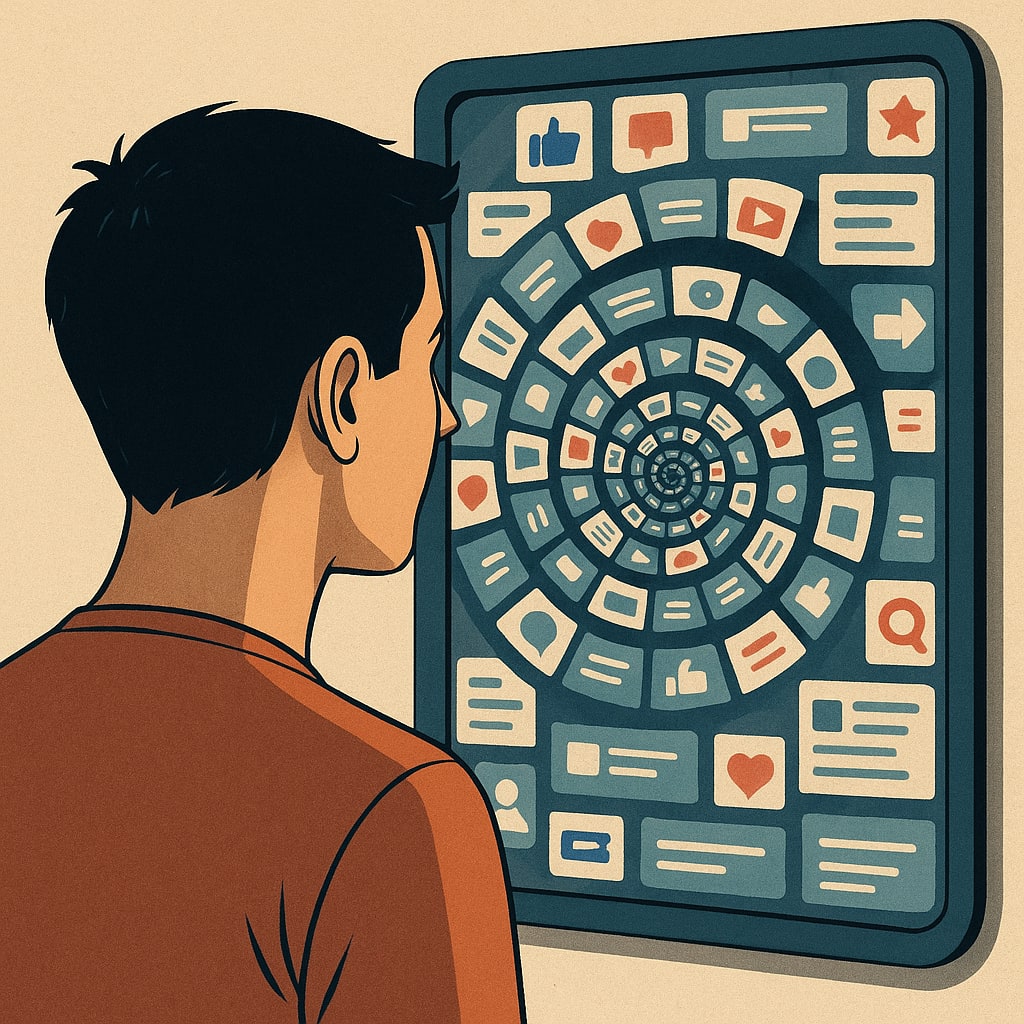
In the early days of the internet, we marveled at its ability to open up the world. With a single search, we could find voices from distant lands, cultures we’d never known, and ideas that challenged our own. It was chaotic, but liberating. And then, bit by bit, the web stopped feeling so wide.
Now, we live inside refined bubbles. The algorithm knows who you are—or more precisely, who you’ve been. Every scroll, every click, every half-second pause contributes to a digital profile designed to show you more of the same. Your feeds don’t just reflect your interests; they reinforce them, narrowing the path forward.
Welcome to the era of personalized reality.
The Psychology of the Familiar
There’s a cognitive reason this works so well. Human beings are pattern-seeking creatures. We take comfort in the familiar and feel threatened by the unknown. When an app shows us content that aligns with our past preferences, it triggers the brain’s reward circuitry. “Yes, this is me,” we think. The dopamine hits. We keep scrolling.
But what happens when this psychological preference for the familiar is exploited by systems built to hold our attention? What happens when the external world starts reflecting our internal state so closely that we stop questioning either?
In this new psychological ecosystem, the self becomes an echo. Your fears, your biases, your old selves—all amplified and repackaged until you forget they were ever optional.
The Algorithmic Mirror
Unlike human mirrors, which show us how we look, algorithmic mirrors show us how we behave. They observe our actions without context. If you liked a video about conspiracy theories once, even as a joke, it doesn’t matter. The machine doesn’t understand irony. It only understands patterns.
Over time, we become the sum of our clicks. A person who reads about isolation might be served more content about loneliness. Someone curious about productivity may be pushed into hustle culture. A fleeting interest becomes a defining trait.
We no longer consume content. We become it.
The Death of Serendipity
Before algorithmic curation, discovery was often accidental. You’d stumble across a weird forum, a new artist, a challenging viewpoint. Today, platforms like TikTok, YouTube, and Instagram create an illusion of randomness—yet it’s all driven by relevance scores and predicted engagement.
The randomness is gone. You are no longer exposed to what you didn’t know you wanted. Instead, you’re constantly shown what the machine thinks you will want. It creates a safer, more addictive experience—but at a cost: the slow erosion of personal growth.
Real change often comes from discomfort. But discomfort rarely trends.
Becoming Someone Else
The danger of algorithmic living isn’t just in what we see. It’s in who we stop becoming. A person is not a fixed entity but a process—an unfolding story of reinvention. Yet if we are fed content that reinforces who we already are, how do we evolve?
It’s no coincidence that people who try to reinvent themselves—through lifestyle changes, political shifts, or new interests—often feel a digital friction. The platforms don’t catch up. They still push the “old you” for days, weeks, months. You're haunted by past selves, stuck in a feedback loop that doesn’t believe in transformation.
It’s as if your digital twin doesn’t want you to grow.
Breaking the Feedback Loop
So how do we fight back? Can we even escape this mirror?
Manual Serendipity: Seek out content you know will challenge you. Go to places you wouldn’t normally go—both online and off. Read opposing views. Subscribe to channels with values unlike your own. Let the algorithm get confused.
Kill the Autoplay: Disable the features that feed you endlessly. Make content consumption intentional. Pause. Choose. Reflect.
Digital Fasting: Take breaks—not just from platforms, but from being a “data point.” Rediscover what it’s like to be bored, untracked, and undistracted.
Rewild Your Mind: Just like nature needs biodiversity, so does your mind. Step outside the digital. Engage with messy, unsorted, analog things—books, strangers, conversations.
A Speculative Future
Let’s imagine, for a moment, that the trend continues. One day, each person’s feed becomes so customized that two people living in the same apartment share no cultural overlap. Their jokes don’t land, their news doesn’t match, their truths diverge. The world fractures not along political lines, but along personal algorithmic realities.
In this future, a simple conversation could feel like cross-cultural diplomacy.
And maybe that future is already here.
Final Thought: The Self is Not a Brand
In a world that profits from predictability, your greatest act of rebellion is to be unpredictable. To surprise yourself. To unlearn. To be new.
You are not an algorithm. You are not a pattern. You are not a brand.
You are a becoming.
About the Creator
Ahmet Kıvanç Demirkıran
As a technology and innovation enthusiast, I aim to bring fresh perspectives to my readers, drawing from my experience.
Keep reading
More stories from Ahmet Kıvanç Demirkıran and writers in Psyche and other communities.
The Psychology of "What Could Have Been"
Have you ever found yourself replaying a decision in your head, imagining how life could have unfolded differently? The job you didn’t take. The person you never confessed your feelings to. The city you almost moved to.
By Ahmet Kıvanç Demirkıran9 months ago in Psyche
Do You have a Support Network?
Life is harder when you’re on your own. Human beings are social creatures, and we usually feel better when we have support from a strong social network around us. For most people, it’s our families that hold us together like glue.
By Elizabeth Woodsabout 3 hours ago in Psyche
Grok and the Quiet Anxiety Around Machines That Understand Us
For years, people imagined artificial intelligence as something distant and mechanical. It lived in movies, research labs, and tech conferences far removed from everyday life. Then tools like Grok appeared, and that distance began to shrink. Suddenly, a system could read questions, respond with humor or seriousness, and follow complex conversations in a way that felt unsettlingly human. Grok is not just another name in the growing list of AI systems. It represents a moment where curiosity meets unease. People are fascinated by what it can do, yet unsure about what it means. To understand Grok, we need to look beyond features and focus on the feelings, questions, and quiet worries it brings with it.
By Muqadas khan7 days ago in Psyche



Comments (2)
Nice 💙✍️💙
Very interesting and well written, good luck.