
The Brain Doesn’t Forget
The Shadow of the 10,000-Year House

I was six years old when I first learned that the mind is a hoarder.
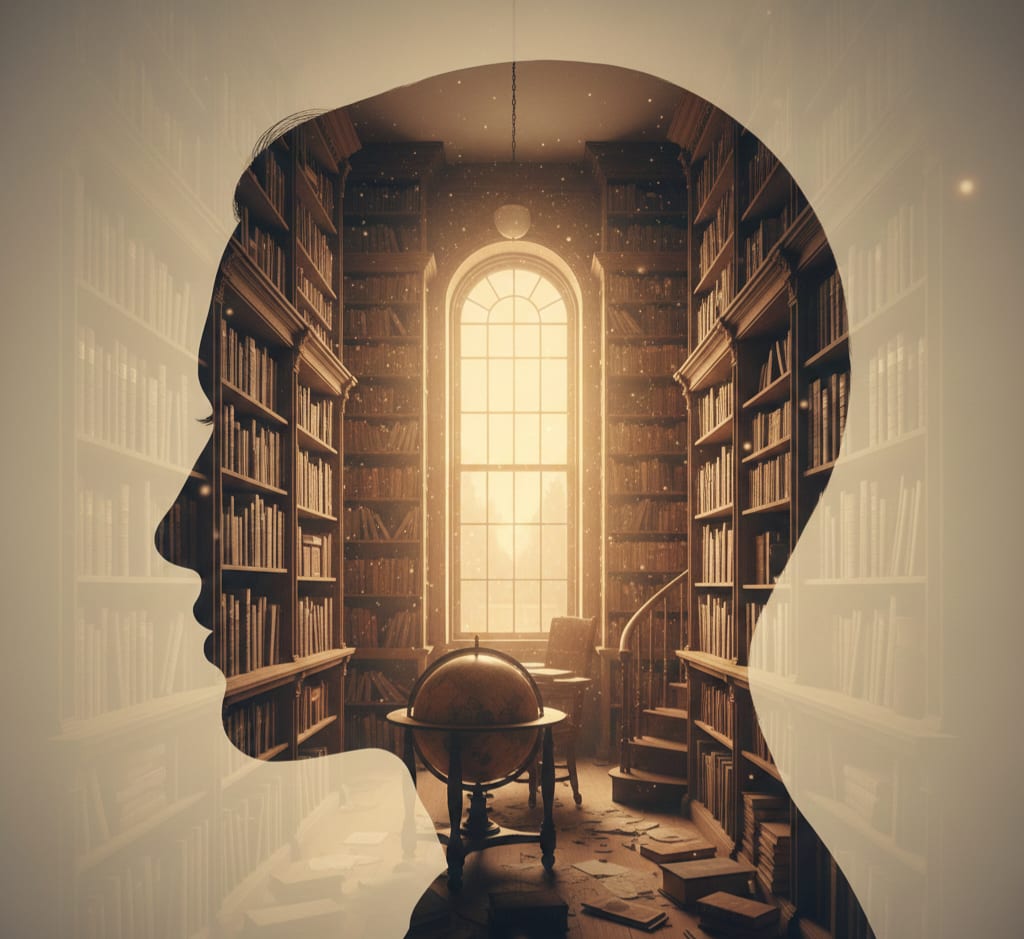
My grandfather, a man who could remember the exact humidity of the day he returned from the war in 1945, once told me: "The brain is like a house with a locked basement. You might lose the key, but the furniture inside never leaves."
At twenty-six, I realized he was right. I was walking through a crowded terminal at O’Hare International when a specific scent—a blend of stale diesel and cheap lilac perfume—hit me. In a heartbeat, I wasn't in Chicago anymore. I was standing in a rainy bus station in Prague, five years prior, saying a final, agonizing goodbye to a woman whose face I hadn't let myself picture in months.
My pulse spiked. My palms sweated. Scientifically, this is called neural reactivation. Poetically, it's a haunting.
The Myth of "Moving On"
We live in a culture obsessed with "letting go." We are told to delete the photos, throw away the sweaters, and "unlearn" the habits of our past selves. But neuroscience suggests we are fighting a losing battle against our own anatomy.
The hippocampus, that seahorse-shaped curator of our memories, doesn't operate like a trash can. It operates like an architect. When we experience something—especially something laced with high emotional stakes—the brain encodes it via the amygdala, tagging it as "Vital for Survival."
Your brain doesn’t care that the breakup happened three years ago. Your brain thinks that the emotional pain you felt was a "predator" it needs to remember so it can protect you next time. It isn't just a memory; it's a survival map.
The Persistence of the Ghost
There is a phenomenon in neurobiology known as Long-Term Potentiation (LTP). To put it simply: the more we "re-fire" a memory, the stronger the physical connection between those neurons becomes.
Every time I walked past a flower shop that smelled of lilacs, I was unknowingly reinforcing the highway that led back to that rainy day in Prague. The brain doesn't forget; it just builds faster roads to the things that hurt.
But here is the twist: The brain doesn't just keep the trauma. It keeps the beauty, too.
Last year, I visited my grandfather in the hospital. His "10,000-year house" was finally beginning to crumble under the weight of dementia. He couldn’t remember what he had for breakfast. He couldn't remember the year.
But when a nurse accidentally hummed a few bars of a 1940s swing tune, his fingers began to tap against the bedrail. His eyes, foggy and distant, suddenly sharpened. He began to hum the harmony. The lyrics, buried under decades of newer, "more important" data, rose to the surface like a cork in water.
“The brain doesn’t forget, kid,” he whispered, a ghost of his old self returning. “It just waits for the right song.”
The Architecture of Tomorrow
If the brain doesn't forget, then the quality of our lives is determined by the "furniture" we choose to put in the house today.
We cannot control the "diesel and lilac" moments that haunt us. We cannot stop the brain from archiving the pain. But we can consciously choose to create moments of such profound kindness, such vivid joy, and such intentional presence that they become the dominant structures in our neural landscape.
I eventually made my flight in Chicago. I didn't try to "push away" the memory of Prague. Instead, I sat at the gate and wrote down three things I was grateful for in that moment: the taste of the coffee, the hum of the terminal, the fact that I was still a person capable of remembering love so clearly it felt like a physical touch.
We are not broken because we remember. We are remarkable because we cannot help but carry our history with us.
Your brain is holding onto everything for a reason. Don't fight the basement. Just make sure you’re still building the sunroom.
About the Creator
LUNA EDITH
Writer, storyteller, and lifelong learner. I share thoughts on life, creativity, and everything in between. Here to connect, inspire, and grow — one story at a time.
Reader insights
Outstanding
Excellent work. Looking forward to reading more!
Top insights
Compelling and original writing
Creative use of language & vocab
Excellent storytelling
Original narrative & well developed characters
Heartfelt and relatable
The story invoked strong personal emotions
Keep reading
More stories from LUNA EDITH and writers in Psyche and other communities.
The Color We Learned to Fear
Black is a color that refuses to be neutral. It enters a room with history on its shoulders and silence in its wake. For some, it is elegant, powerful, and endlessly modern. For others, it is heavy—too heavy—with meanings they did not choose but inherited. The dislike of black is rarely about the color alone. It is about what black has been taught to represent, the emotions it awakens, and the stories people carry inside them.
By LUNA EDITH5 days ago in Psyche
Watch Out Wednesdays - 1/21/26 (Opinion)
From an international standpoint, we have two major things to watch out for. The first is the conflict over Greenland with a proposed US takeover by President Trump. The goal appears to be to take over the entire Western Hemisphere piece by piece. If you have teenage children, then you may unfortunately will have to send them to war if these conflicts continue.
By Adrian Holman3 days ago in Psyche


Comments
There are no comments for this story
Be the first to respond and start the conversation.