
The Psychology of Losing Interest in Life
The Slow Fade: When Everything You Loved Becomes Something You Just Do

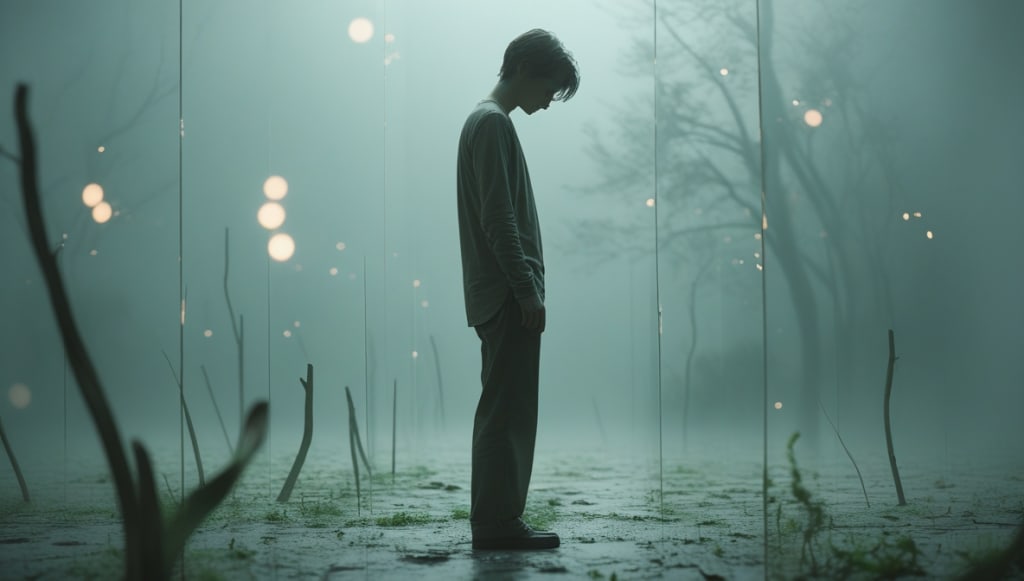
I didn't notice when I stopped caring. It wasn't a decision, wasn't a moment. It was a gradual dimming, like someone slowly turning down the lights in a room so incrementally that you don't realize you're sitting in darkness until you can barely see anymore.
My bookshelf is full of unread books.
Not new books I haven't gotten to yet—books I was excited about, bought eagerly, started reading, and then... just stopped. They sit there, bookmarks still in place from where I lost interest, collecting dust alongside all the other things I used to care about.
My guitar leans against the wall in the corner, strings gathering dust. I haven't played it in eight months. I used to play every day, lose myself in music for hours. Now I walk past it without even noticing it's there.
My running shoes sit by the door, barely worn. I used to run five miles every morning, needed it to start my day right. Now the thought of lacing them up feels exhausting, pointless.
My friends have stopped inviting me places. Not because they're angry, but because I've said "maybe next time" so many times that they've finally stopped asking. I don't blame them. I wouldn't want to hang out with me either.
I used to be someone. Someone with passions, interests, hobbies, enthusiasm. Someone who was excited about things, engaged with life, present in my own existence.
Now I'm just someone going through motions, waiting for bedtime, counting down hours until I can sleep again and temporarily escape the monotony of being awake.
The Erosion of Interest
It didn't happen all at once. That's the insidious thing about losing interest in life—it's so gradual you don't recognize it's happening until you're already deep in it.
First, I stopped doing the things that took effort. "I'm just tired," I'd tell myself. "I'll get back to my hobbies when work calms down."
Then I stopped doing things that required leaving the house. "It's just easier to stay in tonight. I'll be social next week."
Then I stopped doing things that brought me joy, even easy things. Watching shows I loved became too much effort. Reading felt like work. Even scrolling social media—the lowest-effort activity possible—felt exhausting.
Eventually, I was doing nothing but the absolute minimum required to keep my life from falling apart: work, basic hygiene, feeding myself (barely), sleep. Everything else fell away.
My partner noticed before I did. "You don't seem excited about anything anymore," he said one night. "When's the last time you talked about something you were passionate about?"
I couldn't remember. Not because it had been so long, but because I couldn't remember ever being passionate about anything. That person who got excited, who had enthusiasm, who cared deeply about things—she felt like someone I used to know, not someone I'd been.
The Questions I Couldn't Answer
"What do you enjoy doing?" my therapist asked during our first session.
I sat there, genuinely unable to answer. Not because I was being difficult, but because I didn't know. I couldn't remember what I enjoyed. I couldn't access any sense of preference or desire or interest.
"What did you used to enjoy?" she tried.
"Reading, I guess. Music. Running. Seeing friends." The words came out flat, like I was reading someone else's biography.
"Do those things not interest you anymore?"
"I don't know," I said, and realized I was crying without quite knowing why. "I don't think anything interests me anymore. I don't feel interested. I don't feel... anything about anything."
She nodded, unsurprised. "What you're describing is called anhedonia—the loss of interest or pleasure in activities you used to enjoy. It's a core symptom of depression."
Depression. The word felt both right and wrong. I wasn't sad, wasn't crying all the time, wasn't unable to function. I went to work every day. I kept my apartment reasonably clean. I wasn't actively suicidal.
But I also wasn't living. I was existing. And there's a difference.
The Weight of Indifference
People don't understand how heavy indifference feels. They think not caring would be light, easy, freeing. But apathy has its own gravity, pulling you down, making every action feel like moving through cement.
Every morning, I'd wake up and feel the weight settle over me—the knowledge that I had to get through another day of not caring about anything, including getting through the day.
Shower? Why bother. I'd just have to shower again tomorrow.
Eat something healthy? What's the point. Nothing tastes good anyway.
Call that friend back? For what. I have nothing to say.
Work on that project? Why. It doesn't matter. Nothing matters.
The rational part of my brain knew things mattered. Objectively, logically, I understood that my relationships, my health, my work, my life—these things had value and consequences.
But I couldn't feel it. There was a disconnect between knowing something mattered and caring that it mattered. And without the caring, the knowing was useless.
The Isolation of Apathy
Losing interest in life is profoundly isolating because you're not just disconnected from activities—you're disconnected from other people's enthusiasm, their joy, their engagement with life.
I'd watch my coworkers get excited about projects and feel like I was observing an alien species. How did they care? Where did that energy come from? What was the point?
My partner would come home excited about his day, wanting to share, and I'd have to perform interest I didn't feel. "That's great, honey," I'd say, while internally feeling nothing. He'd eventually stop sharing because he could tell I wasn't really there.
Friends would invite me to things they were excited about—concerts, trips, events—and I couldn't muster even fake enthusiasm. "I'm busy" became my default response, easier than admitting "I don't care about anything anymore, including seeing you."
The worst part was feeling nothing about feeling nothing. I'd think, "I should be upset that I'm losing all my relationships." But I wasn't upset. I was just... aware of it happening, like watching a car crash in slow motion that I had no interest in preventing.
The Daily Performance
I became very good at faking normal.
I'd smile at appropriate times. Laugh when others laughed. Nod and say "mm-hmm" during conversations. Make comments that suggested I was present and engaged when really I was counting down minutes until I could be alone again.
At work, I did exactly what was required, no more, no less. The passion I'd once had for my career, the drive to excel, the satisfaction from accomplishment—all gone. I showed up, performed my tasks adequately, and left. My performance reviews noted I was "meeting expectations," a phrase that once would have devastated my perfectionist tendencies but now barely registered.
I maintained the appearance of someone who had their life together. Clean clothes. Basic hygiene. Apartment not a disaster. Paid my bills. Showed up where I was supposed to show up.
But inside? Empty. Going through every motion mechanically, feeling nothing, wanting nothing, caring about nothing.
The performance was exhausting. Not because it required much energy, but because maintaining even the minimum felt pointless. Why keep pretending? For what? What was I preserving? A life I didn't even want to live?
The Questions That Had No Answers
Late at night, unable to sleep despite being exhausted, I'd lie in the dark asking myself questions I couldn't answer:
When did I stop caring?
How do I care again?
Is this just who I am now?
Will I ever feel excited about anything again?
Does everyone feel like this and just hide it better?
What's the point of any of it?
Why am I even here?
Not suicidal thoughts exactly—more like existential ones. I didn't want to die, but I also couldn't articulate why I wanted to live. I existed because not existing required active effort I didn't have the energy for. So I just... continued. Day after day. Feeling nothing. Wanting nothing. Being nothing.

The Unraveling
Things came to a head on my birthday.
My partner threw me a surprise party. Friends I hadn't seen in months showed up. There was cake, presents, decorations, effort and love poured into celebrating me.
I stood in the middle of it all and felt absolutely nothing. Not gratitude. Not joy. Not even the social obligation to pretend enthusiasm. Just that familiar flat emptiness.
"Make a wish!" everyone said as I stood over the cake with its glowing candles.
I couldn't think of a single thing to wish for. Not one thing I wanted. Not one hope or dream or desire. The candles burned down while everyone waited and I stood there, hollow, wishing I could wish for something.
I blew them out without wishing. Everyone cheered. I smiled. And inside, I was drowning in the awareness of how profoundly disconnected I'd become from my own life.
After everyone left, my partner found me sitting on the bathroom floor, staring at nothing.
"Talk to me," he said. "Please. I don't know how to help you."
"I don't know how to help me either," I said. "I don't know what's wrong. I just don't care about anything anymore. Not the party, not my birthday, not my life. I'm just... here. Existing. And I don't know why."
"We're getting you help," he said. "Tomorrow. This isn't okay."
Understanding the Loss
My psychiatrist explained it in terms that finally made sense. "Your brain's reward system isn't functioning properly," she said. "The neurochemicals that create motivation, pleasure, interest, desire—they're depleted or not being processed correctly. It's not that life isn't interesting. It's that your brain can't register interest."
She drew a diagram showing dopamine pathways, explaining how depression disrupts the circuits that make you want things, enjoy things, care about things.
"You're not lazy. You're not ungrateful. Your brain chemistry is disrupted. The good news is, we can address that. The bad news is, it takes time."
She started me on an antidepressant, with the caveat that it could take weeks to work, if it worked at all. "We might need to try several before we find the right one," she warned.
She also recommended therapy, specifically behavioral activation—a treatment that involves doing activities whether you feel like it or not, to rebuild the neural pathways between action and reward.
"You can't wait until you feel like doing things," my therapist explained. "Because your brain has forgotten how to generate that feeling. We have to retrain it by doing the activities anyway, repeatedly, until your brain remembers that activities can be rewarding."
The Slow Return
The medication took six weeks to start working. Six weeks of taking pills daily, feeling nothing change, wondering if I'd be like this forever.
Then one morning, I woke up and noticed the sun coming through my window. Just noticed it. Not felt joy about it or suddenly loved life, but actually registered that there was sunlight and it looked nice.
A tiny spark. Barely noticeable. But something.
Over the following weeks, more sparks appeared. A song that caught my attention. A meal that actually tasted like something. A moment of genuine laughter at a joke. Brief, fleeting moments where I felt something other than flat emptiness.
The behavioral activation was harder. My therapist had me schedule activities—even tiny ones—and do them regardless of how I felt.
Monday: Play guitar for five minutes.
Wednesday: Text a friend.
Friday: Take a ten-minute walk.
It felt pointless. Mechanical. I was doing the actions but feeling nothing about them. But she insisted: "You're rebuilding the pathways. Your brain needs to relearn that activities lead to rewards, even small ones. Keep going."
Slowly—painfully, frustratingly slowly—things started shifting. Playing guitar still didn't bring me joy, but it also stopped feeling completely pointless. Walking still felt like effort, but occasionally I'd notice something interesting during the walk.
I started reading again, just ten minutes a day. Most of it didn't hold my interest, but occasionally a sentence would catch me, pull me in for a moment before I drifted away again.
The Gradual Awakening
Nine months into treatment, I realized something had changed. I'd just spent an hour working on a song I was writing. Not because I had to, not because it was scheduled, but because I wanted to. Because I'd gotten interested in solving a musical problem and lost track of time trying different approaches.
I stopped mid-note, stunned. I'd been interested. Genuinely interested. I'd wanted to do something and had experienced pleasure doing it.
It was such a small thing. But it felt monumental.
After that, the returns came more frequently. A book that genuinely captured my attention. A conversation with a friend where I was actually present and engaged. A morning run where I felt that familiar runner's high I'd forgotten existed.
I wasn't cured. I still had flat days where nothing interested me. But they were days, not months. Episodes, not my permanent state.
Living With Reawakened Interest
Two years later, I have hobbies again. I have enthusiasm again. I have days where I'm genuinely excited about things.
I've also become extremely protective of my mental health, vigilant for the warning signs that I'm starting to lose interest again. When activities start feeling mechanical, when I catch myself just going through motions, when enthusiasm starts draining away—that's when I know I need to adjust something. More sleep. Less stress. Medication check-in. Extra therapy sessions.
I've learned that losing interest in life isn't moral failure or character weakness. It's a medical condition, as real as diabetes or any physical illness. Your brain chemistry gets disrupted, and suddenly the things that used to bring pleasure just... don't anymore.
The tragedy is how many people suffer through this without realizing it's treatable. They think this is just how life is now. That they've aged out of enthusiasm or passion. That adulthood means not caring about things anymore.
But that's not true. You're supposed to care. You're supposed to have interests and passions and things that light you up. And if you don't, if everything feels flat and pointless and you're just going through motions—that's a sign something's wrong, not a sign that this is just life.
The Message for Those Still Fading
If you're reading this and recognizing yourself—if your hobbies have become chores, if you can't remember the last time you cared about anything, if you're just existing rather than living—please hear me: this is not your destiny. This is not who you are. This is your brain chemistry lying to you.
Interest can return. Passion can reignite. Life can feel worth living again. But it won't happen by waiting. It won't happen by trying harder or being more disciplined or just "snapping out of it."
It happens by getting help. By admitting something is wrong. By treating this like the medical issue it is, not a moral failing.
You're not lazy. You're not ungrateful. You're not broken beyond repair.
You're ill. And illness can be treated.
The person you used to be—the one who got excited about things, who had enthusiasm, who cared—isn't gone. They're just sleeping. And with the right help, they can wake up.
I know because I'm proof. I was lost in the gray for so long I forgot what color looked like. But I found my way back. And you can too.
Losing interest in life isn't a personality flaw—it's your brain's neurochemistry malfunctioning, the reward system that makes things feel worthwhile systematically shutting down. You're not ungrateful for the good things in your life. You're not lazy for not pursuing your passions. You're ill with a condition that robs you of the very mechanisms that create motivation and pleasure. But here's what depression doesn't want you to know: interest can be rekindled, passion can return, and the person who used to care about things is still in there, waiting. You just need the right tools to wake them up. Don't mistake your brain's chemical lies for your actual reality. The flatness isn't the truth—it's the symptom. And symptoms can be treated.
About the Creator
Keep reading
More stories from Ameer Moavia and writers in Psyche and other communities.
When You Don’t Feel Sad, Just Empty
People kept asking if I was depressed. "No," I'd say. "I'm fine." And I meant it. I wasn't sad. I wasn't in pain. I wasn't anything. I was just... empty. A shell going through motions, waiting to feel something—anything—again. I'm sitting at my daughter's birthday party, watching her blow out the candles. She's radiant, laughing, surrounded by friends. This is a moment I should treasure. A moment that should fill me with joy, with love, with that warm parental pride that makes your chest ache in the best way. I feel nothing. Not sadness about feeling nothing. Not anxiety about my numbness. Just a vast, echoing emptiness where emotions used to be. I'm present in body, absent in every way that matters. I smile at the right times, say the right things, take the pictures. But I'm not really here. My daughter looks at me, her eyes bright with happiness, and says, "Mom, isn't this the best day ever?" "It's wonderful, sweetie," I say, and the words feel like they're coming from someone else. Some automated version of me that knows the script but has forgotten how to mean it. Later, driving home, my husband asks if I'm okay. I almost laugh at the question. Okay? I don't even know what I am. I'm functional, going through every motion of life, completing every task. But I'm not okay. I'm not anything. I'm just empty. The Absence of Everything Depression, I'd always understood, was sadness. Heavy, crushing sadness. The kind that makes you cry, that weighs on your chest, that feels like drowning. This wasn't that. This was absence. A void where feelings used to be. Not darkness, but grayness. Not pain, but numbness. Not drowning, but floating in some liminal space between living and existing. I went to work every day. I had conversations. I laughed at jokes—or at least, I made the laughing sound. I cooked dinner, helped with homework, maintained my house, paid my bills. From the outside, I looked completely functional. But inside, I'd disappeared. The person who used to feel joy, sadness, anger, love, excitement—she was gone. In her place was this hollow thing, performing life without experiencing it. Music that used to move me sounded like organized noise. Food lost all flavor—I ate because I was supposed to, not because I wanted to. Sunsets that once took my breath away barely registered. Touch felt distant, like someone was touching a body I was only vaguely connected to. I wasn't actively suicidal. I didn't want to die. But I also didn't particularly want to be alive. I just... was. Existing without purpose, moving without direction, breathing without really living. The Confusion of Emptiness The worst part was not understanding what was wrong with me. If I were sad, I could name it. If I were anxious, I could identify it. But this? This had no name, no clear symptoms, no obvious cause. "Are you depressed?" my doctor asked during a routine checkup. "I don't think so," I said. "I'm not sad. I'm not crying. I'm managing everything fine." She looked at me for a long moment. "Depression doesn't always look like sadness. Sometimes it looks like emptiness. Like nothing matters. Like you're going through life on autopilot." I stared at her. That was exactly what it felt like. But I'd always thought depression meant being overwhelmed with emotion, not the complete absence of it. "What you're describing sounds like anhedonia," she continued. "The inability to feel pleasure or joy. It's a core symptom of depression, even when you're not actively sad." Anhedonia. A clinical word for the void I'd been living in. For the flatness, the grayness, the nothing. The Origins of the Void In therapy, we started excavating how I'd arrived at this empty place. It hadn't been one thing. It had been accumulation—years of stress, of pushing through, of functioning through crisis after crisis without ever really processing what I was experiencing. My mother's death two years earlier. A job I hated but couldn't leave. A marriage that had become more roommate arrangement than partnership. Financial stress. Parenting challenges. The constant low-grade anxiety of modern life. I'd handled it all. I'd been so strong. Everyone said so. I'd managed every crisis, solved every problem, supported everyone who needed me. But I'd done it by essentially turning off my emotional system. Feelings were inefficient. They slowed me down. They made things harder. So I'd learned to power through them, to override them, to function despite them. Eventually, I'd functioned so well without feelings that my brain apparently decided I didn't need them anymore. The shutdown that started as a temporary coping mechanism became permanent. The dimmer switch I'd turned down to survive got stuck at zero. "You burned out emotionally," my therapist explained. "You asked your system to handle more than it could process, so it went numb to protect you. But now you're stuck there." Living in the Gray Emptiness is different from sadness in ways that are hard to explain to people who haven't experienced it. Sadness has texture. It hurts, yes, but at least you're feeling something. There's a realness to it, a connection to your own humanity. Emptiness has no texture. It's smooth, featureless, vast. You're not in pain, but you're also not okay. You're not suffering in any way you can articulate, but you're not living either. People would try to cheer me up, not understanding that I wasn't down—I was nowhere. They'd suggest activities I used to enjoy. "Remember how much you loved hiking? Maybe you should get outside more." I'd go hiking. I'd see the beautiful views, feel the sun, hear the birds. And feel absolutely nothing. Not disappointment that I wasn't enjoying it. Just... nothing. Like watching scenery through a window, knowing intellectually it's beautiful but unable to access any emotional response to it. My relationships suffered in quiet ways. My husband would share good news and I'd respond appropriately—"That's great, honey"—but there was no joy behind it. My friends would tell me about their problems and I'd offer advice, but I couldn't access the empathy I used to feel. I was doing all the right things, saying all the right words, but I wasn't really there. The Isolation of Nothingness Emptiness is profoundly lonely, partly because it's invisible and partly because it's hard to ask for help when you can't even explain what's wrong. How do you tell someone, "I need support," when you don't feel distressed? How do you ask for understanding when you're functioning perfectly well? How do you explain that you're suffering when you're not actually in pain? I tried once, to tell my best friend what I was experiencing. "I just feel empty," I said. "Like nothing matters. Like I'm not really here." She looked concerned but confused. "That sounds hard. But you seem fine? You're working, you're taking care of your family. Are you sure you're not just tired?" Maybe I was just tired. Maybe this was normal and I was overreacting. Maybe everyone felt this way and I was just weak for struggling with it. But deep down, I knew this wasn't normal. I remembered feeling things—joy, sadness, excitement, connection. I remembered being alive in my own life. And now I was just existing in it, a ghost in my own body. The loneliness of emptiness is that you're surrounded by life—your life, technically—but you can't touch it. You're on the other side of glass, watching everything happen but unable to participate in any meaningful way. The Moment of Recognition The turning point came six months into the emptiness, during a moment that should have devastated me. My daughter fell off her bike and broke her arm. She was crying, in pain, scared. My husband was panicking. We rushed to the emergency room. And I felt... nothing. No fear, no worry, no maternal instinct kicking in. I did everything I was supposed to do—comforted her, handled the logistics, stayed calm. But internally, there was just that same flat grayness. Sitting in the ER waiting room, watching my child suffer, unable to feel anything about it—that's when I knew this had gone too far. This wasn't coping anymore. This was being dead inside while still technically alive. I called my therapist from the hospital parking lot. "I think something's really wrong," I said. "My daughter broke her arm and I felt nothing. Not scared, not worried, nothing. What's wrong with me?" "You're not broken," she said gently. "You're depleted. Your emotional system has shut down to protect you from overwhelm. But we can bring it back online. It's not gone—it's just... sleeping." The Long Thaw Healing from emptiness is different from healing from sadness. You can't think your way out of it or talk your way through it. You have to slowly, carefully, wake up your emotional system—like coaxing circulation back into a limb that's fallen asleep. My therapist started me on an antidepressant, despite my protests that I wasn't sad. "Anhedonia is a symptom of depression," she explained. "The medication can help restore your brain's ability to experience pleasure and connection." We also worked on creating space for emotions to return. I'd been so focused on functioning that I'd never given myself permission to not be okay. We practiced sitting with feelings when they appeared—even tiny ones. A moment of annoyance. A flicker of interest. A brief sense of peace. At first, nothing. Then, slowly, pinpricks of sensation started breaking through the numbness. I'd be driving and suddenly notice the music. Really notice it, not just hear it. For thirty seconds, I'd feel something approximating enjoyment before the grayness returned. I'd see my daughter laugh and feel a tiny spark of warmth. Just a spark, gone almost immediately, but something. These moments were so small, so fleeting, that I almost didn't recognize them as progress. But my therapist celebrated each one. "That's your emotional system waking up. Little by little, it's coming back." The Return of Feeling The first time I genuinely cried—not just tears, but real, emotional crying—was four months into treatment. I was watching a movie, some forgettable drama, and a scene showed a parent reuniting with their child. And suddenly, unexpectedly, I was sobbing. Deep, wrenching sobs that came from somewhere I'd forgotten existed. My husband looked alarmed. "Are you okay? What's wrong?" "Nothing's wrong," I said, crying and laughing at the same time. "I'm feeling something. I'm actually feeling something." It sounds absurd, but that moment of sadness—actual, genuine sadness about a fictional character—felt like a gift. Because it meant I wasn't empty anymore. The void was starting to fill. After that, feelings returned gradually, unpredictably. Joy at my morning coffee. Irritation at traffic. Affection when my husband held my hand. Gratitude for a kind gesture. Fear during a tense moment at work. They were small, these feelings. Not the overwhelming emotions I'd shut down years ago, but manageable ones. Real ones. Evidence that I was inhabiting my life again instead of just observing it. The Ongoing Journey A year later, I'm not completely "healed." I still have stretches of flatness, days when the grayness returns and everything feels muted. But they're the exception now, not my constant state. I've learned that emptiness was my mind's way of protecting me from more pain than I could handle. But in protecting me from pain, it also shut me off from joy, from love, from connection, from life itself. The work now is staying present with whatever I feel—even when it's uncomfortable, even when it's painful. Because the alternative to feeling is that terrible emptiness. And I never want to go back there. I've learned to recognize the warning signs—when I start going through motions without presence, when colors start to seem less vivid, when I catch myself smiling without meaning it. That's when I know I need to pause, to check in, to make sure I'm not sliding back into the void. The Truth About Emptiness If you're reading this and recognizing yourself—if you're not sad but you're not okay, if you're functioning but not living, if you're going through motions but not feeling anything—I want you to know: this is depression too. Even though it doesn't look like what you thought depression would look like. Emptiness is as valid a form of suffering as sadness. Just because you're not crying doesn't mean you're not hurting. Just because you're functioning doesn't mean you're okay. You're not weak for feeling nothing. You're not broken for going numb. Your system did what it had to do to survive. But you don't have to stay there. Feelings can return. The void can fill. The grayness can give way to color again. It takes time, it takes help, it takes patience. But it's possible. You're not gone. You're just sleeping. And with the right support, you can wake up. Emptiness isn't the absence of depression—it's depression disguised as functioning. When your emotional system shuts down to protect you from overwhelm, you don't collapse dramatically. You just... fade. You perform life without experiencing it, exist without living, function without feeling. But numbness isn't your natural state. It's your nervous system's emergency shutdown, and it was never meant to be permanent. The feelings you think are gone aren't dead—they're dormant, waiting for you to create enough safety to let them return. You're not a broken person. You're an exhausted one. And exhaustion, with time and care, can heal.
By Ameer Moavia2 months ago in Psyche



Comments
There are no comments for this story
Be the first to respond and start the conversation.