
The Accident That Unlocked Genius: Inside the Mystery of Acquired Savant Syndrome
Imagine waking up from a head injury and suddenly playing the piano like Mozart. For a rare few, trauma unlocks unexplained brilliance.
The Day Everything Changed
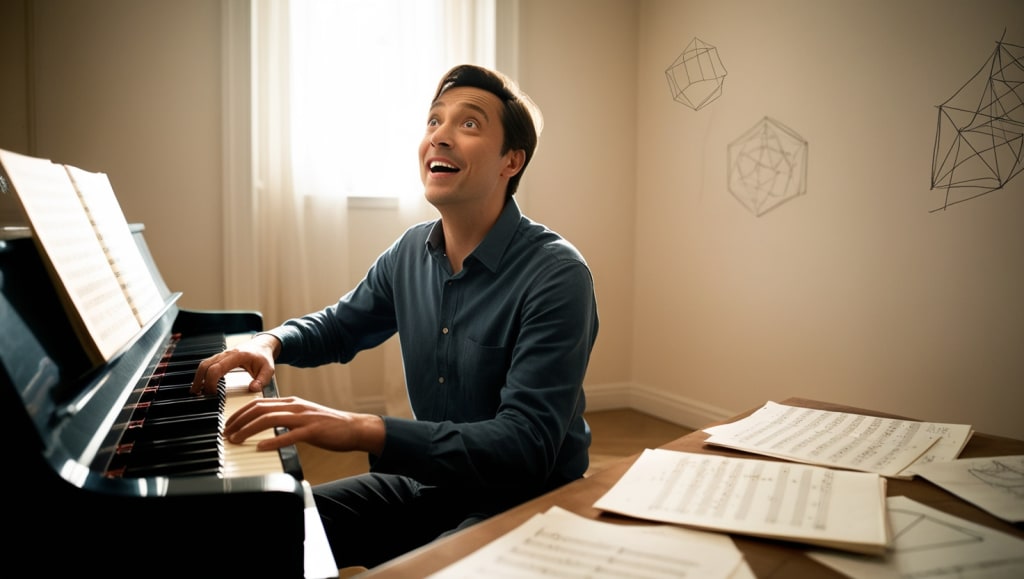
Derek Amato, a Colorado man with no musical background, dove into a shallow swimming pool in 2006 and suffered a major brain injury. Everybody was astonished; when he awoke, he changed radically rather than just healing. Derek came to a piano just a few days later and started producing incredibly gorgeous music as though he had been playing for years. This incident uncovered an amazing phenomenon known as acquired savant syndrome, a rare condition in which a person displays remarkable artistic, mathematical, or intellectual ability after an accident or sickness.
Though highly unusual, what seems like the storyline of a science fiction movie is genuinely real. Globally, there are only about 50 well-documented cases of this occurring. Every instance, meanwhile, offers understanding of the amazing potential of the human brain.
What Is Acquired Savant Syndrome?
Unlike congenital savant syndrome (which typically appears in individuals with autism or developmental disorders), acquired savant syndrome emerges suddenly—after a brain injury, stroke, or even lightning strike. The individual, often previously average in skill, begins to display genius-level abilities in specific domains, such as:
- Playing complex musical pieces by ear
- Solving advanced mathematical problems
- Creating hyper-realistic artwork
- Speaking or understanding foreign languages without prior study
What makes it especially astonishing is the lack of formal training—the skills seem to “download” into the mind overnight.
The Brain’s Hidden Blueprint?
Experts believe that everyone has dormant talent in the shape of neural pathways that could generate untapped potential. Intriguingly, brain damage could trigger these areas. Much like a computer that retrieves lost files after a crash, the brain may reorganise itself to expose unforeseen skills.
Some researchers highlight the left anterior temporal lobe, which often sustains damage from trauma, as crucial in showing great talents. Because it might destroy mental blocks that normally filter off useless information, the thoughts of the subconscious could surface when this area is damaged. This may lead to a burst of new viewpoints or creativity.
After his accident, for example, Derek Amato experienced an increase of black and white geometric patterns in his visual cortex, which inspire his musical compositions today. "I don't read music," he says of his technique. I understand. I use my hands to follow the patterns.
Real-Life Stories That Defy Explanation
1. Tony Cicoria, a surgeon in New York, was struck by lightning. Though he had never played before, he had a great urge to play the piano after he was well. He then composed classical music that shocked even professional musicians.
2. Once a furniture salesman, Jason Padgett was hurt in front of a karaoke bar. Following a concussion, he developed a strong interest in geometric forms and began producing extremely complex fractal art. Presently, he instructs in quantum physics.
3. Orlando Serrell was hit by a baseball at age 10 and suddenly acquired a calculating date capability. He can specify the day of the week for any past date, even from decades ago.
None of these people showed any evidence of outstanding talent before their events. Their lives changed drastically—sometimes in good ways, other times in hard ones.
The Double-Edged Gift
Although acquired savant syndrome may look remarkable, it has its drawbacks. It usually follows brain injuries and causes emotional instability, persistent cognitive impacts, or constant headaches. Some individuals get sensory overload or develop obsessivecompulsive behaviors related to their new skills.
For many, going back to their former lives is difficult. Friendships evolve, career paths change, and everyday schedules get disrupted. Jason Padgett said I became unrecognizable to other people. I was unsure even who I was anymore.
Furthermore, there is an emotional burden: striving to grasp why they were "chosen," afraid their talents might disappear, and under pressure to live up to the expectations of their newly discovered genius.
What It Reveals About the Brain
Acquired Savant Syndrome offers a fascinating view on the brain's flexibility and great ability for transformation. Furthermore raises several philosophical questions about this phenomenon:
Every one of us has a hidden genius just waiting to be unearthed.
Is creativity an inherent capacity that gets stifled or anything we learn?
Should we try to access this latent capacity using technology or counseling?
Using transcranial magnetic stimulation (TMS), a noninvasive technique that briefly modifies brain activity, scientists are now looking at how to create savantlike experiences. Some participants saw temporary improvements in skills including drawing, memory, and pattern recognition in well thought out studies.
The goal is to understand how to improve creativity, memory, and learning among normal people rather than to create artificial savants.
Embracing the Mystery
Acquired Savant Syndrome remains one of neuroscience’s greatest enigmas. It challenges long-held beliefs about intelligence, talent, and brain injury. While most of us will never spontaneously become virtuosos after a bump on the head, the condition reminds us that the human brain holds secrets still waiting to be unlocked.
For those who live with this mysterious gift, the journey is often confusing, profound, and deeply personal. As Derek Amato puts it, “I don’t know why I was given this, but every note I play feels like a message from somewhere deeper than thought.”
External Link for Further Reading:
Scientific American – Savant Syndrome: A Peek into Extraordinary Potential
About the Creator
Keep reading
More stories from Shahjahan Kabir Khan and writers in Psyche and other communities.
“I Feel Your Pain—Literally: The Astonishing World of Mirror-Touch Synesthesia”
When Touch Crosses the Boundary of Self Have you ever grimaced when you saw someone injured their foot? Seeing other people in agony makes many of us uncomfortable since we might connect with their experience. But for those with MirrorTouch Synesthesia, this experience is a tangible one, not just a metaphor. When they witness someone suffering a paper cut, they can feel phantom pain on their own bodies. If a friend is hugged, they also feel that hug. This rare brain abnormality transforms regular social interactions into very physical sensations.
By Shahjahan Kabir Khan7 months ago in Psyche
The Age of Solitude: Why More People Are Choosing to Be Alone—and What It Means for Society
Introduction: The Quiet Revolution of Being Alone Being alone has never been easy. Throughout history, solitude has been conceived as loneliness—something to be pitied or feared, a condition of the rejected or unwanted. It was the opposite of belonging, an shadow cast by human failure to connect.
By The Chaos Cabinetabout 22 hours ago in Psyche



Comments
There are no comments for this story
Be the first to respond and start the conversation.