support
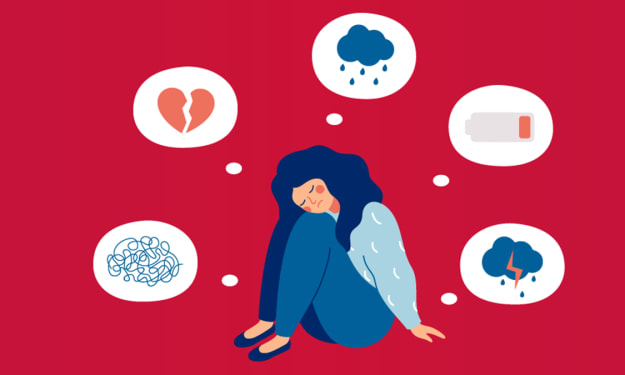
A solid support system is invaluable for one's recovery from psychiatric illness and mental health issues.
How to talk about mental health issues with loved ones
How to talk about mental health issues with loved ones Talking about mental health issues with loved ones can be a sensitive and important conversation. When it comes to discussing mental health issues with loved ones, it's important to approach the conversation with sensitivity and care. It can be difficult to open up about personal struggles, so it's important to create a safe and supportive environment for both parties involved. It's also important to focus on sharing feelings and experiences rather than assigning blame or making accusations. Practicing active listening and validating their emotions can help build trust and strengthen relationships. It's important to remember that seeking professional help is also a valuable resource and can aid in the recovery process.Here are some steps to consider when approaching this topic:
By Cutee capriconz3 years ago in Psyche
Understanding and Managing Anxiety
Introduction In today's fast-paced and demanding world, anxiety has become a prevalent issue affecting millions of people worldwide. Whether it's due to work pressures, relationship challenges, financial concerns, or global events, anxiety can significantly impact our overall well-being. However, understanding anxiety and learning effective tools for managing it can empower individuals to navigate the ups and downs of life with greater resilience and inner peace. In this article, we will explore the nature of anxiety, its causes, and provide practical strategies for coping with anxiety in a stressful world.
By Melodic Narrator3 years ago in Psyche
Mood disorders
It is often quite natural when a person has irritability, anger, happiness or sad, and etc. These moods change from time to time depending on the situation and fragility of it. "A mood disorder is a condition that severely impacts mood and its related functions" (DiMaria, 2022). This is where the mental health conditions heavily impact your mood and emotional state, which may later have an effect on the body and mind.
By Mahpara Mukhtar3 years ago in Psyche
Shadows of the Mind
In the quiet town of Willowbrook, an enigmatic phenomenon begins to unfold, casting a shadow of intrigue and mystery over its inhabitants. People from all walks of life, seemingly unrelated, find themselves grappling with unexplained memories and emotions that disrupt their daily lives. As the shadows of the mind deepen, a captivating mental health story emerges.
By Sambo E. I.3 years ago in Psyche
Depression
Depression is something that is known throughout the world yet there is not much knowledge given to what it actually is. Grieving or feeling sad about trying circumstances in life, such losing your job or being divorced, is natural. Depression, on the other hand, differs in that it lasts for at least two weeks, nearly every day, and itself in more symptoms than just melancholy.
By Mahpara Mukhtar3 years ago in Psyche
Emotions, Vulnerability and Trust
In a world where masks and facades often dominate our interactions, the power of emotional vulnerability shines as a beacon of authenticity and connection. When we open ourselves up to the depths of our emotions, allowing others to witness our true selves, remarkable transformations can occur. This article takes you on a journey exploring the significance of emotional vulnerability and its impact on personal growth and meaningful relationships.
By Ngange Krubally. B.Sc, M.Sc.3 years ago in Psyche
How To Build Trust With Your Employees to Improve Retention
Introduction In today's competitive job market, retaining talented employees is crucial for the success of any organization. Building trust with your employees is a fundamental step towards ensuring their loyalty and commitment to the company. Trust creates a positive work environment and paves the way for open communication, collaboration, and increased productivity. Moreover, it is equally important to prioritize your employees' mental well-being. By implementing a comprehensive mental wellness program, you can support their emotional health and foster a more engaged and motivated workforce. In this article, we will explore effective strategies to build trust with your employees and highlight the significance of a mental wellness program for employees for their overall well-being.
By sanidhya sawant3 years ago in Psyche
Exploring Different Therapy Options. Content Warning.
If you've been experiencing persistent sadness, lack of motivation, irritability, anxiety, or a constant feeling of being on edge for weeks or months, it might be time to consider therapy. Seeking help is an important step towards improving your mental well-being and overall quality of life. However, with the wide range of therapy options available, it can be overwhelming to determine which one is best suited for your needs, especially if it's your first time seeking therapy. This article aims to provide insights into some commonly used therapies for mild depression, helping you make an informed decision about which approach might be most beneficial for you.
By Harsh Patel3 years ago in Psyche
Schizophrenia
Schizophrenia is a complicated mental health problem that is hard to make sense of put together; many people tend to confuse Schizophrenia with multiple personality disorders, but has no connection with it whatsoever. "Schizophrenia is a chronic, severe mental disorder that affects the way a person thinks, acts, expresses emotions, perceives reality, and relates to others" (Bhandari, 2022). It can also be defined as: "Schizophrenia refers to both a single condition and a spectrum of conditions that fall under the category of psychotic disorders" (Cleveland Clinic, 2018). Many behaviors or experiences may be a part of this disorder; or the behaviors could be due to schizophrenia. "When schizophrenia is active, symptoms can include delusions, hallucinations, disorganized speech, trouble with thinking and lack of motivation" (American Psychiatric Association, 2020).
By Mahpara Mukhtar3 years ago in Psyche
Science Behind Transmission of Norms and Values
Functionalists support the process of socialisation in society as the main agencies teach individuals the expected norms, values and attitudes in society which will create social order and prevent deviance, (item b). A functionalist which supports socialisation is Talcott Parsons who introduces his theory on the ‘organic analogy’. Parsons refers to the organs in the body as a reflection of how society operates in a stable manner. Socialisation benefits society as it teaches all the correct norms and values to all in society from a young age. This creates social cohesion, meaning that society becomes stable, which reduces and helps to prevent crime and deviance in society. Talcott Parsons introduced the term ‘value consensus’, which is formed due to socialisation. Value consensus is when all in society are in an agreement, leading to social stability. Agencies of socialisation, like family, reinforce value consensus. Family acts as primary socialisation, and it teaches the key norms and values of society, such as manners and societal norms. Such is taught from a very young age, which is significant in reinforcing value consensus as it unites all in society by creating agreement. However, a Marxist interpretation may dispute this as they would argue that primary socialisation is different for upper-class children and working-class children as the bourgeoisie teach their children the exploitation of the working class.
By G.A.L. Grace3 years ago in Psyche
Autism Disorder
"Autism spectrum disorder (ASD), or autism, is a broad term used to describe a group of neurodevelopmental conditions" (Cherney, 2018). Disparities in communication and social interaction are characteristics of these disorders. People with ASD frequently exhibit repetitive or constrained inclinations or behaviors. Since signs of autism often arise in the first two years of life, it is referred to as a "developmental disorder" but can be diagnosed at any age.
By Mahpara Mukhtar3 years ago in Psyche