schizophrenia
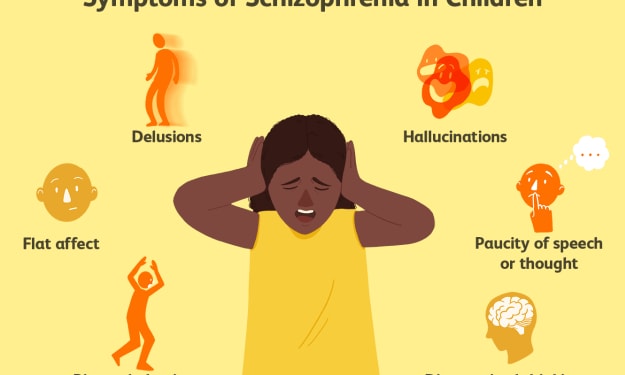
Schizophrenia 101; look beyond the pop culture portrayals and learn the reality behind this oft-stigmatized mental illness.
Why the World Needs More People with a Good Heart?
Introduction: In a world that often feels chaotic, divided, and sometimes unkind, one of the most precious gifts we can offer is a good heart. But what does it mean to have a good heart? It’s not about being perfect, or always doing the right thing. Rather, it’s about carrying kindness, empathy, and a genuine care for others, regardless of the situation. In a society that often emphasizes success, status, and material wealth, having a good heart is a silent but powerful revolution. People with good hearts offer something that is so desperately needed today — a chance for humanity to reconnect with its compassion. And this world needs more of them now than ever before.
By Inside the soul11 months ago in Psyche
The Power of Forgiveness: How Letting Go Can Free Your Heart
Introduction: Forgiveness is not just about letting others off the hook. It's about freeing yourself. In a world full of grudges, bitterness, and unresolved conflicts, forgiveness is the key to peace. It’s a strength, not a weakness — and it’s one of the most powerful tools we have to heal ourselves and build stronger, more meaningful relationships. The process of forgiving can be incredibly liberating. It’s an act that empowers you to move forward in life, without the burden of past pain. Whether it’s forgiving someone who hurt you deeply or forgiving yourself for mistakes you've made, the act of letting go of resentment brings healing in profound ways. In this article, we'll explore how the power of forgiveness can transform your life and help you find peace within.
By Inside the soul11 months ago in Psyche
Schizotypal Personality Disorder: Eccentricity, Magical Thinking, and Treatment Options
One such domain, in my experience, is a realm of human behavior so complex and mysterious that it questions the very concept of “normal.” Schizotypal Personality Disorder (STPD) is one such condition marked by great eccentricity, a predilection for magical thinking, and interpersonal quirks defying conventional classification. Today we travel into the depths of STPD: we investigate its historical roots, look at its distinguishing clinical traits, investigate the subtleties of magical thinking, and map the changing terrain of therapeutic methods. This is a long, introspective journey meant not just to inform but also to promote understanding and empathy for those whose inner worlds are vibrantly colored.
By Waleed Ahmed11 months ago in Psyche
Search the best schizophrenia treatment in Gurgaon
Schizophrenia is a complex and chronic mental health disorder that affects a person's thinking, feelings and behavior. This can significantly affect a person's ability to function in daily life, but with correct treatment and support, individuals with schizophrenia can complete life. In Gurgaon, many treatment options and healthcare providers are available to help people struggling with schizophrenia, offering many approaches to manage symptoms and promotes recovery.
By Tulasi Health Care11 months ago in Psyche
Schizophrenia treatment in Gurgaon
Schizophrenia is a complex and chronic mental health disorder that requires a comprehensive approach to treatment. In a city like Gurgaon, which has a growing healthcare infrastructure, there are several treatment modalities available that aim to address both the symptoms and underlying causes of schizophrenia. The treatment process generally involves a combination of therapies, supportive care, and lifestyle adjustments. Here’s an outline of the best treatment strategies for managing schizophrenia in Gurgaon.
By Tulasi Health Care11 months ago in Psyche
Chapter IV: The Fool’s Lament Beneath the Comet’s Eye
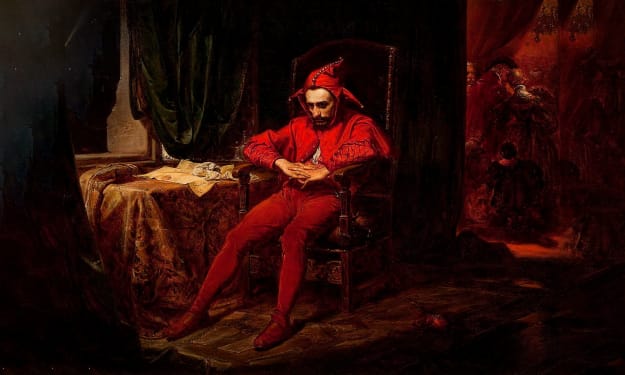
Kraków was engulfed in night like a heavy coat that thickened and resisted shedding, as if there were an invisible force rejecting all life around. Inside a chamber dark as the depths of a comet’s tail spilling through a window, glowing a faint grey, sat a man alone. His clothes were a strange mixture of bright red and black, adorned with jingle bells that rang out laughter, as though whatever once caused them to do so was simply an echo now devoid of sound. This man was Stańczyk, the court jester, yet the expression on his face was anything but jovial. He appeared astonishingly forlorn, his haunted gaze lost deep within the throes of a letter weightily spread open on the table before him. All Stańczyk could notice was a broken, worn wax seal that appeared flaccid like human desire, and the letter whispered softly with the simple phrase 'Smolensk is lost.'
By LUCCIAN LAYTH11 months ago in Psyche
Through the Abyss and Back: A Journey of Mental and Emotional Transformation
The Descent into Chaos "There is a crack in everything. That's how the light gets in." — Leonard Cohen It was an ordinary day, or so it seemed. Yet, beneath the surface of routine, a storm was brewing—a tempest of doubts, fears, and unresolved traumas. We all experience pivotal moments in life, moments when the weight of our emotions reaches a breaking point. But what happens when that breaking point becomes a breakthrough?
By Alain SUPPINI12 months ago in Psyche
Chapter XVII: The Sovereign of Shadows
The wind shrieked, calling me through the hollow arches of my empire, and shared the whispers of those from which I had long departed. They did not capitulate, they did not bend the knee—those stubborn flames in their unyielding commitment who were steadfast in grisly devotion to my cause even while I drifted into infinite nothingness. I stand now before the stripped down bones of my empire, their magnificence reduced to chambers of resonating echo and thrones of dust. *Why have I returned?* The question coils in my heart like the serpent of eternal regret. Perhaps it is the burden of promises I once scarred into the flesh of memory now bleeding through the cracks of time. Or perhaps it is the truth that solitude, even from this frayed kingdom, is a reprieve from the honeyed mumble of humankind. Humanity—how shameless a pantomime! They murmur constantly of virtues they loathe, and in the very next breath, dive into the sins of their own disdain. Their laugh, a knife—that roasts, and their kindness, a mask stuck to rotten flesh. I have tasted their "compassion," a goblet of vinegar, and spit it back into oblivion. They are the architects of their own suffering, bringing offerings of opinions about the innocence of gutting like lambs to a slaughterhouse. Weakness masquerades as strength in their world—a monstrous breeding from the bones of gentle chitterers.
By LUCCIAN LAYTH12 months ago in Psyche
The Mirror Within
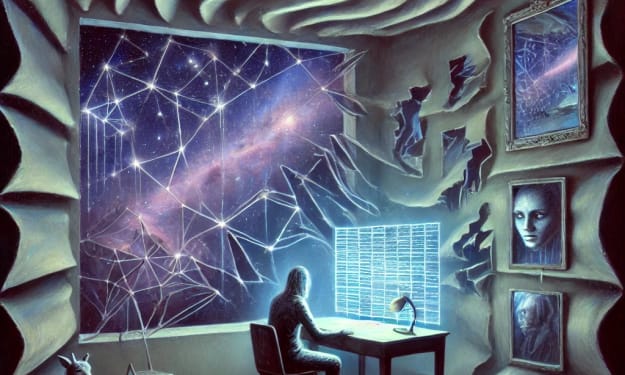
Some nights, the walls forget their shape. I sit at my desk, fingers hovering above the keys, while the room folds like a crumpled sheet of paper. Outside, the goats scream—though I’ve lived here long enough to know it’s just their language, coarse and unashamed. Inside, the frogs from the lake chant an offbeat rhythm, croaking my name backwards.
By Stéphane Lallée12 months ago in Psyche
Change is a Part of Life
In the Sonapur village, the old mango tree was casting a shadow as the sun set. The slender dirt road where Rohan used to play was bathed in golden light. Now, years later, he was returning after a long time, a stranger to the place he once called home.
By Niranjon Chandra Roy12 months ago in Psyche
From Breakdown to Breakthrough: How a Mental Meltdown Became My Superpower
The Moment My Brain Declared War Have you ever felt like your mind was conspiring against you? One minute, you're cruising through life; the next, you're tangled in an emotional tornado with no exit sign. My moment of reckoning hit me like a rogue wave, and it forced me to face parts of myself I had expertly avoided.
By Alain SUPPINI12 months ago in Psyche