personality disorder
Personality disorders are as complex as they are misunderstood; delve into this diagnosis and learn the typical cognitions, behaviors, and inner experience of those inflicted.
Life with Borderline Personality Disorder
I’m not an expert writing in my field. I am a patient who was diagnosed several years with incorrect disorders. It is not easy to be diagnosed as Borderline, which I will refer to now as BPD. There are nine qualities that your therapist or psychiatrist will go over to determine if this is really what you have. As difficult as it is to diagnose, it is difficult to deal with. What I’m wanting to share is my experience with the nine major signs, and hopefully help others that are suffering and don’t know why.
By Rhiannon Brown Reeves5 years ago in Psyche
Are narcissists evil or disabled?
Personality disorders are most often a response to trauma. And narcissistic personality disorder is almost impossible to cure because it tends to cause the person afflicted with NPD to play mind games with therapists. It’s a really awful personality disorder. Sadly, it means that whilst their interpersonal communication skills are top-notch from a marketing/PR perspective their relationships tend to be very superficial and built on finding a supply to feed their ego with in a vain attempt to feel better about themselves. They’re really tied up quite tightly by their personality disorder and it’s almost impossible to treat NPD because narcissists play mind games with therapists and aren't capable of being vulnerable enough for therapy to be helpful.
By Arié Moyal5 years ago in Psyche
Narcissist Personality Disorder
Do we know when we encounter a narcissist? Are they able to be pointed out? No, unfortunately we all have a little of narcissism in us, however not as much as others. Here I’ll explain what narcissist personality disorder is. Also, will talk about treatment, when to see a doctor, complications, symptoms, risk factors, prevention and two types of narcissist personality disorder.
By MICHELLE SMITH5 years ago in Psyche
How My Wife Taught me about Mental Health
I have always considered myself an intelligent person, and I strive to be open-minded. I am smart enough to realize that there are things I don’t know, and don’t understand. I know my limits, but have always strived to broaden my horizons by learning that which I do not know. I was always taught to push myself. If I came across a word I didn’t know, I’d look it up. If someone offered an opinion different than mine, I’d look into the facts. If it turned out that the facts had changed, I’d change my opinion rather than argue. This outlook has served me well in life, at least until recently. I have finally come up against something that I just can’t seem to wrap my head around: Mental Health.
By Jared Baker5 years ago in Psyche
The 5 Common Characteristics Of A Narcissist.
When you are trying to determine if you or if someone you know is a narcissist, you need to keep in mind that you should look for clues on behaviors and patterns. Narcissism can't be identified using physical blood tests or MRIs. Overall, you will need to go on to observe behaviors and attitudes that a person (or you yourself) shows.
By Blue Dymond5 years ago in Psyche
BPD: Impressionable or Motivated?
Living with Borderline Personality Disorder can be hard, especially when I tend to be really venerable to what others think and say. Maybe it is simply the fact that with BPD, I think others are more worthy than me, therefore, there word means more than my own.
By Katherine Estelle5 years ago in Psyche
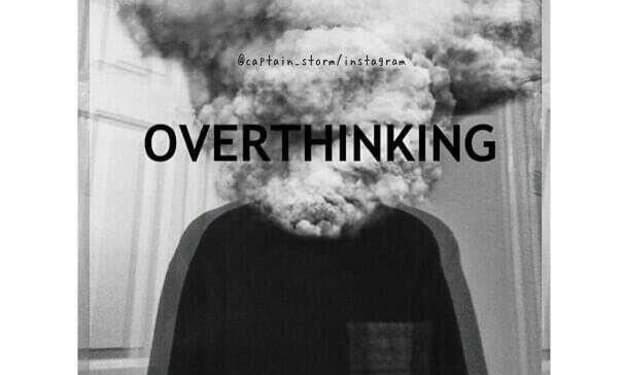
Why am I overthinking?
Hello, my name is Victoria Grace and I am very new. This is my first story and I though about writing something that is not something that would probably be on here. Keep in mind the story I am about to tell you, I have never seen myself do, my mother has told me what I've done.
By Victoria grace5 years ago in Psyche
My Multiples Won"t Leave Me Alone.
To be honest I don"t know who is writing this, or which personality is writing this, I just know that I find myself talking and answering myself a lot these days and some of the voices are not my own. This is not a cry for help it's to let others know that mental health can be a serious matter.
By Anthony Leclair5 years ago in Psyche