humanity
Mental health is a fundamental right; the future of humanity depends on it.
The power Of silence
The Power of Silence: Debunking Stereotypes and Embracing the Quiet Life In a world that is increasingly loud and chaotic, the power of silence is often underestimated. Silence is often associated with boredom, loneliness, and even sadness. However, silence can be incredibly powerful and can have a profound impact on our physical and mental wellbeing. In this blog post, we will debunk some of the stereotypes around silence and explore the ways in which silence can be embraced as a positive force in our lives. From mindfulness meditation to simply turning off our devices, we will demonstrate how incorporating silence into our daily routines can lead to greater calm, clarity, and fulfillment. If you are ready to explore the power of silence, then read on!
By oghenerukevwe favour anthony2 years ago in Psyche
Unveiling the Hidden Treasures: Exploring the Potential of Rainforests in Curing Diseases.
Rainforests, often referred to as the Earth's lungs, are some of the most diverse and complex ecosystems on the planet. These lush and vibrant habitats are not only home to a rich variety of flora and fauna but also hold the promise of untold wonders for humanity. Among the myriad of possibilities, one of the most captivating ideas is the existence of herbs within rainforests that have the potential to cure various diseases. While this notion has sparked excitement and curiosity, it also raises ethical and environmental concerns. This essay delves into the possibility of rainforests containing herbs that could cure diseases, exploring the scientific basis, cultural knowledge, conservation challenges, and the potential for new medical discoveries.
By Armando Rios2 years ago in Psyche
Should Making Money Be The Measure Of Self-Worth?
Did you know that, in the United States, the average CEO income is way higher than that of average workers. In 2021, the average CEO of a S&P 500 company made $18.3 million, while the median worker made just $58,260. This means that the average CEO was paid 324 times more than the median worker. In fact, the CEO-to-worker pay ratio has been steadily increasing for decades. In 1965, the average CEO made only 20 times more than the median worker. Twenty-five years later the ratio had increased to 59-to-1. And in 2021, it reached an all-time high of 399-to-1.
By Elaine Sihera2 years ago in Psyche
Become who you are Afraid to be.
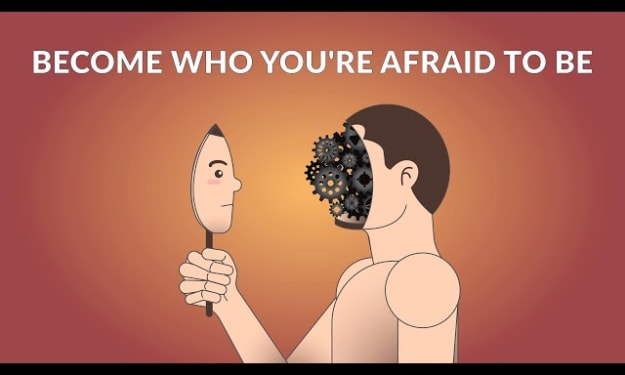
Most people are afraid to fully be themselves. They’re afraid to embrace the parts of themselves that might be regarded as unacceptable, because embracing these unacceptable parts makes them feel uncomfortable. So to escape this uncomfortableness, they divide themselves into two halves: conscious and unconscious. In the conscious-half, they construct an ideal image of themselves: an image formed out of the bits and pieces of their past that they deem as good and acceptable. And as a result, in the unconscious-half, they repress the parts of themselves that they view as bad and unacceptable. In Jungian psychology, this repressed part of the personality is called /The Shadow/. And unless The Shadow is integrated into the personality, a person can never reach their fullest potential. Instead, one will always remain incomplete, fractured, and partial—living a life of regret rather than the full life that could have been. Imagine, for example, that I’ve solved a few equations and convinced myself that I’m a great mathematician. I might meet a few friends, and they tell me that they have a maths club. They gather every weekend and try to have a crack at maths most difficult problems. This scares me, because if I join, I’ll no longer get to be the ‘great mathematician’ that I’ve convinced myself I am. Instead, I’ll be a concrete person with actual strengths and weaknesses. And in this scenario, there are two possible actions I can take. The first action is to run from my shadow and let it grow. I refuse to join the maths club and realize my own weaknesses as a mathematician. I get to cling to the ideal image of myself as a great mathematician, but as a result, I lose the opportunity to actually become one. The second action is to come into contact with my shadow and integrate it. I join the maths club and realize that I’m not the great mathematician that I thought I was. In the short term, this hurts. I discover that I’m not very good at geometry, but also that I excel in differential equations. I become measured with my colleagues. I have an actual place and rank among other mathematicians. In reality, I realize I’m not the great mathematician I thought I was, but now I open up the possibility of actually becoming one. I can actually improve my skills and rank. In the long run, this ends up being the best decision I’ve ever made. See, in a way, we often prefer to be pure potential. We convince ourselves we /could be/ whatever we want to be, but don’t actively work to /actually/ be something. We just comfort ourselves with the idea that we could be something if we wanted to. This is because when we work towards something, we start feeling our weight in the world. We’re measured and ranked. We’re quantified and actual. And this actual reality is often less pleasurable to live in than our ideal fantasy. But it’s real, not a fantasy. And reality can be improved, but a life of imagination always ends in tragedy. The path to self-improvement starts with self-acceptance. Only by embracing and integrating our shadow, by accepting the ugly parts of ourselves, by becoming who we’re afraid to be, can we reach our fullest potential. But if we reject our shadow, if we pick and choose the parts of our past, personality, and behaviour that we like and repress the parts of ourselves we fear, we become incomplete and partial. And instead of living a full, whole life, we live one full of regrets. But it’s up to you to decide: in Jungian terms, will you embrace your shadow or reject it? Would you rather fail in actuality or succeed in mere hypotheticals?
By Ash Martin2 years ago in Psyche
Unlocking the Complexities of Human Behaviour
Unlocking the Complexities of Human Behavior: 31 Fascinating Psychological Facts Revealed The human mind is a complex and fascinating thing. It's capable of so much, from solving complex problems to creating beautiful art, music, and literature. But it's also capable of dark thoughts and emotions that can be difficult to understand. Psychology is the study of the human mind and behavior, and it can help us unlock some of the mysteries of how we think and feel. In this blog post, we'll explore 31 fascinating psychological facts that reveal the complex workings of the human mind. From the power of persuasion to the way we perceive time, these facts will give you a new perspective on the way we think and interact with the world around us. So sit back, relax, and prepare to learn something new about yourself and the people around you.
By oghenerukevwe favour anthony2 years ago in Psyche
The Intriguing Connection: Exploring the Possibility of a Baby Absorbing Mother's Memory and Genetics
The bond between a mother and her child is one of the most profound and mysterious connections in the human experience. As a baby develops within the mother's womb, it is nurtured and shaped by her body, but does this intimate connection go beyond physical nourishment? This essay delves into the fascinating question of whether a baby absorbs its mother's memory and genetics during pregnancy, exploring the current scientific understanding and cultural beliefs surrounding this phenomenon.
By Armando Rios2 years ago in Psyche
15 Mind-Blowing Psychological Discoveries
The realm of psychology delves into the intricacies of the human mind and behavior. Over the course of decades, studies aimed at unraveling the complexities of human nature have been conducted, and this exploration continues to evolve. With each passing day, our knowledge deepens, yet there remains an abundance of uncharted territory. Amid the array of research findings, some stand out as particularly captivating. Did you know that the use of punctuation in text messages can inadvertently convey insincerity? Brace yourself for an enthralling journey through the realm of psychology. The ensuing collection of psychological revelations might provide insight into your own behaviors and those of others.
By Jessica Church2 years ago in Psyche
Unlocking the Potential: Strategies to Enhance Human Intelligence
Human intelligence is a remarkable attribute that defines our capacity to learn, reason, adapt, and solve problems. While genetics play a significant role in determining our cognitive abilities, it is possible to enhance and maximize our intelligence through various practices and lifestyle choices. This essay explores a comprehensive range of strategies to increase human intelligence, empowering individuals to unlock their full intellectual potential.
By Armando Rios2 years ago in Psyche
Unraveling Alzheimer's. Content Warning.
Alzheimer's disease is a progressive neurodegenerative disorder that primarily affects memory, cognitive function, and behavior. It is the most common cause of dementia, a term used to describe a group of symptoms affecting memory, thinking, and social abilities severely enough to interfere with daily functioning. In this comprehensive article, we will explore the symptoms, psychological and biological causes, consequences, medical treatments, psychological interventions, and precautions associated with Alzheimer's disease
By Shams Ul Qammar2 years ago in Psyche