
Reputation Burnout: Why Managing Your Image Is Draining Your Soul
In the era of personal branding, authenticity is sacrificed at the altar of perfection.

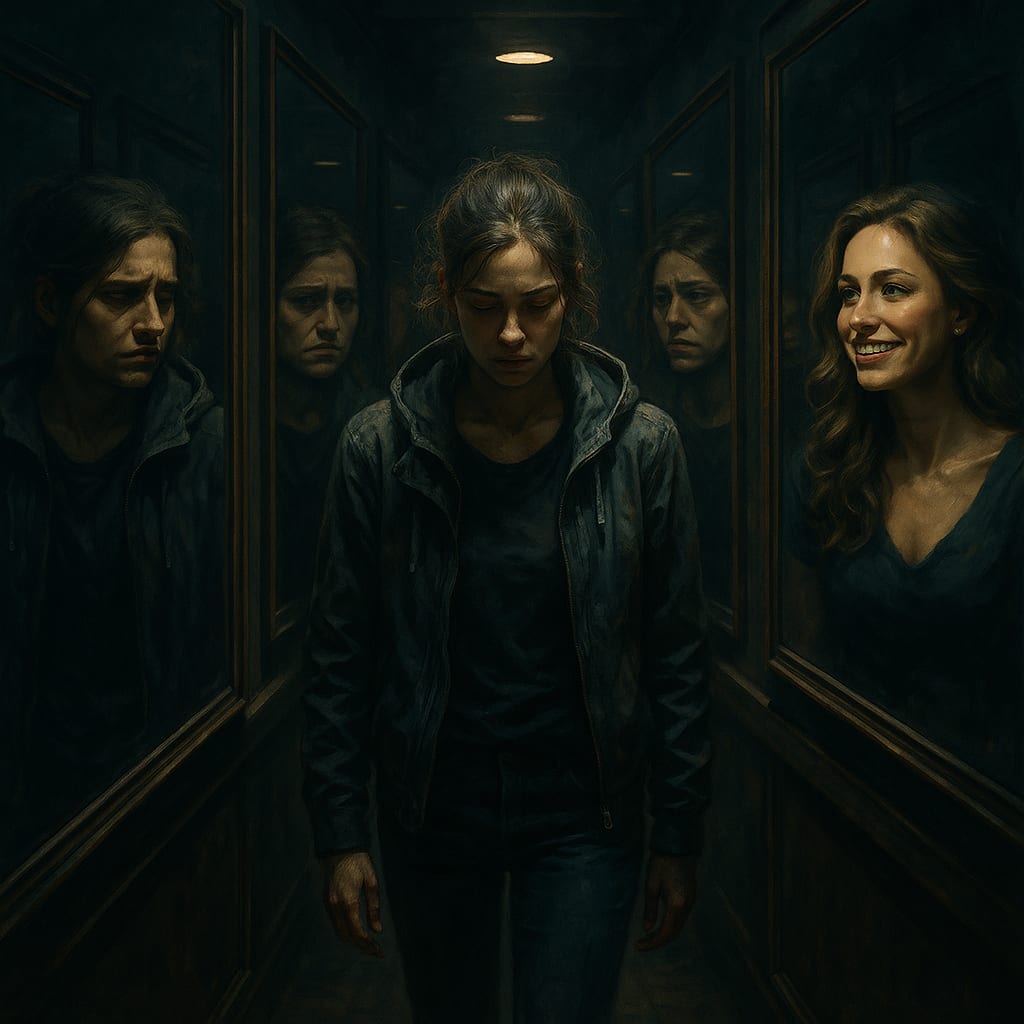
In the era of personal branding, authenticity is sacrificed at the altar of perfection.
It starts with a profile picture.
Not just any photo, but one taken from the right angle, under the right lighting, filtered just enough to say, "I woke up like this," without revealing the hours of staging it actually took. Then comes the bio. Short, witty, confident. You want to seem competent but not boastful. Unique, but not weird. Approachable, yet aspirational.
And then, the feed.
You carefully curate every post, every tweet, every story. You delete that old tweet from 2014. You archive the photo that didn’t get enough likes. You rewrite a caption six times to strike the perfect balance between humblebrag and relatability.
Welcome to reputation management—the quiet, constant performance that defines our digital lives.
The Cult of Personal Branding
We used to associate "branding" with companies. Now, it's deeply personal. Whether you're an artist, a job seeker, a student, or a stay-at-home parent with a TikTok account, you're told to "build your brand." Online courses, coaches, and influencers will sell you templates, strategies, and color palettes for your digital identity.
And it's exhausting.
Branding demands coherence. Your identity must be legible to others at a glance. It must make sense. It must be likeable. And it must be maintained.
This is not inherently bad. Reputation, after all, has always mattered. But the permanence, visibility, and global scale of digital identity have turned what was once a social instinct into a psychological burden.
You no longer just are; you must appear to be.
The Performative Self
Sociologist Erving Goffman, in his classic work The Presentation of Self in Everyday Life, argued that social interaction is like a stage performance. We play roles, adopt personas, manage impressions.
But Goffman never imagined Instagram.
Now, the stage never closes. There’s no backstage. You are always "on." And it doesn't matter if you're in your bedroom in pajamas or at a beach in Bali—your digital self must be composed, curated, and brand-aligned.
Over time, this fractures you. You begin to separate your "public self" from your real one. You find yourself smiling in photos when you're struggling. You tweet affirmations you don't believe. You "engage with your audience" when all you want is solitude.
And slowly, authenticity erodes.
The Anxiety of Being Seen
Social media was once a tool for connection. Now, for many, it's a stage of surveillance.
You worry not only about being liked, but being correct. Is this post tone-deaf? Is this joke problematic? Will this opinion get me canceled? We’ve entered an era where the self is constantly litigated—by algorithms, by strangers, by our own inner critics.
This leads to chronic social anxiety. Not in the clinical sense, necessarily, but in a daily, gnawing self-awareness. You walk through your day considering how it would look on a story. You filter your real-time experiences through imagined audiences.
Even joy feels performative.
The Burnout Is Real
When every action becomes content, every thought a potential tweet, every sunset an opportunity for engagement—your internal life gets hollowed out.
We are not designed to be "consistently on-message." Real humans are inconsistent, messy, and full of contradictions. But the internet hates ambiguity. It wants clarity. Certainty. Consistency.
So you suppress the parts of yourself that don’t "fit."
Eventually, it catches up to you. Studies have linked excessive social media use to anxiety, depression, and self-esteem issues. But there’s a deeper emotional fatigue few talk about: the existential tiredness of being perceived.
You long for anonymity, not because you want to disappear, but because you want to exist without explanation.
The Cost of Perfection
The pressure to appear perfect is especially acute for young adults, who are not just building careers but building identities. College students craft LinkedIn profiles before they know who they are. Creatives second-guess every post. Activists worry that one misstep will invalidate their message.
And in this perfectionism, people lose their voices.
You become afraid to experiment, afraid to be wrong, afraid to evolve. You trap yourself in a version of you that is always 5% shinier than the truth. And that 5% slowly becomes a wall between you and others.
You stop being known. You start being followed.
So What Can We Do?
First, we need to normalize imperfection. Show up with typos. Share the unfiltered photo. Post the half-formed thought. Not everything has to be a performance.
Second, reclaim private spaces. Not everything has to be documented. Not every meal needs a photo. Not every opinion needs a tweet. Create moments that exist just for you.
Third, question the idea of "personal branding" altogether. Ask yourself: Who am I performing for? What am I afraid will happen if I show the real me? What would it feel like to be honest?
Finally, give others permission to be real, too. Celebrate vulnerability. Reward honesty. The culture won't change until we stop applauding perfection and start valuing presence.
The Freedom of Being Whole
When you stop managing your image, you make room for deeper things: relationships rooted in truth, work guided by purpose, joy unfiltered by optics.
You remember what it means to be human.
Not a brand. Not a feed. Not a performance.
Just you.
And that is more than enough.
About the Creator
Ahmet Kıvanç Demirkıran
As a technology and innovation enthusiast, I aim to bring fresh perspectives to my readers, drawing from my experience.
Keep reading
More stories from Ahmet Kıvanç Demirkıran and writers in Psyche and other communities.
The Dimming Mind: How Convenience Culture Is Making Us Forget How to Think
We live in an age of astonishing ease. With a few taps, we summon dinner, diagnose a rash, translate a foreign text, or generate an entire business plan. Algorithms anticipate our desires before we consciously register them. The idea that technology should do the thinking for us has become not only accepted—but celebrated.
By Ahmet Kıvanç Demirkıran7 months ago in Psyche
A Failed Artist, A Disillusioned Poet, An Underpaid Game Show Host
I took my son and niece to Gori, a small town in Georgia where Joseph Stalin was born. They talked me into visiting the Stalin's Museum, the largest in the post-Soviet space. I had resisted going there because I just can't stand the monster and know enough about him, or so I thought.
By Lana V Lynx7 days ago in FYI


Comments (2)
brilliant
Fab story♦️🌼♦️