
Protein Powders May Contain Toxins Linked to Cancer, Study Warns
Organic and Plant-Based Options Among the Riskiest—Here’s What You Need to Know.

A recent study, ladies and gentlemen, has revealed a deeply concerning matter: some of the protein powders people consume to build muscle may contain, instead of beneficial nutrients, insidious toxins that cause cancer. Yes, you heard that correctly! And there are three types of these powders that are the worst of all, it seems.
The "Clean Label Project," a national nonprofit organization dedicated to testing contaminants in various products—from wine to baby food, and from pet food to cleaning products—has issued a new report revealing that protein powders may contain lead and cadmium, two toxic substances with dire consequences. This time, as in 2018, the organization focused on protein supplements, a market valued at $9.69 billion in the United States as of 2023 and expected to more than double by 2033.
The report, my friends, tested 160 products from 70 of the best-selling protein powder brands, representing 83% of the market. Among these products, 47% exceeded safety standards set by either a state or the federal government, including the strict safety thresholds of California's Proposition 65 for toxic metals. Yes, you read that correctly as well!
And what’s truly astonishing, ladies and gentlemen, is that organic products were among those with the highest average levels of heavy metal contamination. Yes, those products that are supposed to be safer and healthier! These products showed three times the amount of lead and double the amount of cadmium compared to non-organic products. As for plant-based protein powders, they fared no better, showing three times the amount of lead compared to whey-based alternatives.
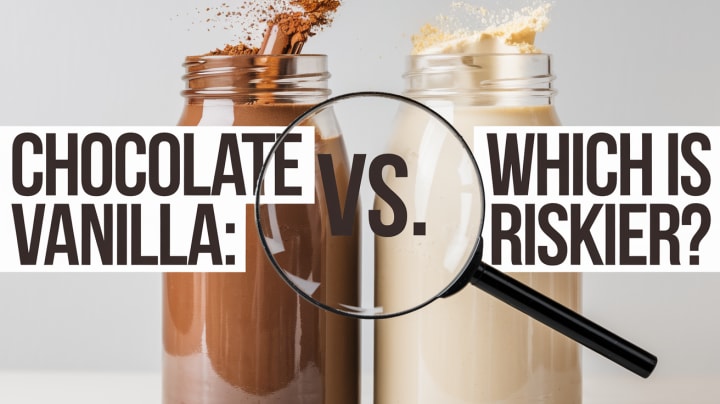
Even chocolate-flavored powders contained four times the amount of lead compared to vanilla, aligning with other recent findings indicating the presence of heavy metals in cocoa-containing products.
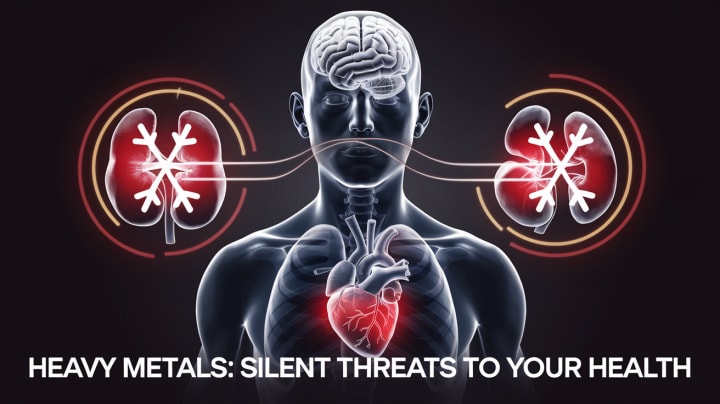
The report states, my friends, that "this study serves as a wake-up call for consumers, manufacturers, retailers, and regulators alike." With the absence of comprehensive federal regulations specifically addressing heavy metals in dietary supplements, it is imperative that the industry takes proactive measures independently.
To compile this report, the Clean Label Project conducted 35,862 individual tests for contaminants, including heavy metals such as lead, cadmium, arsenic, and mercury, as well as bisphenols (BPA and BPS). All of these substances, ladies and gentlemen, can enter products through environmental exposure, agricultural practices, and packaging materials. However, it is worth noting that bisphenol levels have significantly decreased since the 2018 study results.
But, my friends, the Clean Label Project did not respond to Fortune's requests for further details about its methodology. And since it did not provide much detail in the report about its findings, some experts are urging caution.
Felicia Wu, a distinguished professor of food science and human nutrition at Michigan State University, commented that while the heavy metal concentrations exceed the recommended limits of California's Proposition 65, "this report did not reveal the actual numbers, and Prop 65 recommendations are for daily amounts—so it is unclear how much CLP assumed people were consuming protein powder daily." She added, "Without this more detailed information, we cannot determine the real risk to human health."
Moreover, the Council for Responsible Nutrition, which notably serves as the leading trade association representing dietary supplement manufacturers, has taken issue with what it calls the Clean Label Project's lack of "critical context" and its risk of "misleading consumers rather than empowering them."
In a rebuttal on its website, Andrea Wong, senior vice president of scientific and regulatory affairs, noted that "modern analytical techniques can detect even trace levels of naturally occurring elements, such as heavy metals, which are present in soil, air, and water. These trace levels are often well below established safety thresholds set by federal agencies like the Food and Drug Administration (FDA) and the Environmental Protection Agency (EPA)."
Wong added, "California Proposition 65, frequently referenced in CLP’s findings, imposes limits that are uniquely stringent and not aligned with federal guidelines... and it requires labeling of products over that amount, not a ban on them."
According to a 2020 article in the journal Toxicology Report, independent testing organizations, including both the Clean Label Project and Consumer Reports, have been raising concerns about heavy metals found in protein powders since at least 2010. However, the article urges against immediate panic, noting that "health risks of heavy metals in protein powder supplements should be conducted within the context of relevant background exposures and established health-based standards instead of the presence of hazardous substances alone."
Now, my friends, let us speak a little about lead and cadmium. According to the U.S. Food and Drug Administration, there is no known safe level of lead exposure. Young children (and fetuses in the womb) are most vulnerable to its negative effects, which can include learning disabilities, behavioral problems, and lowered IQ. Adults, on the other hand, are prone to kidney dysfunction, hypertension, and neurocognitive issues from chronic exposure.
As for cadmium exposure, which is toxic to the heart and many other organs, there is a low threshold (0.21-0.36 micrograms per kilogram, or per 2.2 pounds of body weight per day), according to the FDA. Ingestion may cause stomach upset, nausea, and vomiting.
So where do these heavy metals come from? While they enter the environment "through natural processes like volcanic eruptions, weathering of rocks, and soil erosion," accumulating in air, water, and soil over time before making their way into human food sources, as the report explains, they can also become more concentrated due to human industrial and agricultural activities.
The report explains that "lead may be present in food from the environment where foods are grown, raised, or processed." Levels of lead in the environment can vary depending on natural geographical makeup and proximity to current or past use or manufacturing of products made with lead. For example, the FDA states that lead entered the environment from the past widespread use of lead in products such as paint, gasoline, and plumbing materials—many of which have been phased out, but not all.
Cadmium, like lead, may be present in food from the environment where foods are grown, raised, or processed, and its levels can vary depending on past use of the metal in manufacturing and its effect on soil. It can be found at higher levels, for instance, in areas where phosphate fertilizers are used and where processes such as smelting, mining, and burning of fossil fuels take place.
The FDA monitors and regulates levels of lead in foods. However, while supplements, including protein powders, are also regulated by the FDA, this is typically done after they are already on the market.
So, my friends, how can we play it safe? The Clean Label Project tested "160 of the top-selling protein powders, sourced from Nielsen and Amazon’s best-seller lists." However, the report does not name any specific products tested, and the list of best-selling products on Amazon changes frequently.
The report does list Clean Label-certified options, some of which are vegan, from the following companies: Genetic Nutrition (from the U.K.); Ritual; Oziva; Puori; Wellbeing Nutrition; Wicked Protein; Nutrabox; Gorilla.
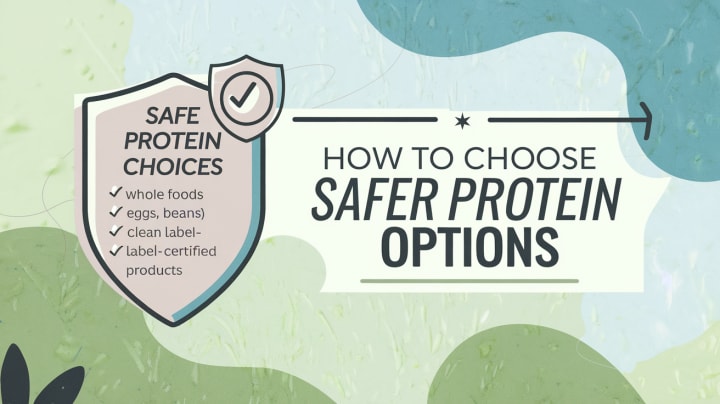
You could also, ladies and gentlemen, abstain altogether from protein powders, which most people do not need, as experts recently told Fortune, preferring for protein to come from whole foods. And chances are, you’re already getting enough protein from food sources anyway.
And so, my friends, we come to the end of this troubling tale. Always remember that caution is necessary, and knowledge is the most powerful weapon in facing such challenges.
About the Creator
Pedro Wilson
Passionate about words and captivated by the art of storytelling.
Keep reading
More stories from Pedro Wilson and writers in Psyche and other communities.
Top tipple tricks
Been thinking a lot about drinking, lately. Not least because of a recent episode of over-indulgence and the inevitable after effects. Some readers may recall the earlier articles I wrote about beating the booze. Here I set out an experiment in techniques for cutting down on my alcohol intake. The experiment was successful, the techniques worked, and I have armed myself with an arsenal of weapons in the war against the demon drink. I have yet to fire the first round however. It's all a question of timing (perhaps procrastination).
By Raymond G. Taylor5 days ago in Psyche
The 'Zero Tolerance' World
It has occurred to me recently that the amount of 'zero tolerance' posters in shops, restaurants and cafes has increased. So what is a 'zero tolerance' poster? It is a poster that states that there is zero tolerance in said establishment of abuse towards members of staff. That the abuse will be treated with police intervention and that there may also be criminal prosecution where necessary. I may not go out and about often but I have noticed a massive increase in these signs basically stating 'please don't beat up our staff' as if someone is going to go in to punch in the head of the Starbucks barista, sees the sign and rethinks his/her stance. I think body cams might be a better deterrent or even allowing the member of staff to retaliate in an appropriate manner. People are less likely to smack the Starbucks barista if they find out that the woman making their coffee has a black belt in some ancient martial arts and is allowed to put their knowledge to good use.
By Annie Kapur2 days ago in Psyche
My First Time Skiing and I Got Lost, Alone, in the French Alps
Looking back, I can trace some of my life’s biggest adventures to a simple action from my sister. She’d introduced me to Tommy (a very long time ago), a colleague of hers, who had overshared his penchant for Italian-looking women, and I ticked that box.
By Chantal Christie Weissabout 16 hours ago in Humans




Comments (1)
Great work. Good to know!