
Poly vagal theory and practical ideas to get out from the immobilization zone | MindfulStack
Today we are talking about poly vagal theory. What’s this about? Let's find out!

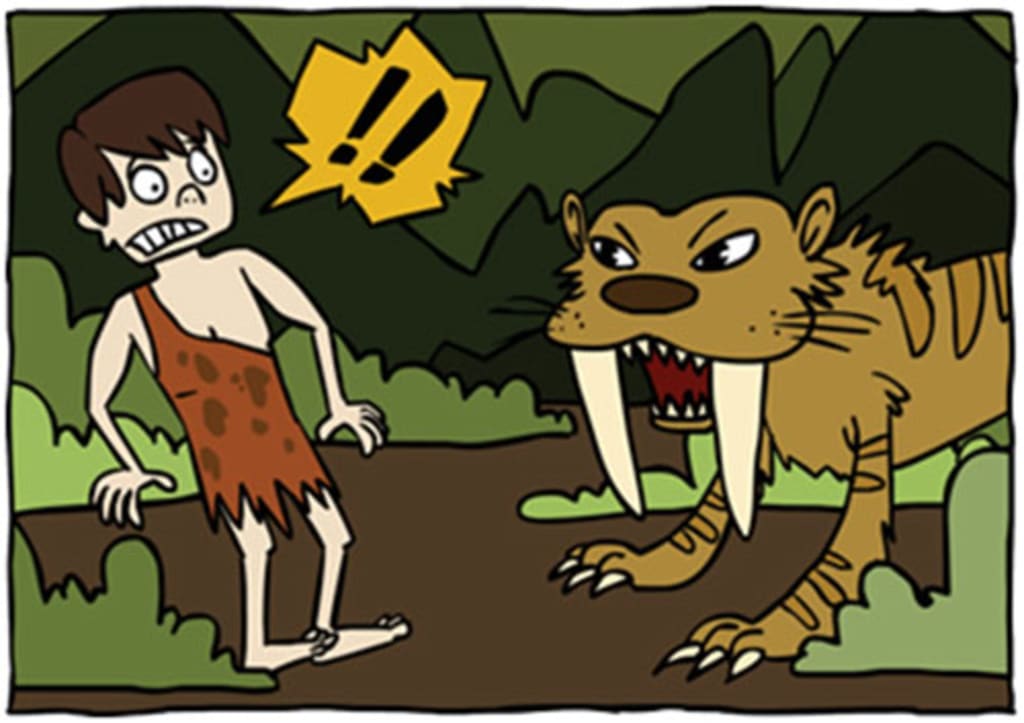
Today we are talking about poly vagal theory. What’s this about?
I am NOT a psychologist or an expert in the field, but in small terms the poly vagal theory explains man’s reactions in dangerous situations.
I hope the insiders will forgive me in case I say wrong stuff😅
Formulated by neurophysiologist Stephen Porges (2014), poly vagal theory is based on the biological evolution of our nervous system. In particular, it identifies a substantial diversity between our reptile ancestors and us mammals, since, unlike them, we are beings who need to establish social relations in order to live.
Explaining it in simpler terms, as opposed to the “classic” paradigm that sees our nervous system alternate between an attack-escape phase and a protection-security phase, the poly vagal theory instead identifies for the nervous system three “zones”: immobilization, attack-escape, security.
DORSAL VAGAL — IMMOBILIZATION
In the language of theory, the immobilization zone corresponds to the term dorsal vagal.
If we are at this stage we can feel depressed, without energy, down in morale, considering that obviously the lower you go down and the worse it is (in the worst cases you can even dissociate).
Based again on personal experience, I can say that in these cases it is important, in my opinion, to do two things: identify what sends you to that area and understand how to go back to a safe zone.
What’s knocking you down? Strong attacks of fear, unexpected, guilt, panic? What makes you “go back up” to a protection zone?
Personally, I’ve experienced that a good laugh tends to cheer me up and get me back into a safe zone.
I believe that in the least extreme cases it is feasible. Find something that will stimulate you a strong laugh, and you will most likely go from an immobilization zone to a security zone.
Alternatively, after observing yourself, try to put down a list of what sends you into immobilization and what can pull you out of it.
SYMPATHETIC — ATTACK-ESCAPE
At this stage we can experience strong feelings of anger, frustration, irritation (attack), or fear, anxiety, concern (escape).
Here it is important to understand in-depth well which triggers stimulate our wrath (I have already talked about it in a couple of articles), or which ones push us, precisely, to run away or pull us back.
Once observed, understood and above all discussed with a qualified professional, it may make sense to put down a list of methods (cognitive or physical) that take us back to a safe zone.
As I said earlier, anger can be used to immerse yourself in physical activity, to work better by channelling that energy into something productive, while if we are afraid it can be useful to understand if there is anything that moves us from an escape position to an attack position, or better still security.
I realize it’s not easy, and I don’t have a solution for everyone, but it can be a good first step.
It is normal that you have to dig deep to understand why you feel certain sensations and how to overcome them, this awareness is acquired only through a lot of self-observation and work with someone who follows us closely.
Sometimes we can go from one “area” to another through really simple and banal activities, such as watching a movie, chatting with a friend, walking in a park.
VENTRAL VAGAL — SAFETY
Here we are. We are in the peace of angels. We feel safe and focused on what we’re doing. Furthermore, we are mindful and have the right energy to face our challenges at their best.
I personally find writing these articles very therapeutic. Bringing my experience within someone else’s reach helps me a lot to move from an immobilization/suffering zone to a safe zone.
If we feel scared, or worse immobilized, and think we don’t have a way out, verbalizing the thoughts we have at the time, or even putting them on paper can help us see them for what they really are.
Empirically tested 😄
CONCLUSION
I hope this article can help you and give you a cue from which to start working on yourself.
I realize that it can never replace the help of a professional who follows you closely, because everyone still has to do their own path.
WANT MORE STORIES LIKE THIS?
Follow MindfulStack on its social networks or send an e-mail to [email protected] to collaborate with me!
#StayMindful
About the Creator
Manuel Alonge
MindfulStack is a project by Manuel Alonge, web developer and passionate about psychology and personal growth.
The aim of MindfulStack is to share awareness about the best practices on how to manage human emotions.
Keep reading
More stories from Manuel Alonge and writers in Psyche and other communities.
When Saying “No” Feels Strange
He did not plan to smoke that day. He was standing outside his school gate, bag on his back, waiting for the van. A boy from his class took out a vape. Another smiled and asked him to try. He refused at first. Everyone laughed, not loudly, not cruelly just enough to make him feel small.
By Muhammad Ayaan about 16 hours ago in Psyche



Comments
There are no comments for this story
Be the first to respond and start the conversation.