
Let Your Heart Lead, Not Your Mind
How to Shift from Mind to Heart

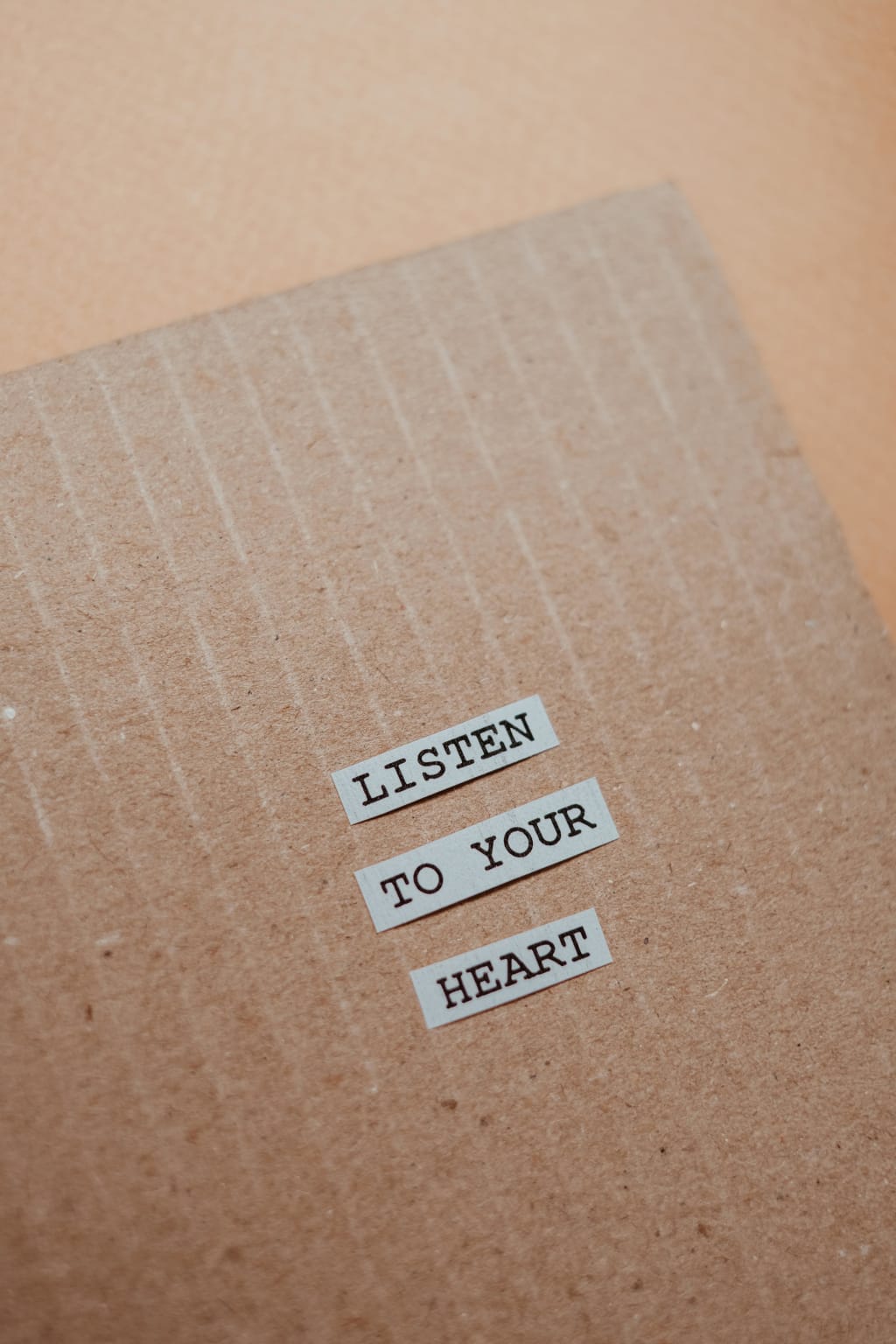
In our daily lives, we often let our minds take the lead. We analyze, plan, control, and overthink. But have you ever paused and wondered—what if there’s a better guide? What if our hearts, not our minds, are meant to be in charge?
This idea might sound abstract, but it’s deeply practical. Let’s explore what it means to let your heart take the lead and how you can start this shift today.
Heart vs. Mind: What’s the Difference?
Think of your mind as a tool, like a computer. It stores information, calculates, and helps us solve problems. But it’s also limited. The mind constantly seeks control and often pulls us into overthinking, doubt, and fear.
Now think of your heart—not as an organ, but as your inner compass. Your heart is limitless, free, and deeply connected to what truly matters: love, peace, and authenticity.
Here’s a metaphor to make it simple:
The mind is like clouds in the sky—always moving, often distracting.
The heart is like the sky itself—vast, calm, and unshakable.
When we focus too much on the clouds, we lose sight of the sky. But when we let the sky guide us, the clouds no longer bother us.
How to Shift from Mind to Heart
The good news? You don’t need to control your mind to make the shift. In fact, trying to control it often backfires because control itself is a function of the mind. Instead, you need to practice letting go.
Here’s a simple practice to start:
1、When thoughts arise, let them pass.
Imagine your thoughts as clouds. You can’t stop clouds from forming, but you don’t have to chase them. Let them float by while you focus on the vast sky of your heart.
2、Use your breath to ground yourself.
Breathing is one of the easiest ways to reconnect with your heart. When you feel overwhelmed by thoughts, take a few deep breaths and focus on the sensation. This brings your awareness out of your mind and into your body.
3、Ask yourself: Is this my mind or my heart?
In moments of decision-making, pause and ask, “Is this what my mind wants, or is it what my heart truly desires?”
The mind’s desires are often rooted in fear, ego, or fleeting pleasure.
The heart’s desires feel peaceful, fulfilling, and aligned with your true self.
Common Questions
1.What if I can’t stop overthinking during meditation or mindfulness practices?
That’s completely normal! The goal isn’t to stop thinking—it’s to stop fighting your thoughts. Let them come and go without attaching to them.
2.What if following my heart conflicts with what others expect of me?
Worrying about what others think is a trick of the mind. The truth is, most of our fears about being judged are imaginary. Your job is to honor your authentic self, not someone else’s expectations.
3. When is the best time to meditate or practice mindfulness?
The “perfect time” doesn’t exist. Whether it’s in the morning, evening, or even during a coffee break, the key is to start. Begin with just a few minutes and build from there.
A Simple Daily Exercise
Here’s a small exercise to practice tuning into your heart:
Before making a choice—big or small—pause and ask yourself:
“Is this my mind speaking, or is this my heart?”
Notice the difference. The mind often feels restless and grasps for control, while the heart feels calm and steady.
Why This Matters
In today’s fast-paced, tech-driven world, we’ve become experts at using our minds. We plan, analyze, and solve problems like never before. But in doing so, many of us have lost touch with our hearts—the source of our true wisdom and joy.
Letting your heart lead doesn’t mean ignoring your mind. It means re-balancing the relationship. Use your mind as the tool it is, but let your heart set the direction. Because at the end of the day, your heart knows the way.
About the Creator
Fly with James
I enjoy breaking down complex ideas into actionable insights. Let’s grow together—follow me for stories, insights, and inspiration!
Keep reading
More stories from Fly with James and writers in Psyche and other communities.
Rediscovering Yourself in Life's Maze: A Path to Inner Peace and Joy
Introduction Have you ever felt like life is a never-ending race? You keep chasing things—success, recognition, happiness—but no matter how hard you try, it feels like you’re never quite there. It’s exhausting, isn’t it?
By Fly with Jamesabout a year ago in Lifehack
Society Often Teaches Us to Suppress Our Sad Feelings, Branding Them as Negative.
Allow yourself the time to feel, process, and let go. What a journey we’ve traveled together. You can relate to that pain that appears out of nowhere and wants to linger in our minds. Once fear moves in, it takes root—spreading doubt, loneliness, and confusion It’s that kind of pain that overtakes your mental health, gradually making a home within you. Your thoughts can create a space filled with fear, a feeling that we often cling to because it’s the one our minds use against us—leading to a fierce battle between your thoughts and your feelings. It’s a struggle no one wants to lose, yet losing yourself feels like an ever-present threat. Isn’t that a trick life plays on us?
By Johana Torres23 days ago in Psyche



Comments
There are no comments for this story
Be the first to respond and start the conversation.