
Left for Dead — The Ordeal of Mary Vincent
One girl’s fight to survive

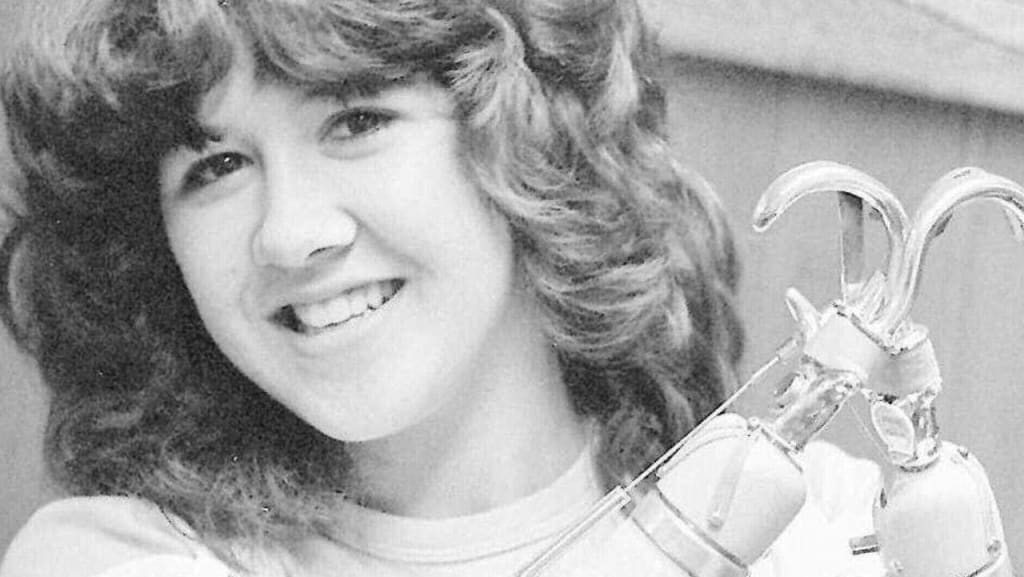
Mary Vincent was a fifteen-year-old runaway in 1978 when she found herself in peril beyond anything she could have ever imagined.
Mary spent her early years in Las Vegas, where her father worked as a mechanic and her mother was a blackjack dealer. She was one of seven children born to the couple during their marriage. Her love was dancing and she had a bright future already blooming, but her home life was a different matter. She was not very close to her parents and eventually chose to strike out on her own after they announced they were getting a divorce.
Living on the streets and sometimes in unlocked cars along the way, Mary set out to hitchhike to her grandfather’s house in California. Eager to get to her destination, she was happy to accept a ride from a man in a blue van. His name was Lawrence Singleton. There was nothing sinister about his looks. In fact, he came across to her as rather innocuous and grandfatherly. She could have never imagined the horror that awaited her.
Initially, everything seemed fine, but when Singleton bypassed the turn-off to the interstate where he was supposed to be taking her, she grew suspicious and demanded that he turn around. He told her it was a simple mistake and was convincing enough that she relaxed again, with him turning around to point back toward the interstate.
A bit further down the road, Singleton told her that he had to stop and pee, explaining that he couldn’t wait until they got back to a service station. He pulled over to the side of the road. Mary decided it would be a good time to step out to stretch her legs and get some fresh air. As she bent down to tie her shoes, Singleton approached her and struck her in the head with a sledgehammer, but his attack didn’t end there.
Singleton spent most of the night violently raping and sodomizing Mary. When he was done, he hacked off both her arms with a hatchet and shoved her down a thirty-foot ravine to die, thinking she’d pass out and bleed to death before anyone ever found her. Mary was not to be so easily discarded.
Once he was gone, Mary shoved her mangled arms into the mud to staunch the blood flow and climbed the hill above her, walking nearly three miles before getting help from a couple who spotted her walking nude down the road, holding what remained of her two arms up in the air in an attempt to further curtail the bleeding. She was rushed to the hospital.
While still being treated for her injuries, Mary worked with detectives to quickly identify and locate her attacker, pushing off the rest she so sorely needed to finish giving them the details they required to create a composite sketch for investigators. The rendering of Singleton was so accurate that his neighbor immediately recognized him and turned him in to local police who quickly arrested Singleton for his crime.
Mary testified at his trial, leading to his conviction. Due to the laws at that time, he was only given fourteen years, of which he served a little more than eight before getting out on “good behavior.”
A previous prison psychiatric evaluation on Singleton stated that he was “so out of touch with his hostility and anger, he remains an elevated threat to others’ safety inside and outside prison.” Yet, that wasn’t enough to keep him behind bars. Neither was the fact that he had written several letters to Mary’s lawyer during his incarceration, threatening Mary. It was no wonder that she feared he would come after her again when he was released. It wouldn’t be until 1987 that “Singleton’s Law” would be passed to create stiffer sentences and no early release in crimes involving torture.
Mary also won a civil judgment against Singleton, the court awarding her $2.56 million. Of course, it was money she would never see as Singleton was unemployed and lacked any means to pay.
The years that followed were hard on Mary. She had survived the worst of her ordeal, but she was severely depressed, her dream of becoming a dancer ruined by the reconstructive surgery she’d been forced to undergo due to her injuries. The memories of her attack haunted her and lent to constant nightmares. She was unfocused and unable to work. With no income, she wasn’t even able to properly maintain her prosthetic arms, eventually filing for bankruptcy.
With the prosthetic arms she had been fitted with only two weeks of her attack in a state of disrepair, she began using spare parts from broken electronics to modify them into her own custom design. She eventually found a new love in art and a new life in her classes at the University of Nevada before meeting and marrying a man named Tom with whom she had two sons before their divorce.
In a twist to this story, Singleton was once again arrested in 1997 after a painter glimpsed him attacking a woman through a window he was passing by on his way home. He contacted the police and they arrived on the scene shortly thereafter to find the gruesome aftermath of yet another crime committed by Singleton. He was covered in blood and Roxanne Hayes, a sex worker he had hired, lay dead on his sofa. She had been stabbed repeatedly by a boning knife. Roxanne was the mother of three children.
Mary once again took the stand against him. “I was raped. I had my arms cut off. He used a hatchet. He left me to die,” Mary stated to the courtroom, pointing toward Singleton with a prosthetic hook. This time, Singleton was sentenced to death, but instead died of cancer in 2001 while still sitting on death row.
Mary has spoken openly and honestly about her journey and finding healing in becoming an advocate for victims’ rights. Though she is a very private person, she routinely steps out of her comfort zone to deliver motivational speeches in which she also cautions young women about the dangers of hitchhiking.
Her art consists mostly of chalk pastels of “powerfully upbeat women” she likens to “female action figures.” She also creates family and individual portraits on commission. Her customized prosthetics are her own works of art and include a custom prosthetic for bowling.
Mary may have once been seen as a victim, but there is no doubt that anyone familiar with her ordeal would call her a survivor.
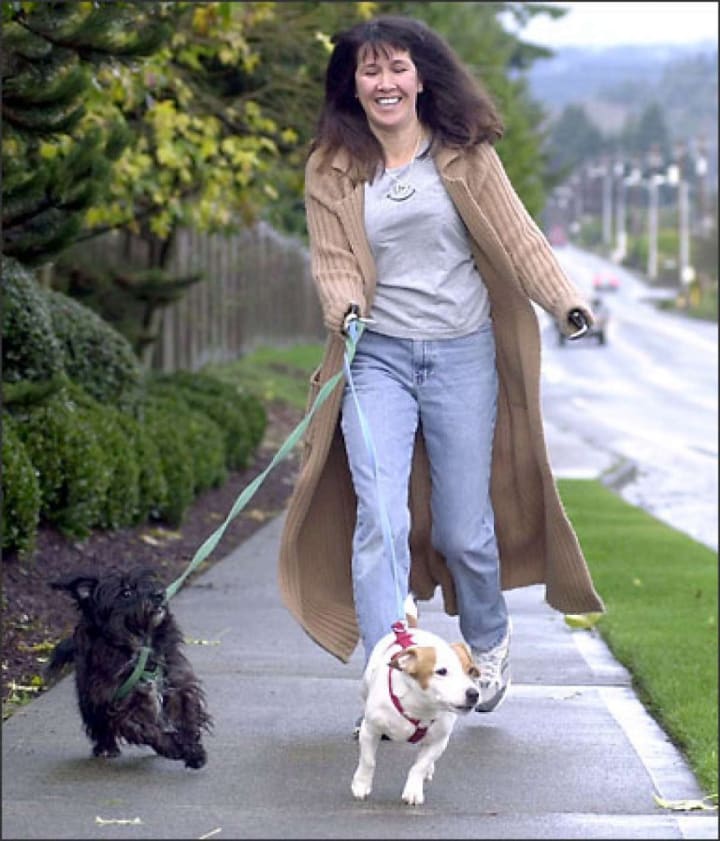
About the Creator
A.W. Naves
Writer. Author. Alabamian.
Keep reading
More stories from A.W. Naves and writers in Psyche and other communities.
The Unsolved Murder of Yolanda "LaLa" Brown
Yolanda Rose “LaLa” Brown was an American R&B singer. She is most well known for her featured vocals on a track titled “S.E.X” with Lyfe Jennings. The song went as high as number 3 on the Billboard Hot R&B/Hip-Hop Songs chart and topped out at number 37 on the Billboard Hot 100 in October 2006.
By A.W. Naves4 years ago in Criminal
From Surviving to Living: When Rest Becomes an Act of Courage
When Survival Becomes a Lifestyle — And You Forget How to Live There is a quiet shift that happens when survival lasts too long. At first, it’s temporary. You tell yourself, “I just need to get through this phase.” Then weeks become months. Months become years. And without realizing it, survival stops being a response — it becomes a lifestyle. You don’t notice the moment it happens. There’s no clear breaking point. Just a gradual narrowing of life. Your goals become smaller. Your dreams become practical. Your emotions become controlled, managed, muted. You stop asking what brings you joy and start asking what is necessary. What is efficient. What is acceptable. And slowly, living turns into managing. The Hidden Cost of Constant Coping When someone lives in survival mode for too long, their nervous system adapts. It learns to stay alert. It learns to expect pressure. It learns that rest is risky and stillness is unsafe. So even when external threats disappear, the body doesn’t get the message. This is why many people feel exhausted without knowing why. Why calm moments feel uncomfortable. Why success doesn’t bring satisfaction. Why peace feels strangely empty. It’s not because something is missing. It’s because your system was never taught how to receive ease. You learned how to endure. Not how to enjoy. Why Letting Go Feels Harder Than Holding On Letting go sounds simple in theory. But for someone who survived by holding everything together, letting go feels like failure. You weren’t rewarded for resting. You were rewarded for coping. For staying strong. For not needing too much. So your identity formed around function, not feeling. This is why slowing down can trigger anxiety. Why saying “I can’t” feels shameful. Why doing less feels like becoming less. Your worth became linked to effort. And effort became constant. Healing Is Not Becoming Softer — It’s Becoming Safer Healing from long-term survival is not about becoming fragile. It’s about becoming safe. Safe enough to pause without panic. Safe enough to feel without rushing to fix. Safe enough to rest without preparing for collapse. This kind of healing doesn’t happen through motivation or discipline. It happens through permission. Permission to stop performing strength. Permission to disappoint expectations — including your own. Permission to exist without proving anything. At first, this feels unnatural. Because survival trained you to believe that safety must be earned. But safety is not earned. It is allowed. Relearning What Living Actually Feels Like Living is not dramatic. It doesn’t always feel exciting or intense. Sometimes, living feels quiet. Neutral. Ordinary. And for someone used to survival, that can feel unsettling. But calm is not emptiness. It is space. Space to notice yourself again. Space to feel preferences instead of obligations. Space to choose, not react. You don’t suddenly become a new person. You simply return to parts of yourself that were postponed. A Different Measure of Progress Progress is often measured by how much you do. How fast you move. How productive you appear. But healing progress looks different. It looks like stopping before burnout instead of after. Like resting before you collapse. Like saying “enough” without explaining yourself. It looks like choosing sustainability over intensity. Truth over performance. Presence over pressure. This kind of progress is quiet. And because it’s quiet, it’s often overlooked. But it is real. A Closing Truth If survival shaped you, it’s not your fault. You adapted the way you had to. But you are not meant to live your entire life in adaptation mode. You are allowed to soften without losing strength. To rest without guilt. To live without constantly preparing for impact. You don’t need to become more. You need to feel safe enough to be. And that shift — from surviving to living — is not weakness. It is the most honest form of courage there is.
By Med Abdeljabbar6 days ago in Psyche
A Dart at Dusk
Seconds ago, the sullen sun set on the two of us… my exuberant furry companion and me. A fresh breeze embraces us, delivering welcome relief from the day’s oppressive heat. His typical stumbling and staggering along — apace with a sloth — has turned into trip-trapping, high-stepping, almost skipping along.
By Angie the Archivist 📚🪶4 days ago in Petlife



Comments
There are no comments for this story
Be the first to respond and start the conversation.