
Ketamine for Depression at Home: Is Telehealth Treatment Safe and Legal?
Exploring the Legality, Safety, and Effectiveness of At-Home Ketamine Therapy for Depression Through Telehealth Services

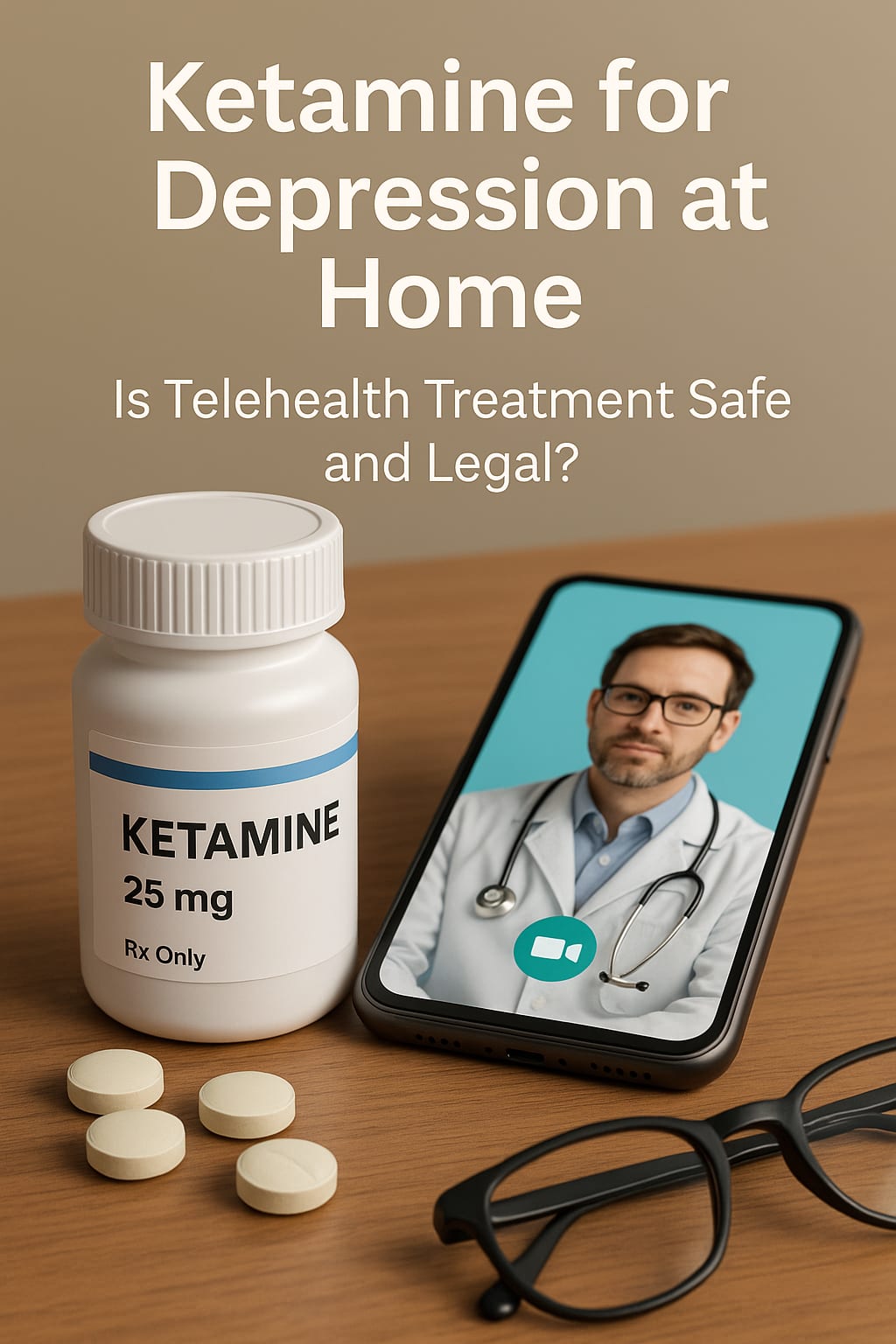
In recent years, the landscape of mental health treatment has undergone a quiet revolution. Among the most talked-about breakthroughs is the use of ketamine for depression, a method that, once confined to clinics and hospitals, is now being offered remotely, delivered right to patients’ homes.
But as this new form of care gains popularity, many are left wondering: Is telehealth ketamine therapy truly safe? And more importantly, is it legal?
We are going to dive deep into the growing trend of at-home ketamine treatment, examining the science behind it, the regulatory framework, and what patients should consider before embarking on this unconventional path.
Understanding Ketamine’s Role in Depression Treatment
Ketamine was originally developed as an anesthetic in the 1960s. However, over the past two decades, researchers discovered that low, sub-anesthetic doses could have a profound effect on mood, especially in individuals suffering from treatment-resistant depression (TRD). Unlike traditional antidepressants, which can take weeks to work, ketamine often provides rapid relief, sometimes within hours.
The drug works on the brain’s glutamate system, particularly through NMDA receptor antagonism, which promotes synaptic growth and neuroplasticity. Simply put, ketamine helps "rewire" parts of the brain affected by depression. This neurological reset offers a new chance at stability for people who have tried and failed multiple other treatments.
What Is At-Home Ketamine Therapy?
At-home ketamine treatment typically involves oral lozenges or tablets, sometimes nasal sprays, which are shipped to the patient following a telehealth evaluation. The patient then takes the medication in their own home, often with remote monitoring or guided support from licensed clinicians, such as therapists or psychiatric nurse practitioners.
Companies that offer these services generally provide a full protocol. This includes virtual screening, medication delivery, follow-up sessions, and integration therapy to help patients process their experiences.
The goal isn’t just to provide a drug, but to offer a structured, therapeutic environment, even if that environment is virtual.
How Safe Is It?
This is the question that hangs in the air for many. Administering a mind-altering substance like ketamine at home understandably raises concerns. Yet, research suggests that when used responsibly under medical supervision, even remotely, at-home ketamine therapy can be safe.
That said, ketamine is not without its risks. Potential side effects include dissociation, nausea, elevated blood pressure, and in rare cases, psychological distress.
The possibility of misuse or dependency, while relatively low in therapeutic settings, also exists. That’s why credible providers insist on strict screening processes, close monitoring, and controlled dosing schedules.
Safety is heavily dependent on the structure of the program. Quality providers will not only assess your medical history but also ensure that you’re not alone during the session.
Some even require a “sitter”, a trusted person who stays with you while the drug is active.
If you’re considering at-home ketamine, pay close attention to how much support is offered. A program that skimps on follow-up or fails to provide integration therapy should be treated as a red flag.
Is It Legal?
Here’s where things get a little murky.
Ketamine is a Schedule III controlled substance in the United States. That means it’s legal for medical use, but regulated. When prescribed by a licensed clinician, it can be used legally to treat depression, even at home.
The Drug Enforcement Administration (DEA) permits telehealth prescribing of certain controlled substances under specific conditions.
During the COVID-19 public health emergency, the DEA loosened restrictions on telemedicine prescribing, allowing clinicians to prescribe controlled substances, including ketamine, without an in-person visit. This expansion led to the birth of many telehealth ketamine companies.
However, the regulatory climate is shifting. The DEA has proposed rolling back some of these telehealth flexibilities, potentially reinstating the requirement for an initial in-person consultation.
This proposal is under review, and the outcome could change how at-home ketamine is prescribed and delivered in the future.
So, while it is legal now under federal guidelines, this legality is somewhat provisional and may evolve.
Patients must also consider state laws. Some states have tighter regulations regarding telemedicine or controlled substances, making it essential to research local guidelines or consult a legal professional.
What Should Patients Look For in a Provider?
Not all ketamine providers are created equal. With the sudden boom in demand, some startups have entered the space without the necessary clinical rigor.
When selecting a provider, look for the following:
- Licensed clinicians: Ensure that board-certified psychiatrists, psychiatric nurse practitioners, or physicians are overseeing the treatment.
- Comprehensive assessments: A proper evaluation includes a psychiatric history, physical health review, and possibly lab work.
- Integration support: Ketamine therapy isn’t just about the drug—it’s about what happens after. Reputable programs offer therapy sessions or integration coaching.
- Clear communication: You should know what to expect during treatment, how to prepare, and who to contact if something goes wrong.
Avoid services that promise miracles, skip evaluations, or rush you through the process. Real healing takes time, and shortcuts often lead to complications.
The Experience: What It Feels Like
Ketamine therapy doesn’t feel like taking a regular antidepressant. It's immersive, sometimes intense, and often emotionally revealing.
Patients describe a temporary sense of detachment from the self, vivid imagery, and moments of deep introspection. These experiences, while transient, can lead to significant insights, emotional breakthroughs, and shifts in perspective.
This is why professional support during and after the experience is critical. The altered state of consciousness can be transformative, but also destabilizing without the proper framework.
Guided preparation and post-session debriefs help patients make sense of what they saw and felt.
Ethical and Practical Concerns
There’s a growing ethical debate around the commercialization of at-home ketamine therapy. Critics worry that profit-driven companies may overprescribe or under-monitor patients.
Others argue that the convenience of home treatment could lead to less accountability or diminished therapeutic value compared to in-person sessions.
Still, for many who live in rural areas or suffer from severe anxiety, traveling to a clinic may be impossible. For them, telehealth is not just convenient, it’s vital.
But there’s a balance to strike. Convenience should not come at the expense of safety, effectiveness, or ethical integrity.
At-home ketamine treatment is a powerful tool, but it’s not a magic bullet. It’s not for everyone. It carries real risks, and its legal status, while currently favorable, is subject to change.
Still, for many patients with treatment-resistant depression, it offers a rare glimmer of hope.
If you’re considering this path, do your homework. Choose a provider with strong clinical oversight. Make sure there’s therapeutic support. And above all, treat the experience with the respect and seriousness it deserves.
Because in the end, ketamine isn’t just about chemistry, it’s about transformation. And when handled with care, that transformation can begin right from your living room.
About the Creator
Richard Bailey
I am currently working on expanding my writing topics and exploring different areas and topics of writing. I have a personal history with a very severe form of treatment-resistant major depressive disorder.
Keep reading
More stories from Richard Bailey and writers in Psyche and other communities.
What to Expect During Your First Ketamine Infusion for Depression
When depression becomes relentless and traditional medications fail to offer relief, ketamine therapy may present a new path forward. It’s not a miracle cure, but for many, it opens a door that had long felt sealed shut. If you're preparing for your first ketamine infusion, it's normal to feel uncertain—even anxious. Understanding what to expect can ease your mind and help you step into the experience with greater confidence.
By Richard Bailey8 months ago in Psyche
Not All Fear Is Real
The first breath of dawn is a quiet thing, as though the world itself is holding its breath, waiting to exhale. But for Nadia, the morning air felt like a sharp slap against her skin, cold and biting. Her fingers trembled as she clutched the edge of her jacket, the wind tugging at her hair. She stood on the edge of the cliff, her gaze cast over the valley below, the dark outline of the forest stretching far into the horizon. The shadows of night still clung to the trees, but the first threads of daylight were beginning to seep through, spilling gold onto the earth.
By Jhon smitha day ago in Psyche
How to Succeed at the Benson Directory®
Congratulations and welcome to the Benson Directory® employee #22391! As our newest call handler, you will have the privilege of speaking with dozens of unique and interesting people on a daily basis as well as the opportunity to earn bonuses for high performance. Contained within this handbook you will find a set of ease to follow instructions designed to help you settle in to your new role and begin paving the way to success.
By S. A. Crawford2 days ago in Fiction



Comments
There are no comments for this story
Be the first to respond and start the conversation.