
What to Expect During Your First Ketamine Infusion for Depression
Discover what happens during your first ketamine infusion for depression—from preparation and treatment to side effects and emotional impact—in this comprehensive guide

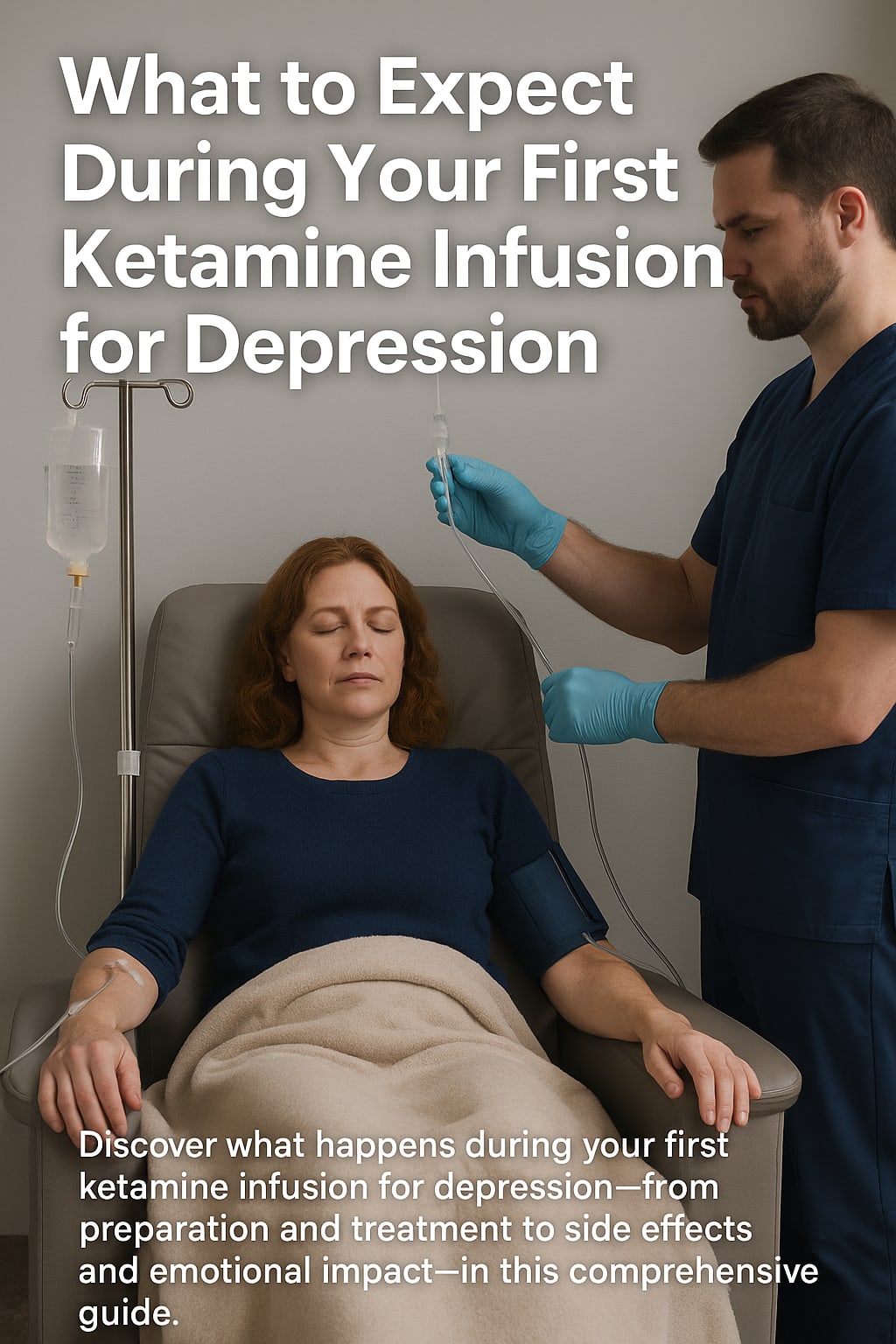
When depression becomes relentless and traditional medications fail to offer relief, ketamine therapy may present a new path forward. It’s not a miracle cure, but for many, it opens a door that had long felt sealed shut. If you're preparing for your first ketamine infusion, it's normal to feel uncertain—even anxious. Understanding what to expect can ease your mind and help you step into the experience with greater confidence.
Let’s walk through the entire process: from preparation to the infusion itself, and what comes afterward.
Understanding Ketamine as a Treatment
Before diving into the procedure, it's worth understanding why ketamine has gained traction in the world of mental health. Originally developed as an anesthetic, ketamine has shown remarkable results in relieving symptoms of treatment-resistant depression, often within hours or days—far faster than conventional antidepressants, which may take weeks.
Ketamine is thought to work differently than other psychiatric drugs. Instead of targeting serotonin or dopamine, it modulates glutamate, the brain’s most abundant neurotransmitter.
This shift may help "reset" certain neural circuits linked to depression. Though scientists are still unraveling the complete picture, the outcomes have been compelling enough to transform how depression is treated in specialized clinics around the world.
Pre-Infusion: Preparing for the Appointment
The first ketamine session typically begins with a thorough intake assessment. Your provider will review your medical history, current symptoms, medications, and any coexisting conditions. This step is crucial, not only for your safety but to tailor the experience to your specific needs.
You’ll be given pre-treatment instructions. These usually include:
- Fasting: You may be asked not to eat for 4–6 hours prior to the infusion.
- Hydration: Drinking water is encouraged, though there may be limits close to your appointment time.
- Transportation: Because ketamine can impair motor skills and cognition temporarily, you’ll need someone to drive you home.
- Comfort: Dress in loose, cozy clothing. You’ll be sitting or lying down for 40–60 minutes.
You might also be asked to avoid certain medications or substances, especially benzodiazepines, which can blunt ketamine’s effects.
The Setting: A Controlled, Calm Environment
Contrary to the sterile image many associate with medical procedures, ketamine infusions typically take place in quiet, dimly lit rooms. A comfortable chair or reclining bed, blankets, and noise-canceling headphones may be provided.
The ambiance is intentional—it helps create a safe and soothing environment conducive to the treatment.
Some clinics offer curated music playlists. Others might let you bring your own. While optional, music can help anchor you during the experience, especially if your thoughts begin to drift or fragment.
A medical professional—usually a nurse or physician—will monitor your vital signs throughout the session. You’ll have a blood pressure cuff and a pulse oximeter attached to your finger. Though it may feel clinical, these are standard safety protocols.
The Infusion: What It Feels Like
The infusion itself lasts around 40 to 60 minutes. Ketamine is administered intravenously, meaning it enters your bloodstream through a small needle in your arm or hand. The effects begin subtly but build gradually.
Most people report a sense of detachment from their surroundings or their body. This sensation—often referred to as dissociation—can feel strange at first. Time may stretch or collapse.
Thoughts can loop, scatter, or shift in unexpected ways. Some describe it as floating; others feel like they’re watching themselves from a distance.
You might experience visual distortions or mild hallucinations, such as shifting patterns or light trails. These aren’t typically frightening, but they can be disorienting if you’re unprepared. It's not uncommon to lose track of where you are, or forget why you’re there.
Despite these unusual sensations, you remain conscious and aware. Most people can speak, ask questions, or signal discomfort if needed. However, many choose to close their eyes and let the experience unfold without interference.
Emotionally, responses vary.
Some sessions are neutral. Others may stir sadness, relief, or a kind of cathartic clarity. You might recall past memories. You may cry. Or you might feel nothing at all. Every session is different, even for the same person.
After the Infusion: The Return
As the infusion ends, the immediate psychoactive effects begin to wear off within 20–30 minutes. However, you may feel foggy, drowsy, or slow for a few hours. This is completely normal.
You’ll likely be observed for a short period before being released to go home. It’s important to avoid driving, operating machinery, or making big decisions until the next day. Rest is encouraged. Let your mind and body recover.
Some people notice a lift in mood the same day. Others may take a day or two to sense the full effects. It’s subtle at first—like a background weight has been lifted. Tasks that seemed impossible might start to feel manageable again. The world may look just a little less gray.
That said, don’t expect instant, dramatic changes. Ketamine is often administered as part of a series—usually 6 to 8 infusions over two to three weeks. The benefits tend to accumulate and stabilize with repeated sessions.
Integration: Making Sense of the Experience
Processing what you felt during the infusion is an important part of healing. This is where integration comes in.
You might want to journal your thoughts afterward. Some people speak with a therapist to explore insights or emotions that surfaced. Others find value in meditation or quiet reflection. The key is to allow yourself space to absorb the experience rather than rushing to interpret it.
Ketamine doesn't "fix" depression like flipping a switch. But it can shift something internal, clearing a path through the mental fog just enough for therapy, lifestyle changes, and connection to take root.
Side Effects and Safety
Though generally well-tolerated, ketamine is not without potential side effects. These may include:
- Nausea or dizziness
- Elevated blood pressure
- Fatigue
- Blurred vision
- Mild anxiety or confusion during or after the session
Most of these resolve quickly. Serious complications are rare when administered in a clinical setting. However, this is not a DIY treatment. Ketamine should only be used under professional supervision, with careful medical oversight.
A Step Toward Hope
Walking into your first ketamine infusion can feel like stepping into the unknown. You may worry that it won’t work, or that it’ll be too strange or overwhelming. That’s okay. These feelings are valid.
But many who have walked this path report that it was a turning point. Not a cure, but a catalyst. A moment when, after months or years of feeling stuck, something finally shifted.
Go in with an open mind. Ask questions. Speak up if something doesn’t feel right. And most importantly, give yourself credit for showing up—for reaching out for help when you needed it most.
Ketamine won’t erase the struggle. But it might just help you find a new way forward.
About the Creator
Richard Bailey
I am currently working on expanding my writing topics and exploring different areas and topics of writing. I have a personal history with a very severe form of treatment-resistant major depressive disorder.
Keep reading
More stories from Richard Bailey and writers in Psyche and other communities.
Ketamine vs. SSRIs: Which Works Faster for Depression?
Depression is more than just feeling down. It can crush motivation, ruin relationships, and dull every part of life. For millions, antidepressants offer a path back—but not all antidepressants work the same way, and not all of them work quickly. When someone is deep in the grip of depression, especially with suicidal thoughts, time becomes a critical factor.
By Richard Bailey9 months ago in Psyche
Who is your "Person"?
It's important to recognize that you cannot go through life as easily on your own. My name is Elizabeth and I'm a survivor of child abuse and horrific trauma. Healing from trauma is not a quick fix and recognizing that it will take time, is part of the struggle.
By Elizabeth Woods5 days ago in Psyche
Attention
The problem isn’t that they stopped loving you — it’s that they stopped paying attention. Read that again. Most relationships don’t collapse because of one dramatic betrayal. They don’t end because of one explosive argument. They slowly fade because attention quietly disappears.
By Ahmed aldeabella4 days ago in Psyche
Review of 'Man on the Run'
My wife and I saw Man on the Run, a nearly 2-hour documentary on Amazon Prime, about Wings, Paul McCartney's group that flew around the world from shortly after The Beatles broke up in early 1970 to shortly after John Lennon was murdered at the end of 1980, making a Beatles reunion forever impossible.
By Paul Levinson7 days ago in Beat


Comments
There are no comments for this story
Be the first to respond and start the conversation.