
How to Determine if You’re Eligible for SDA Under the NDIS
Understanding SDA Eligibility: A Guide to Accessing Specialist Disability Accommodation under the NDIS

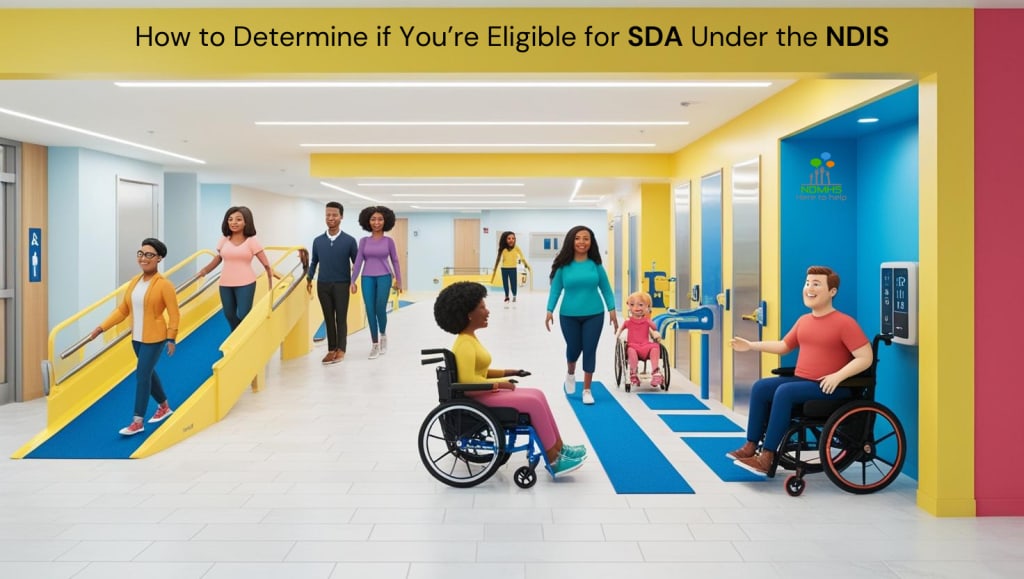
Specialist Disability Accommodation (SDA) is a critical support under the NDIS (National Disability Insurance Scheme) for individuals with extreme functional impairments or very high support needs. SDA provides funding for specially designed housing that enables participants to live more independently and access necessary supports. To determine if you are eligible for SDA, it is essential to work closely with an NDIS coordinator and an NDIS support provider who can guide you through the process.
What is SDA?
SDA is not about the daily care or support services provided to you but rather the physical housing required to facilitate your care. SDA homes include features such as accessible ramps, reinforced materials for safety, and assistive technology, ensuring a supportive living environment for participants with significant disabilities.
Eligibility Criteria for SDA
To qualify for SDA funding, you must:
Be a registered NDIS participant.
Have extreme functional impairments or very high support needs.
Require purpose-built housing to achieve your goals as outlined in your NDIS plan.
Demonstrate that living in SDA will help you achieve independence and improve your quality of life.
The eligibility decision is based on your needs and how SDA aligns with the NDIS principles of “reasonable and necessary supports.”
The Role of an NDIS Coordinator
Your NDIS coordinator is crucial in ensuring your needs are accurately represented in your NDIS plan. They help by:
1. Assessing Your Needs
The coordinator evaluates your current living arrangements and identifies challenges that SDA can address, such as mobility issues, accessibility barriers, or safety risks.
2. Gathering Supporting Evidence
The NDIS requires detailed documentation to assess SDA eligibility. Your coordinator can help you collect and prepare:
Functional capacity reports from occupational therapists.
Medical assessments from healthcare professionals.
Risk evaluations highlighting how your current home fails to meet your needs.
3. Advocating for SDA in Your Plan
During your NDIS plan review, the coordinator advocates for SDA by presenting evidence and showing how SDA aligns with your goals, independence, and safety requirements.
The Role of an NDIS Support Provider
An NDIS support provider works alongside your coordinator to streamline the process of applying for SDA and finding appropriate housing. They provide:
1. Guidance on SDA Options
Your support provider explains the different types of SDA housing available and helps you determine which one best suits your needs:
Fully Accessible Homes for those with severe physical impairments.
Improved Livability Homes for individuals with sensory, cognitive, or intellectual impairments.
Robust Homes for those requiring durable and secure accommodations due to behavioral challenges.
High-Physical Support Homes for participants with complex care needs that require assistive technology or hoists.
2. Preparing Documentation
Support providers ensure that all documentation aligns with NDIS guidelines and strengthens your application. This includes reports from allied health professionals and detailed justifications for SDA funding.
3. Finding Suitable Housing
If your application is approved, your support provider helps you explore and transition into SDA properties. They also ensure the chosen property meets your preferences and aligns with your goals.
Steps to Determine SDA Eligibility
1. Understand SDA Requirements
Review the NDIS guidelines on SDA and assess whether your functional needs align with the criteria. Your coordinator and support provider can assist in this evaluation.
2. Collaborate with Your NDIS Coordinator
Work with your coordinator to gather and submit the necessary evidence during your NDIS plan review. This is essential for justifying why SDA is a reasonable and necessary support for you.
3. Submit an SDA Request
Your coordinator helps you formally request SDA during your NDIS plan review. Highlight your current housing limitations, support needs, and how SDA can help achieve your goals.
4. Receive Decision and Next Steps
Once the NDIS assesses your application, they will either approve SDA funding or request additional information. If denied, your coordinator and provider can guide you through an appeal process.
Why Work with an NDIS Coordinator and NDIS Support Provider?
Both your NDIS coordinator and NDIS support provider play complementary roles in ensuring a seamless process:
The NDIS coordinator focuses on presenting your case effectively to secure SDA funding.
The NDIS support provider ensures you find suitable housing and receive ongoing support throughout the transition.
Together, they ensure your housing needs are met, enabling you to live safely and independently.
Final Thoughts
Determining eligibility for SDA under the NDIS can be a complex process, but with the support of your NDIS coordinator and NDIS support provider, it becomes manageable. These professionals ensure that your needs are accurately documented, presented, and supported. For more information and assistance, consult your NDIS coordinator or explore resources that can help you secure the housing support you need.
ndis supported disability accommodation, ndis housing, ndis sda housing, SDA eligibility NDIS, NDIS housing eligibility, How to qualify for SDA, SDA under NDIS, NDIS Specialist Disability Accommodation criteria, Applying for SDA funding under NDIS, Steps to determine SDA eligibility under NDIS,
About the Creator
NDMHS : NDIS Provider Sydney
NDMHS offers various disability, aged, and mental health services for home and community activities.
Keep reading
More stories from NDMHS : NDIS Provider Sydney and writers in Psyche and other communities.
how to choose the most suitable disability support provider?
Receiving the appropriate support can truly change the quality of life for those living with a disability. Providers of disability support are indeed essential in assisting individuals who have disabilities to face challenges and participate effectively within their communities. That care, that knowledge, and empathy are key to their independence and well-being.
By NDMHS : NDIS Provider Sydneyabout a year ago in Psyche
Who is your "Person"?
It's important to recognize that you cannot go through life as easily on your own. My name is Elizabeth and I'm a survivor of child abuse and horrific trauma. Healing from trauma is not a quick fix and recognizing that it will take time, is part of the struggle.
By Elizabeth Woods5 days ago in Psyche
You won't stop me at your door
The story of a woman who discovers her strength after refusing to return to the one who hurt her If you’ve ever stood outside someone’s door—heart shaking, dignity crumbling, rehearsing apologies for wounds they caused—stop reading for a second and breathe. Because what you’re about to read might be the moment you decide: never again.
By Ahmed aldeabella6 days ago in Psyche


Comments
There are no comments for this story
Be the first to respond and start the conversation.