
How Long Does Ketamine Last for Depression? Duration, Effects, and What to Expect
Explore how long ketamine’s antidepressant effects last, what influences their duration, and how repeated treatments can help manage treatment-resistant depression

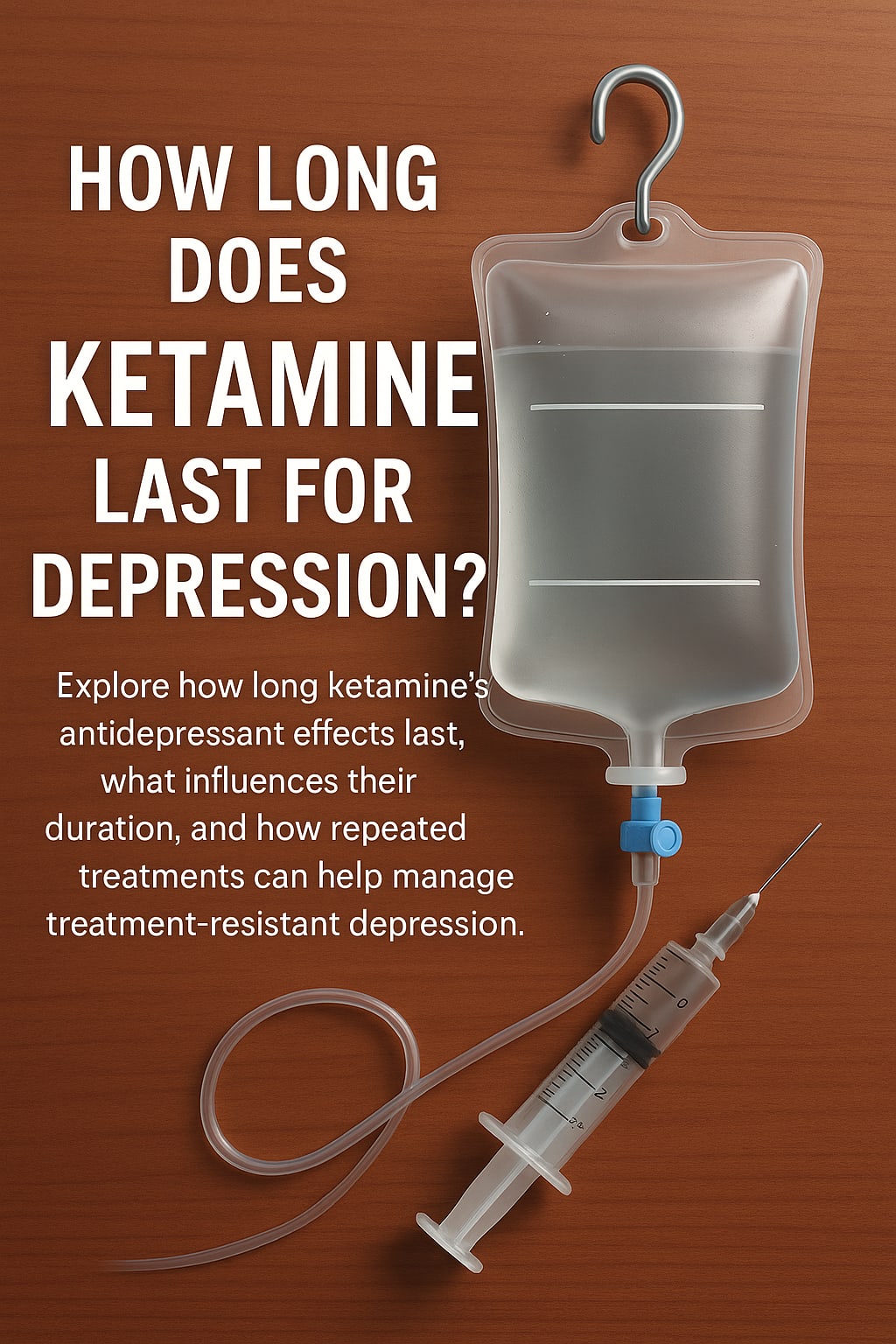
Depression can be crushing. When traditional antidepressants don’t work, or take too long to kick in, some people turn to ketamine. Known for its rapid effects, ketamine has emerged as a breakthrough option in treatment-resistant depression.
But how long do those effects actually last?
This is a question many ask before committing to this unconventional treatment.
The answer? It’s not simple.
The duration of ketamine’s antidepressant effects varies depending on several key factors. Patient biology, dose, treatment frequency, and the type of ketamine used all play a role.
Let’s break it down.
What Is Ketamine, and Why Is It Used for Depression?
Ketamine was originally developed in the 1960s as an anesthetic. It's still widely used in emergency medicine and surgery. In recent decades, however, researchers noticed something surprising: patients who received ketamine often reported an unexpected lift in mood.
Today, low-dose ketamine is used off-label for major depression, especially when other treatments have failed.
In 2019, the FDA approved a nasal spray version, esketamine, under the brand name Spravato. This opened the door for more structured clinical use.
What sets ketamine apart? It's speed.
Unlike SSRIs or SNRIs, which can take weeks to show results, ketamine often works within hours. But that rapid onset raises another question: how long will the relief stick around?
The Initial Response: What to Expect After Treatment
Most people feel the effects of ketamine within 1 to 4 hours after treatment. That includes both physical and emotional sensations. Some report a sense of calm, detachment, or lightness. Others describe a significant drop in suicidal thoughts.
This early phase is often referred to as the acute response. It’s intense, sometimes disorienting, but frequently uplifting.
However, that peak doesn’t last forever.
Short-Term Duration: A Matter of Days
The most immediate antidepressant effects of ketamine typically last anywhere from 3 to 7 days after a single infusion. During this time, many patients feel a noticeable relief from symptoms, less heaviness, more energy, and a shift in perspective.
But unless treatment continues, that relief usually fades.
Studies show that for most patients, a single ketamine dose is not enough for lasting remission. The depression begins to return, gradually or suddenly, once the drug clears the system. This brings us to maintenance strategies.
Maintenance Treatments: Extending the Benefits
Because the effects wear off relatively quickly, doctors often use a series of ketamine infusions. A common protocol includes six infusions over two to three weeks, followed by periodic boosters.
The goal is to sustain the antidepressant response.
With repeated treatments, many patients find that the effects become more stable and longer-lasting. Some can go weeks or even months between boosters without relapse. Others require more frequent administration.
This maintenance phase is highly personalized. There’s no one-size-fits-all schedule. Physicians tailor the treatment plan based on individual response, side effects, and symptom recurrence.
Esketamine (Spravato): A Different Timeline
Intranasal esketamine works differently. Though chemically similar to ketamine, esketamine is slightly more refined and specifically designed for depression treatment. It's usually administered twice a week for the first month, then weekly or biweekly during maintenance.
The effects of esketamine also tend to last a few days after each session, but with ongoing use, many patients report sustained improvement over time. The cumulative effect can lead to remission for some.
Still, the duration of relief varies widely. While one person may feel balanced for weeks, another might relapse within days. This inconsistency remains one of the major challenges in ketamine-based therapy.
Why Do the Effects Fade?
Ketamine’s mechanism is complex. It targets the brain's glutamate system, not the serotonin or norepinephrine pathways targeted by typical antidepressants. This leads to increased synaptic plasticity—the brain’s ability to form new connections.
In theory, this neuroplasticity helps "reset" the brain from a depressive state. But the brain eventually returns to its baseline if that plasticity isn’t reinforced.
This is why ketamine isn't a permanent fix. It's a tool—a fast-acting one—but not a cure. Unless it's part of a broader treatment plan that includes therapy, lifestyle changes, or other medications, its benefits are usually short-lived.
Factors That Influence How Long Ketamine Works
No two people respond to ketamine in exactly the same way. Several factors can affect how long the effects last:
- Dosage and delivery method: Higher doses and IV infusions generally have a more intense, but sometimes shorter-lived, impact than intranasal or oral forms.
- Individual biology: Genetics, brain chemistry, and overall health can all affect how the body processes ketamine.
- Co-existing conditions: Anxiety, PTSD, or substance use disorders may shorten the duration of relief.
- Concurrent treatments: Psychotherapy and other medications may extend ketamine’s antidepressant effects by reinforcing new neural patterns.
Can the Effects Become More Permanent?
There is growing evidence that ketamine may rewire the brain in lasting ways. Neuroimaging studies show changes in activity in the prefrontal cortex and other areas tied to mood regulation.
These shifts may explain why some patients remain symptom-free for extended periods.
Still, most experts agree that ketamine should be seen as a bridge, not a destination. Its greatest strength lies in its speed, buying time for other interventions to take root.
For example, someone with severe depression may use ketamine to emerge from crisis, then begin cognitive behavioral therapy or re-engage with daily life. In this sense, the most enduring effect of ketamine might not be the drug itself, but the opportunity it creates for healing.
Risks of Repeated Use
While ketamine shows promise, it's not without risks. Chronic use can lead to bladder issues, memory problems, and dependency. That’s why most clinicians are cautious with long-term treatment plans.
Controlled, medically supervised use greatly reduces these risks. Still, anyone considering ketamine therapy should weigh the short-term gains against potential long-term consequences.
A Temporary but Powerful Shift
So, how long do the effects of ketamine last for depression?
In most cases, a single treatment offers relief for a few days to a week. A series of treatments can stretch that relief to weeks or months. But without ongoing support—whether that’s therapy, medication, or lifestyle changes, the depression often returns.
That doesn’t mean ketamine isn’t worthwhile. For many, it’s a lifeline, especially in moments of deep crisis. It breaks through the fog fast, offering clarity when nothing else does.
It may not be a forever solution. But it’s often the spark that leads to one.
About the Creator
Richard Bailey
I am currently working on expanding my writing topics and exploring different areas and topics of writing. I have a personal history with a very severe form of treatment-resistant major depressive disorder.
Keep reading
More stories from Richard Bailey and writers in Psyche and other communities.
Ketamine for Depression at Home: Is Telehealth Treatment Safe and Legal?
In recent years, the landscape of mental health treatment has undergone a quiet revolution. Among the most talked-about breakthroughs is the use of ketamine for depression, a method that, once confined to clinics and hospitals, is now being offered remotely, delivered right to patients’ homes.
By Richard Bailey9 months ago in Psyche
Response Time Variability in Online Tarot Services: A Consumer-Oriented Analysis
The accessibility of online tarot consultations has increased significantly in the digital era, yet consumer understanding of service delivery timelines remains inconsistent. This analysis examines the measurable factors that determine how quickly a user can obtain a tarot reading through digital platforms in 2026, focusing on three primary variables: communication format, platform architecture, and session complexity.
By Enrique Martinez3 days ago in Psyche



Comments (1)
Very interesting information well written ♦️💙♦️