
How I Manage Emotional Flashbacks in Daily Life
Navigating Past Pain in the Present Moment with Compassion and Awareness

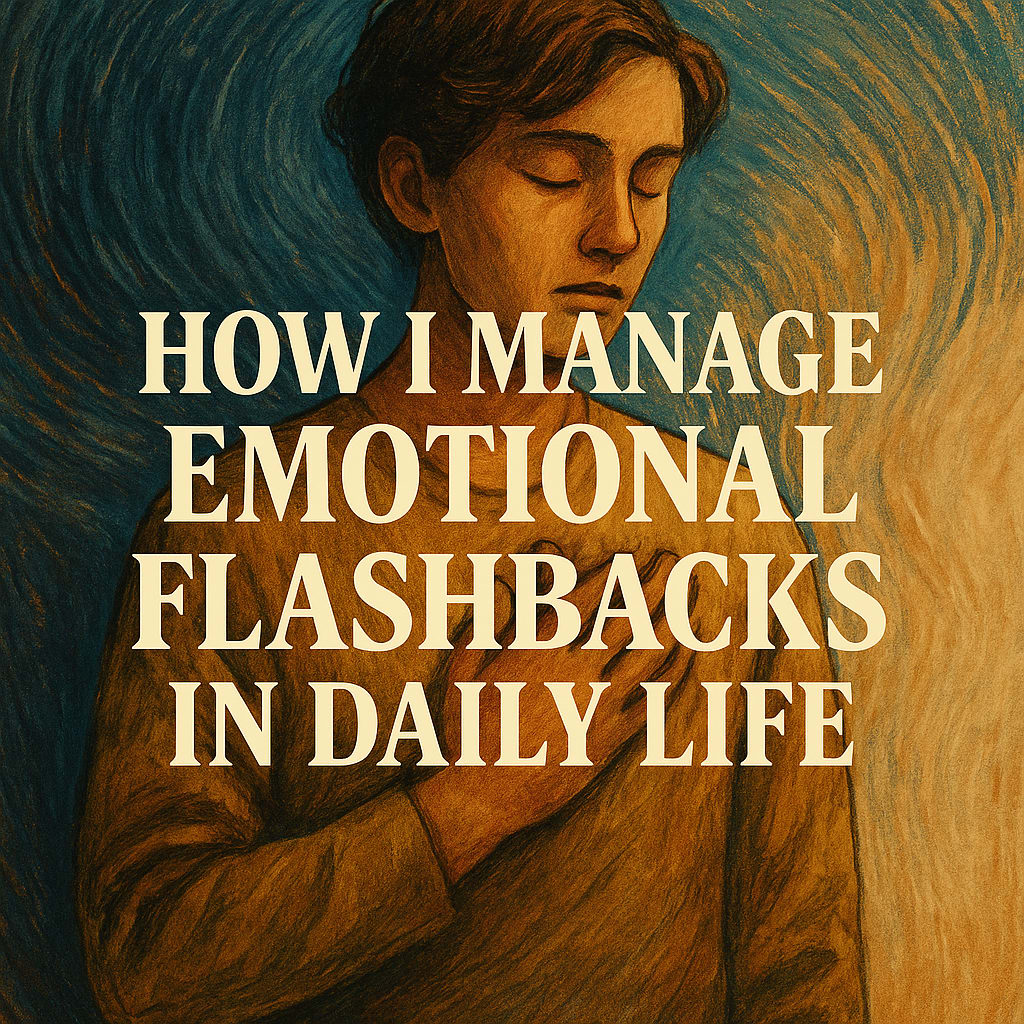
Emotional flashbacks are the ghosts of our past,
Not always visible but deeply felt.
They don’t announce themselves with fanfare.
There’s no dramatic music or clear timeline.
Sometimes, they arrive as:
A sinking feeling in your chest
Sudden panic over something “small”
An urge to flee a perfectly safe space
An irrational fear that you’ll be abandoned, rejected, or attacked
And worst of all?
You often can’t explain why.
Emotional flashbacks are when your body remembers a pain your mind can’t fully place.
They’re not signs of weakness—they’re survival responses asking to be understood.
🧠 What Are Emotional Flashbacks?
Unlike visual flashbacks that replay specific memories (often linked to PTSD), emotional flashbacks are vaguer and more visceral.
They stem from Complex PTSD or prolonged emotional trauma—often from childhood, relationships, or environments where safety, love, or validation were inconsistent.
Emotional flashbacks can include:
Shame or worthlessness that hits out of nowhere
Intense fear of abandonment or being “in trouble”
Numbness or emotional shutdown
Self-sabotaging thoughts like “I’m too much” or “They’re going to leave me”
They feel like they’re happening now—but they belong to then.
And that’s the trick.
Your nervous system doesn’t know the difference between a past threat and a present reminder.
💬 My Experience with Emotional Flashbacks
There was a time when one misunderstood text could ruin my whole day.
If someone responded with silence or perceived distance, I’d spiral into panic, convinced they were upset or abandoning me.
The truth was: they were just busy.
But my body told a different story—
A story rooted in past experiences where silence did mean danger, punishment, or rejection.
These reactions didn’t come from logic.
They came from unhealed wounds.
And learning that was the first step toward managing them with compassion rather than shame.
🛠️ How I Manage Emotional Flashbacks
1. I Name What’s Happening
I’ve learned to pause and say to myself:
“This feels big because it’s old. This is an emotional flashback.”
Labeling it helps me separate the current event from the emotional intensity of the past.
It gives me a moment to ground myself in the now.
2. I Regulate My Body First
The body must feel safe before the mind can make sense of anything.
My go-to regulation tools include:
Cold water on my face or holding an ice cube
4-7-8 breathing (inhale 4, hold 7, exhale 8)
Grounding techniques: Noticing 5 things I can see, 4 I can touch, 3 I can hear, etc.
Sitting against a wall or lying flat to feel supported
Repeating mantras like:
“I am safe now. I am not in danger. This is not then.”
3. I Track the Pattern with Curiosity, Not Judgment
Instead of shaming myself for “overreacting,” I ask:
What just happened that triggered me?
What does this remind me of?
What story am I telling myself right now?
Often, the trigger is small—but the emotional response is old.
It’s a version of me saying:
“This hurt before. Please don’t let it happen again.”
4. I Practice Self-Soothing, Not Self-Silencing
I used to stuff it all down. Smile. Stay silent. Pretend I was fine.
Now, I let myself feel.
Cry if needed.
Journal the spiral.
Say kind things to myself like I would to a scared child.
Because that’s often who’s showing up in an emotional flashback—
your younger self, needing what they didn’t get.
5. I Communicate With Trusted People
When it feels safe, I share what’s going on with someone I trust. I say:
“I know this might sound intense, but I think I’m experiencing an emotional flashback. I just need some grounding and reassurance.”
The right people won’t shame you for feeling deeply.
They’ll meet you with presence, not panic.
🧱 What I No Longer Do
I don’t ignore emotional flashbacks.
They always come back louder if suppressed.
I don’t judge my sensitivity.
It’s not a flaw—it’s a signal.
I don’t assume every strong emotion is irrational.
Some reactions make perfect sense in the context of lived experience.
💡 What’s Changed Since Learning to Manage Them
I still have flashbacks.
But now, they don’t derail my day.
I don’t spiral for hours. I catch them earlier. I respond, rather than react.
I’ve also started repairing my relationship with my nervous system.
I no longer see it as broken.
It protected me.
Now, I’m teaching it that safety is possible—even now.
Healing isn’t about never being triggered.
It’s about shortening the distance between the trigger and your truth.
🌱 Final Words: Your Feelings Are Valid, Even If They’re from the Past
If emotional flashbacks show up in your life, please know:
You are not “crazy.”
You are not too sensitive.
You are not broken.
You are responding to the echo of something unprocessed.
And with gentleness, you can begin to turn the volume down.
So, the next time your body reacts before your brain can catch up—
Pause.
Breathe.
Speak kindly to yourself.
Ground.
Reach out.
Because you deserve to feel safe.
Not just physically. But emotionally, too.
And that safety starts with understanding—
Not judgment.
About the Creator
Irfan Ali
Dreamer, learner, and believer in growth. Sharing real stories, struggles, and inspirations to spark hope and strength. Let’s grow stronger, one word at a time.
Every story matters. Every voice matters.
Top tipple tricks
Been thinking a lot about drinking, lately. Not least because of a recent episode of over-indulgence and the inevitable after effects. Some readers may recall the earlier articles I wrote about beating the booze. Here I set out an experiment in techniques for cutting down on my alcohol intake. The experiment was successful, the techniques worked, and I have armed myself with an arsenal of weapons in the war against the demon drink. I have yet to fire the first round however. It's all a question of timing (perhaps procrastination).
By Raymond G. Taylor5 days ago in Psyche




Comments
There are no comments for this story
Be the first to respond and start the conversation.