
How cooking takes a bite out of my depression
Recognising and trying to overcome the destructive behaviour of your brain though mindfulness in the kitchen.

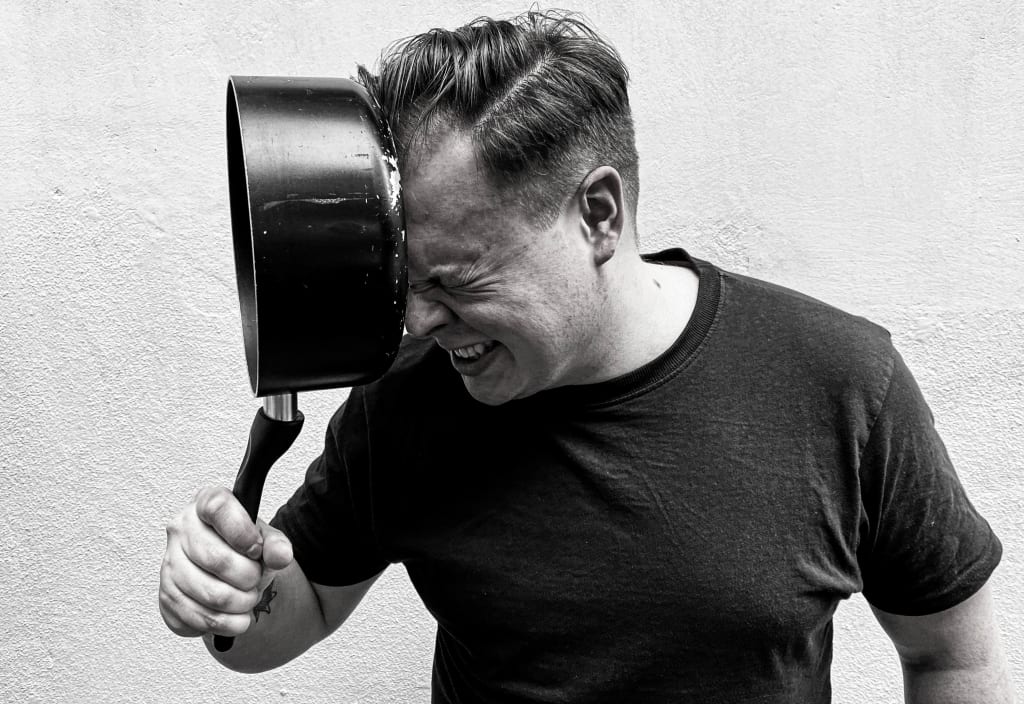
For me, cooking is, and always will be, a joyous experience. I cook everyday, not just because I want to, but because I need to. It’s a ritual much like a form of meditation, there are steps I need to take in order to get into the right state, concentrating on time and temperature to keep the front of the mind focused, so you can truly discover the wonders of flavour. Ok the ‘wonders of flavour’ part sounds a bit daft, but seriously, my relationship with dealing with depression runs rather more deeply. You see it’s easy to say bake a cake and you’ll feel better, but really concentrating on the why, reflecting on your feelings, however positive or negative are all good practices in order to improve your ability to curb the effects of depression.
It’s a very real truth that 1 out of 4 adults in the UK will suffer from some form of mental illness in their lives. Like many of these people I was very unsure as to how I was going to deal with my own mental health, mainly because I was young, slightly cocky and I didn’t understand it at all. A lot of my time was spent reacting negatively and quite aggressively at times, to a situation, especially ones involving criticism and I would often blame others for why I was feeling the way I was. I was a bit of a dick, but most of all I was crippled with feelings of insecurity, doubt, anxiety, anger and I often felt overwhelmed in confronting situations and I was unable to deal with my emotions. All in all, I wasn't very well and I needed to address these issues of my mental illness.
A little bit about the depressed brain
Depression is crap and nobody knows for sure why we get depressed. However we do know that it is a biological disorder linked to the chemistry of the brain. Cortisol is a major influencer when comes to our mood and depression. It regulates our blood pressure, how we digest certain proteins, carbs and fats. It regulates inflammation in the body, it’s linked to your sleep and wake cycle and it is able to give us boosts of energy when we feel threatened or need to be on high alert.
High levels of cortisol can be a good thing in certain situations, if we are being attacked by an axe wielding murderer for example. Our bodies are able to react quickly by flooding our brains with cortisol so that we have the ability to find a way to run from or dissarm said axe wielding murderer. It’s not that often that I find my self in these situations, and hopefully neither do you. It is important though to note that in order to achieve this heightened sense of ninja-like awareness, the brain has to shut down some bodily functions. These include things such as; growth process, reproductive systems, digestive systems and immune system. Because the brain believes we don’t need these things when it is under threat, and it will simply shut them down in order to deal with the danger at hand, and when the danger passes order is restored.
This sounds simple enough, however we are more likely to be attacked in a different way, with information. Information is being sent to us every which way, in a society that is relentlessly forcing us to process information all the time. The brain isn’t able to decipher between high alert being attacked mode and life stress feeling overwhelmed mode. So in this confused state, it has no choice but to continue producing cortisol whenever it feels stress which, in turn, means our brains stop the proper regulation of the aforementioned systems as we continue to live out our lives.
As if it wasn’t bad enough, along with stress, episodes of depression can also trigger the extra production of cortisol. From here it’s a gigantic snowball of crap. This can then lead the amygdala to enlarge, the part of the brain associated with emotional responses. When it is enlarged it causes sleep disturbance and changes in other hormones. Although we don’t know which triggers which, we do know that people who suffer from depression tend to have more inflammation of the brain. One study specifically found that people who have struggled with depression for more than 10 years have 30% more inflammation. Brain inflammation can then worsen depression, interfere with neurotransmitters that regulate mood, and negatively impact learning and memory.
So depression is pretty crap really and can lead to health issues, not just in our brains, but our bodies as well. This is but the tip of the information iceberg when it comes to the brain and depression, however it is important to understand the main point. That the feelings of depression are just chemical imbalances in the brain, and the sooner we understand more about depression and how it affects us, the sooner we can start to take steps to curb the affects of these chemicals and ultimately improve our mood.
Mindfulness in the kitchen
I have looked at many ways in which people deal with their depression. Some people use medication, some people use psychodynamic, cognative or other types of theropy. But one that seems to top the list more recently is mindfulness, specifically mindful meditation.
Mindfulness is the basic human ability to be fully present, aware of where we are and what we’re doing, and not overly reactive or overwhelmed by what’s going on around us. — mindful.org
To some, myself included, mindfulness seemed far too much of a stretch. For a while I deemed it as something only monks did for 16 hours a day on top of a mountain in the middle of Asia interlaced with fasting and praying. However much like what has happened with the stigma attached to mental health illnesses, the idea of being still for a few minutes a day has become more and more common place, it’s talked about a whole lot more and has proved effective for many who practice it. There is even a study carried out by Harvard University that links clearing your mind with affecting your genes and lowering your blood pressure. So as we start to peel back the layers of mindful meditation we can start to understand why it can be used as a form of treatment for depression.
In the hunt to discover more about depression and how I would improve my mood, I have found that, over the years, getting drunk does not help, eating crap does not help and criticising others to make myself feel better, does not help at all. Cooking though, has been my way of practicing mindful meditation as a form of treatment for my depression, but I didn’t actually realise it straight away.
I have always cooked, ever since I was a child and made mince pies with my mother, I have always found a way to enjoy it in many of its forms. It’s been one of the few constants in my life, however I have never really understood why. I would usually say because I enjoy it, which in it’s purest form is fine, but it is only fairly recently that I was able to discover that I needed to cook as a way to reduce the affects of depression. To some the kitchen is a very stressful environment in itself, and it would make no sense at all to use cooking as a way of relaxing. That’s why i’ve never wanted to go professional really, I have worked in a professional kitchen before, and it’s not the place I want to be when I need to feel all zen.
Cooking isn’t just something I do when I feel down, although I do feel somewhat compelled to make something when i’m feeling a bit naff. The point is making it a daily ritual. This could be anything from cooking a three course meal (which I rarely do) to cooking myself mushrooms on toast in the morning (which I do very often). It’s something I practice regardless of how I feel. And now when I reflect on cooking being one of the only constants in my life, I realise that I have been meditating for years I just didn't realise I was doing it.
Judgement and process
I’ve always been a generous cook, I’ll always opt for the smaller portion and give away the bigger piece, I know so noble. But I think that it’s inherent of a lot of cooks, especially home cooks, where we often take on the roll of the nurturer, albeit subconsciously, I don’t go around pretending to be mother to all, I just love cooking for others. What would seem to someone as putting me out, I would feel quite the contrary, I almost feel indebted to them for giving me an excuse to cook (not that I need one).
This in a way has evolved from a want or need to please people. Years ago I felt a need to please people in return for approval and validation. Whearas now, I cook for people because it pleases me. It’s almost selfish in a way, I believe this to be a much more healthy approach as it removes the anxiety and all the questions I asked myself; Will they like what I’m cooking? Will they think that it’s interesting? Will they just be polite and say it’s fine or will they give me criticism and how will that make me feel? My god, this is what used to go on in my head when cooking, even for just me and one other person, exhausting right?. As i’ve grown older this has developed into focusing on the joy of cooking, it’s now a judgment free environment. I no longer concern myself with external thoughts. I know that if I invest myself in a dish because I love making it, that will manifest itself as a great plate of food. This isn’t arrogance, this is confidence in myself and my conscious ability to remove judgment and anxiety from the kitchen and really focus on making great food through a mindful process.
The process itself is just concentrating on the cooking, time and temperature, organising my kitchen is, in a way, a process of organising my thoughts. Filling bottles, wiping down surfaces, sorting out the fridge etc. It gives me something to focus on, and in that focused state i’m not anxious, i’m not judgemental of my own feelings, I’m not fixating on the past or worring about the future. I am simply taking things one step at a time and when I complete the process I am able to experience much more clarity. I am able to analyse my thoughts, feelings and behaviours with much more critical thought. Not taking any of that process personally, but separating the chemical happenings in my brain from my conscious self to realise that I can reduce my anxiety and stress by just being aware that they are not who I am.
Acceptance
Depression affects us all in different ways, I can often wake up with a cloud hanging over me or it can just wander into my life in the form of terrible decisions I’ve made in the past or worrying thoughts about the future. These thoughts are crippling and render any kind of creative output none existent, until the cloud inevitably moves on. I find it not only important in my daily life, but also necessary to try and recognise these feelings when they start to occur, be aware of where they are coming from in order to rationalise them and allow myself to accept them and go through my mindful process.
By the way, I haven’t found the cure. I still have dark days and I still make mistakes. We need to have frank and honest conversations about mental health if we are going to make progress. Helping each other helps us live with our depression. I am still discovering and learning new things about my brain all the time and i’m not saying that if you do what I do and cook every day, you won’t be depressed anymore. This stuff works for me, it helps me deal with it and by sharing my process I hope that it will in some way, encourage others to seek out and share their own.
About the Creator
Chris Perry
Photographer | writer | cook
I'm a headshot photographer by day. I'm a big advocate for talking about mental health as well as wellness and mindfulness. But sometimes I write about other stuff.
Keep reading
More stories from writers in Psyche and other communities.
When Saying “No” Feels Strange
He did not plan to smoke that day. He was standing outside his school gate, bag on his back, waiting for the van. A boy from his class took out a vape. Another smiled and asked him to try. He refused at first. Everyone laughed, not loudly, not cruelly just enough to make him feel small.
By Muhammad Ayaan a day ago in Psyche
Wild Card Weekend Recap: What Happens Now?
I think I figured out why I love Wild Card Weekend so much. It's because it's the first playoff anything of the calendar year. The NFL season starts in the fall, and once upon a time, the champion was crowned either on or slightly before New Year's. The evolution of the NFL schedule has resulted in the playoffs starting just into the New Year, and currently, the final week of the season falls on the first weekend of the New Year, with Wild Card Weekend coming a week after that. So yes, chronologically, the NFL's Wild Card Weekend serves as the first playoff anything of the calendar year.
By Clyde E. Dawkins6 days ago in Unbalanced




Comments
There are no comments for this story
Be the first to respond and start the conversation.