
Heat, Space, and Solace
Rethinking Wellness in the Australian Home

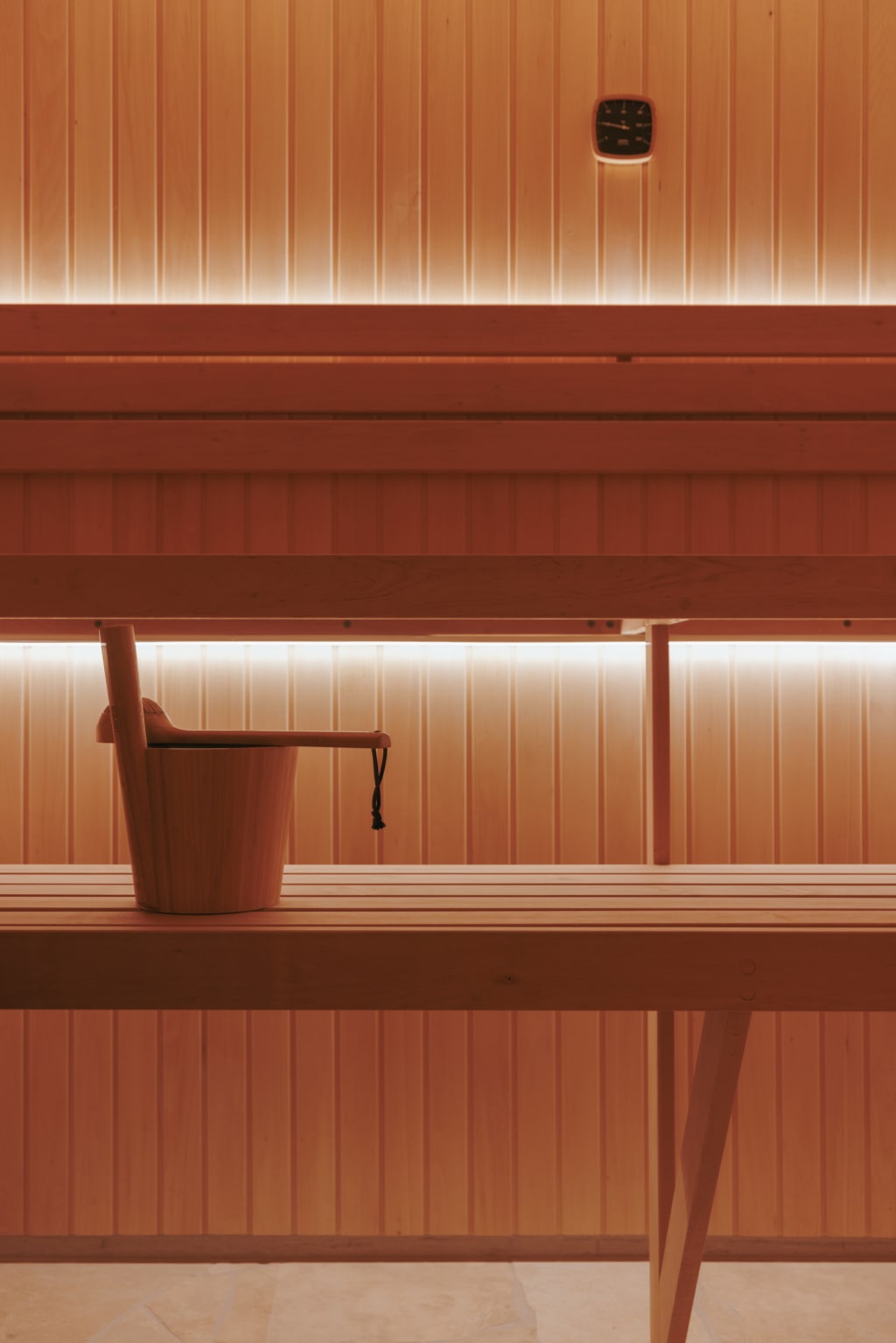
It began with a small detail in a design brief that carried unexpected weight.
A client, while walking me through their hopes for a new home, paused on what seemed at first like a luxury: a sauna and dedicated wellness space. But as we discussed the rationale, it became clear this wasn’t about indulgence. It was about anxiety, about creating a physical space where stress could dissipate, where stillness was not only permitted but encouraged. The sauna, they explained, had become a needed tool for emotional regulation, a ritual of heat and quiet that helped calm their nervous system.
That moment lingered.
Not because it was rare, but because it was honest. And it got me thinking: How often are our clients quietly designing around their emotional needs, even when the language for it isn’t quite there? And more importantly, how often are we, as architects, listening for it?
Across Australia, the notion of home has become increasingly paradoxical. At once a private refuge and a financial pressure point, it is both where we go to unwind and where many feel most trapped—by debt, density, and disconnection.
As housing costs rise and lot sizes shrink, the physical dimensions of our dwellings are increasingly at odds with our psychological needs. At the same time, our cultural appetite for wellness has never been more visible—manifesting in a surge of interest in biophilic design, cold plunges, meditation spaces, and, more recently, the domestic sauna.
This tension between the weight of housing pressure and the yearning for interior peace points to an urgent and timely question: what does it mean to design for mental health at home?
The Psychological Burden of Space
The home, in its ideal form, is a retreat. But for many Australians, it has become a space of overstimulation or emotional fatigue. Living under the stress of high mortgage repayments or insecure rental agreements shapes not only how we feel about home, but how we inhabit it.
Psychologists point to the importance of having access to spaces of solitude and control within the home, places where the body and mind can decompress without interruption. Yet contemporary housing models, particularly in urban areas, increasingly prioritise efficiency over emotional resonance.
As a result, there’s growing momentum among architects and designers to advocate for more intentional “wellness zones” within the home, spaces that don’t serve a conventional function, but serve a psychological one.
Saunas and the Ritual of Heat
Among these wellness elements, the sauna is emerging as a surprising yet telling inclusion. Traditionally associated with Nordic cultures, the sauna ritual, heat exposure, followed by cold immersion or rest is not only a form of relaxation but a reset for the nervous system.
Medical research supports its use for reducing anxiety, improving sleep, and even enhancing mood. But beyond its physiological benefits, the inclusion of a sauna in residential design represents a symbolic shift: a recognition that wellbeing is not an afterthought, but a design priority.
The domestic sauna is a provocation. It asks: What if care was embedded into the architecture itself? What if our homes were designed not just to shelter us, but to support our healing?
The Value of Intentional Space
Designing for wellness is not about size or luxury—it’s about spatial intentionality. A home that nurtures mental health doesn’t require a sweeping floorplan. It requires moments:
- A window seat that catches morning light;
- a room with acoustic softness and privacy;
- a passage that slows movement, creating pause.
This kind of spatial generosity isn’t always measured in square metres, but in how it allows the occupant to breathe, to reflect, and to disconnect when needed.
In many ways, wellness-focused architecture is a form of resistance—against the commodification of home, against the cult of productivity, and against the erosion of quietude. It affirms that being well is a spatial condition, not just a personal one.
Toward an Architecture of Restoration
Australia’s housing crisis is real and structural. But so too is the growing crisis of burnout, anxiety, and chronic stress. Architects are uniquely positioned to bridge these realities—not by offering utopias, but by designing spaces that acknowledge the complexity of how we live.
While designing Little Birch, I found myself returning often to this idea of restoration. The home needed to balance family life with a sense of retreat, and small design gestures became crucial in creating that balance. A framed view from the bath, a quiet corner that catches afternoon light, a generous threshold between inside and out.
In moments like these, I’m reminded that architecture has the power to do more than solve spatial problems. It can actively shape how we feel in our daily rituals. How we rest, how we reconnect, how we restore.
This might look like integrating heat rituals into compact homes, carving out slow space in fast cities, or simply returning to the idea that architecture can, and should, care for the mind, not just the market.
In the end, the most progressive homes may not be those with the newest materials or the most complex geometries. They may be the ones that offer a rare and radical gift: a place to feel well.
About the Creator
Peter James Ahern
Peter James Ahern is director of buck&simple, a Sydney architecture practice creating thoughtful, enduring homes. With experience in design and construction, he brings a detail-driven approach balancing form, function, and lived experience.
Keep reading
More stories from writers in Psyche and other communities.
Steam Machine Price Leak Sparks Hope and Skepticism Among Gamers
Rumors travel fast in the gaming world, but some hit harder than others. When talk of a steam machine price leak began circulating, it stirred a familiar mix of excitement and doubt. For years, gamers have waited for hardware that could bridge the gap between console simplicity and PC freedom. Steam Machines once promised that dream, then quietly faded away. Now, whispers of a return, tied closely to a leaked price point, have reopened old conversations. Is this finally a realistic option for everyday players, or just another idea that looks good on paper? To understand why this leak matters, we need to look at the past, the present mood of gamers, and what price truly means in this space.
By Muqadas khan7 days ago in Psyche



Comments
There are no comments for this story
Be the first to respond and start the conversation.