
Funeral Exclusion
And the damage it does

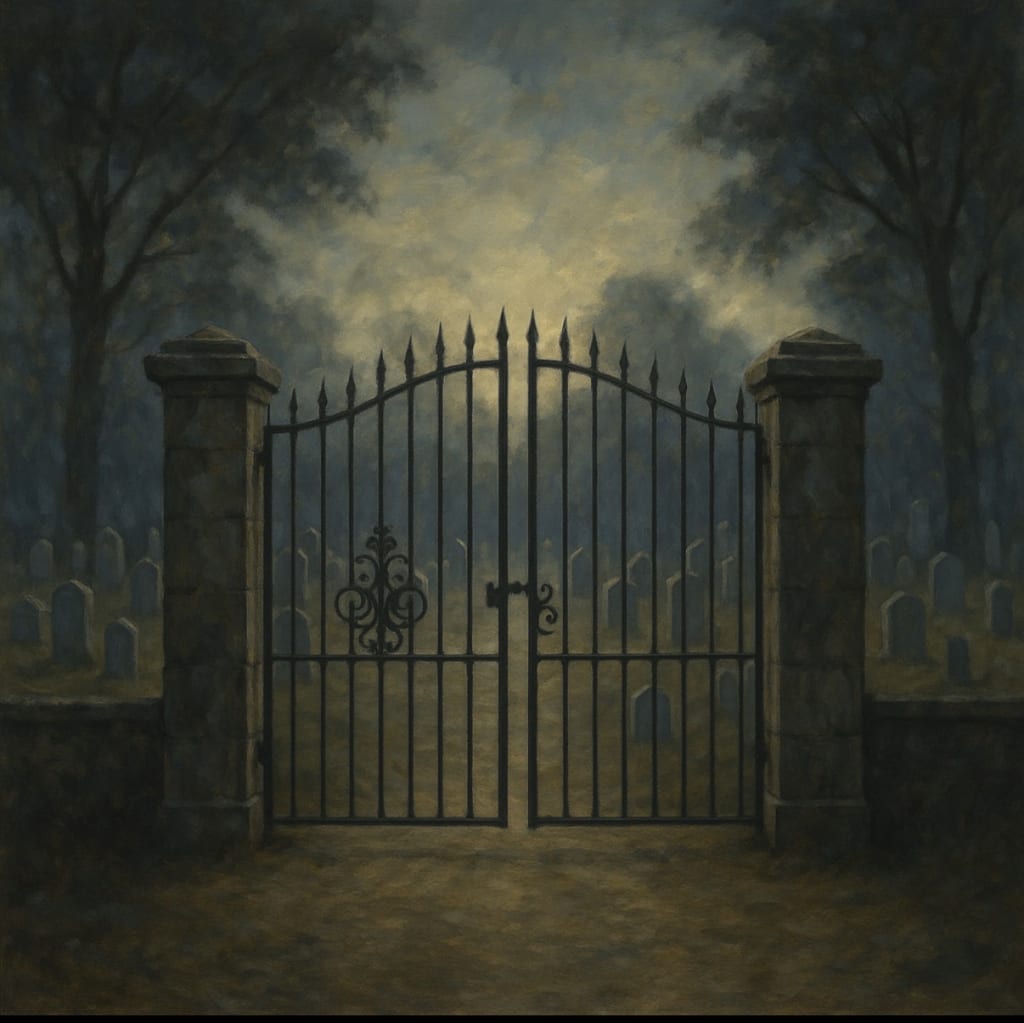
The Ethics and Psychology of Funeral Exclusion: Mourning, Belonging, and the Denial of Witness
Author Note
The author’s interest in this subject arises from direct observation of the psychological and moral harm caused when individuals are denied access to communal mourning. While personal experiences are not detailed, the reflections and analysis are informed by firsthand witness and interdisciplinary research in grief psychology, moral philosophy, and ritual studies. This work seeks to illuminate a largely unexamined form of relational injury and to advocate for more humane, inclusive practices surrounding death and bereavement.
Abstract
Funerals are among humanity’s oldest responses to death, serving as both psychological containment and social ritual. Yet in contemporary contexts, exclusion from such ceremonies—whether through familial gatekeeping, social stigma, or conflict—has become an underexamined form of psychological injury. This paper examines the ethical and psychological implications of funeral exclusion, arguing that barring individuals from mourning rituals constitutes an act of disenfranchised grief and moral violation. Drawing upon the work of Kenneth Doka on disenfranchised grief, Pauline Boss on ambiguous loss, and Émile Durkheim on the collective function of ritual, the essay explores how exclusion fractures the communal process of meaning-making and destabilizes the mourner’s sense of relational identity. The analysis also integrates insights from Judith Butler’s theory of relational ethics and Freud’s concept of mourning as psychic integration. Ultimately, the paper contends that to exclude someone from a funeral is to deny them a fundamental human right: the right to witness death and to be witnessed in grief. It concludes with recommendations for ethical inclusion and restorative approaches to communal mourning.
Keywords: funeral exclusion, disenfranchised grief, ambiguous loss, moral injury, mourning, empathy, ritual
Introduction
To attend a funeral is to stand at the intersection of loss and belonging. It is the one moment when a community, however fractured, acknowledges its shared dependence on the living and its inevitable surrender to death. In this light, exclusion from a funeral constitutes not merely a social slight but a profound rupture in the human order of meaning. When someone is told that they may not grieve publicly for the dead, the message is not only that their presence is unwelcome but that their love itself is illegitimate.
Modern psychology has long recognized the funeral as a site of symbolic reintegration. Sigmund Freud’s (1917/1957) essay Mourning and Melancholia described grief as the psyche’s gradual acceptance of loss, a process that transforms attachment into memory. Yet the mourning process depends on social acknowledgment. Without communal recognition, the mourner remains suspended—unable to reabsorb the emotional energy invested in the deceased. Kenneth Doka (2002) later defined this state as disenfranchised grief: grief that is “not or cannot be openly acknowledged, socially validated, or publicly mourned” (p. 5). Exclusion from a funeral is disenfranchised grief in its purest form.
Beyond the psychological, the act of exclusion also carries ethical weight. Émile Durkheim (1912/1995) viewed funerary ritual as the central means by which societies reconstitute solidarity after death. To deny participation is to fracture that solidarity, transforming what should be collective healing into social hierarchy. Judith Butler (2004) expands this moral dimension by arguing that to recognize another’s grief is to affirm their humanity; to withhold that recognition is an act of symbolic violence.
This paper therefore examines funeral exclusion as both a psychological and moral injury. Drawing on interdisciplinary research from grief studies, moral philosophy, and anthropology, it argues that the refusal to allow another to mourn publicly undermines not only the individual’s process of healing but also the ethical integrity of the community. Exclusion from mourning is not a neutral choice of logistics; it is an ethical failure that distorts the purpose of death rituals themselves.
The Function of Funerals
Funerals perform the essential psychological and social work of grief. They provide the structure through which emotion becomes meaning, offering mourners a ritualized vocabulary for what would otherwise be incommunicable. As Doka (2002) observes, ritual “gives public form to private pain” (p. 17), converting grief from an internal chaos into a shared act of recognition. In this sense, the funeral serves two intertwined functions: containment and connection.
The first function—psychological containment—concerns the management of overwhelming affect. Freud (1917/1957) argued that mourning allows the psyche to detach its energy from the lost object and reinvest it elsewhere. Contemporary grief theorists such as Stroebe and Schut (2010) have reframed this process as a dynamic oscillation between loss-oriented and restoration-oriented coping. Both approaches depend on ritual anchors: the sights, sounds, and gestures of communal mourning that remind the bereaved they are not alone in their disorientation. The funeral thus acts as a scaffold for meaning when meaning has collapsed.
The second function—social connection—is equally vital. Durkheim (1912/1995) maintained that rituals of mourning reaffirm the moral bonds that hold a society together. When the community gathers around the dead, it symbolically restores its own continuity. Anthropologist Robert Hertz (1907/1960) expanded this idea, noting that the funeral reconciles two transitions: the passage of the body to decay and the reabsorption of the mourner into collective life. To attend a funeral is therefore to participate in both biological and social renewal.
These twin functions—containment and connection—demonstrate why the right to mourn is not optional but foundational. Funerals are not stages for the virtuous but sanctuaries for the bereaved. They exist precisely because human relationships are complicated, fraught, and unfinished. To impose conditions on who may attend is to confuse the purpose of mourning with the politics of approval. The ethical premise of the funeral is inclusivity: even when the living failed each other, death demands acknowledgment.
When that acknowledgment is withheld, the result is psychic and social distortion. The individual’s grief becomes unspeakable; the community’s moral coherence fractures. The very ritual designed to restore order becomes a site of exclusion and control.
The Psychological Consequences of Exclusion
The act of barring someone from a funeral converts natural grief into a form of psychological injury. The loss of the deceased becomes compounded by a second loss—the loss of the right to mourn. In clinical terms, this constitutes both disenfranchised grief (Doka, 2002) and ambiguous loss (Boss, 1999): conditions in which mourning cannot proceed because the social framework that would allow it has been withdrawn.
Disenfranchised grief occurs when a mourner’s relationship to the deceased is not socially recognized or sanctioned. Doka (2002) explains that such grief “lacks the legitimacy and support that public rituals normally provide” (p. 16). The individual’s pain is rendered invisible, leaving the bereaved isolated from communal empathy. When exclusion is explicit—as in being told that one may not attend a funeral—the injury intensifies. The mourner is forced into silence at the very moment human connection is most necessary. Research in grief psychology confirms that social support is the single strongest predictor of adaptive mourning (Stroebe, Schut, & Stroebe, 2007). Its removal increases risk for complicated grief, depression, and long-term relational mistrust.
Pauline Boss’s (1999) theory of ambiguous loss provides a complementary lens. In ambiguous loss, closure is denied; the person is “physically absent but psychologically present” (p. 3). Exclusion from a funeral mirrors this paradox. The mourner experiences the death yet is barred from the ceremony that would symbolically complete it. This incomplete mourning produces a kind of suspended identity: the individual knows that loss has occurred but cannot locate themselves within its social acknowledgment.
Such conditions often lead to what clinicians call identity destabilization. The mourner’s sense of belonging—both to the deceased and to the living community—erodes. Judith Butler (2004) describes grief as the moment when one’s boundaries are “saturated by the other” (p. 22); through mourning, the self recognizes its relational nature. Exclusion interrupts this recognition. By denying the mourner public participation, the community severs the dialogue through which selfhood and empathy are mutually affirmed. The result is not merely sadness but a rupture in relational identity.
Empirical studies corroborate these findings. Burke et al. (2018) found that social marginalization during bereavement correlates with heightened intrusive thoughts, sleep disturbance, and prolonged grief symptoms. Conversely, inclusion in collective mourning predicts resilience and post-traumatic growth (Neimeyer, 2012). These outcomes demonstrate that exclusion is not benign. It inflicts measurable psychological harm, transforming what should be a ritual of integration into an instrument of isolation.
References
Bonhoeffer, D. (1997). The cost of discipleship (R. H. Fuller, Trans.). Touchstone. (Original work published 1955)
Boss, P. (1999). Ambiguous loss: Learning to live with unresolved grief. Harvard University Press.
Burke, L. A., Neimeyer, R. A., & McDevitt-Murphy, M. E. (2018). African American homicide bereavement: Aspects of social support that predict complicated grief, PTSD, and depression. OMEGA—Journal of Death and Dying, 77(2), 163–187. https://doi.org/10.1177/0030222815590699
Butler, J. (2004). Precarious life: The powers of mourning and violence. Verso.
Doka, K. J. (2002). Disenfranchised grief: Recognizing hidden sorrow. Lexington Books.
Durkheim, É. (1995). The elementary forms of religious life (K. E. Fields, Trans.). Free Press. (Original work published 1912)
Freud, S. (1957). Mourning and melancholia. In J. Strachey (Ed. & Trans.), The standard edition of the complete psychological works of Sigmund Freud (Vol. 14, pp. 243–258). Hogarth Press. (Original work published 1917)
Hertz, R. (1960). Death and the right hand (R. Needham & C. Needham, Trans.). Free Press. (Original work published 1907)
Stroebe, M., Schut, H., & Stroebe, W. (2007). Health outcomes of bereavement. The Lancet, 370(9603), 1960–1973. https://doi.org/10.1016/S0140-6736(07)61816-9
About the Creator
Harper Lewis
I'm a weirdo nerd who’s extremely subversive. I like rocks, incense, and all kinds of witchy stuff. Intrusive rhyme bothers me.
I’m known as Dena Brown to the revenuers and pollsters.
MA English literature, College of Charleston
Keep reading
More stories from Harper Lewis and writers in Psyche and other communities.
William Faulkner
The speech is below, in case his accent is too thick for you to understand, like the attendees at the Nobel Banquet in 1950. Faulkner finished his short, brilliant speech and was met with devastating silence, his Mississippi drawl rendering his speech unintelligible to most of those international ears.
By Harper Lewis3 months ago in Writers
Christmas is Not Always “Beer and Skittles”
If you find the holiday season challenging, you’re not alone. I have never been a big fan of Christmas. I have always found it a bit pretentious. It is a time for kids, really. I have not had kids in my life, so the "children's influence" around this time of year doesn’t occur.
By Calvin London21 days ago in Psyche
Grok and the Quiet Anxiety Around Machines That Understand Us
For years, people imagined artificial intelligence as something distant and mechanical. It lived in movies, research labs, and tech conferences far removed from everyday life. Then tools like Grok appeared, and that distance began to shrink. Suddenly, a system could read questions, respond with humor or seriousness, and follow complex conversations in a way that felt unsettlingly human. Grok is not just another name in the growing list of AI systems. It represents a moment where curiosity meets unease. People are fascinated by what it can do, yet unsure about what it means. To understand Grok, we need to look beyond features and focus on the feelings, questions, and quiet worries it brings with it.
By Muqadas khan3 days ago in Psyche


Comments
There are no comments for this story
Be the first to respond and start the conversation.