
Extroverts: A Personality Analysis
A Deep Dive Into Psycholog

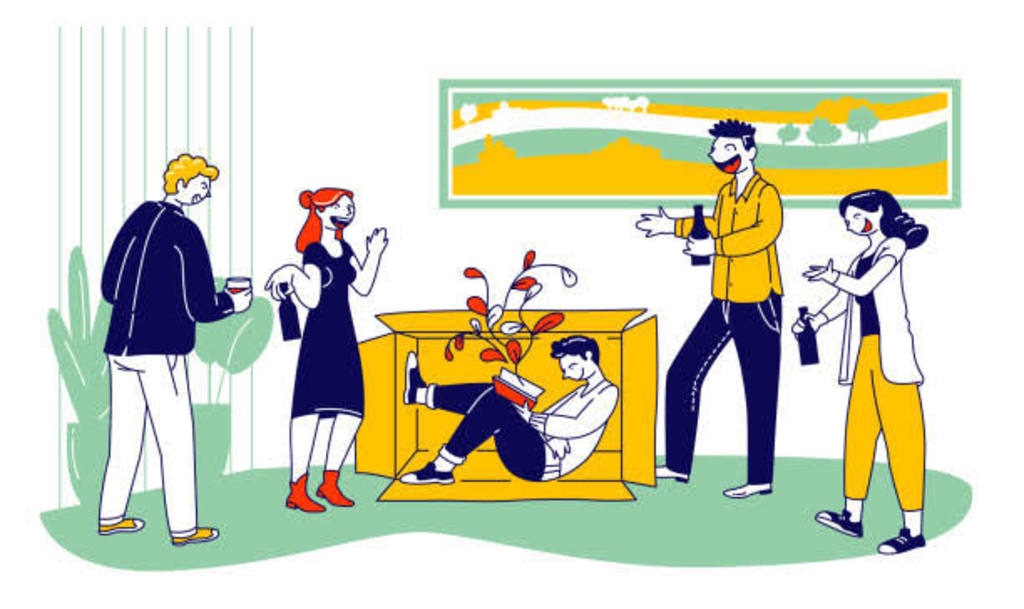
This is a sequel to another psychological piece I’d previously written. The first one set the tone and direction for this series. If this is your first time on this page, I highly recommend that you check out the first one, as it went into detail for this second part and laid down some general understanding of personality. It equally went a little deep into the different personality types.
You can first read the prequel (Introverts) by clicking on this LINK, before you go ahead to read this one that is based on Extroverts. I would recommend that reading order. But anyway, let’s get into it.
Personality
Although there are The Dark Triad personality traits – narcissism, psychopathy, sociopathy, and Machiavellianism. There are equally 7, 13 and many other personality models. But generally speaking, there are 5 personality traits that apply to everyone. These are Agreeableness, Neuroticism, Conscientiousness, Openness, and Extraversion. I wouldn’t go into detail about what each one means to avoid being tautological, since I’ve covered them in my publication on introverts. Although I might subtly hint at their meanings for context when necessary.
Personality is the combination of characteristics or qualities that form an individual's distinctive character. Each personality type works on some kind of scale. How each person fair on the scale is what their personality entails. This is especially the case since people can score differently on each trait depending on their socialization and biological makeup.
Personality is also a way to identify a unique person. They have their own taste in songs, movies, cars, books, etc. Almost all of the things you’d find in one person and never another. If you ask most people what they want most in their partner, some people are quick to choose personality over any other thing, while some other people prefer physical appearance to anything else.
Having a personality helps you create an identity for yourself. Where you fail to fall into a category of already identified and acceptable standards of behaviour, you’ll most likely be called “weird”. Where you aren’t as generic and papercut as most people you associate
Lots of people have no personality. They basically emulate the behaviour of everyone else around them, and they, therefore, end up behaving like everyone else: having the same sense of humour, the same taste in music, and similar behaviour of jumping on whatever is trending at the moment – a perfect caricature of someone with no individual identity.
Personality helps people stand out. Makes them distinct by lots of factors, whether it is how they talk, their music taste, how they dance, how they relate with other people, their vocabulary, their posture – all of these micro factors that make someone different from the herd.
But speaking more on the observable aspects of personality, the introverts, and the extroverts…
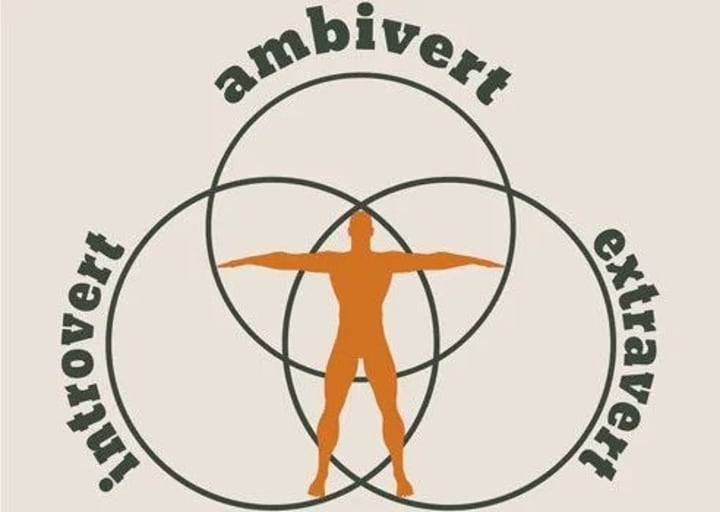
Two people might score differently on extraversion, which is one of the Big 5 that is characterized by how outgoing and energetic a person is. Where Subject A scores 2/10 on extraversion, but Subject B scores 8/10, it’ll be easy to identify Subject A as an introvert, and Subject B as an extrovert. Those are the two extremes of extroversion. Where you score high on the trait, you are very likely to be an extrovert. But if otherwise is the case, you are highly likely to be an introvert.
Let’s assume here that there is a Subject C. After multiple tests, Subject C scores 5/10 on the extraversion trait. A psychologist would identify such a person as an Omnivert (neither there, nor there, but is able to be one or the other when appropriate).
If, much like my good friend, you don’t think “introverts and extroverts” are real things, then it pains me to say that it is because you are not looking enough at the things that make themselves obvious in your social interactions. It is Socrates said, “Know thyself”. When you understand yourself, you understand the human psyche, because give or take, you are also a human being. Not me though, y’all be safe.
Based on your answer to this question is about to ask, you’ll see for yourself whether you are Subject A, B, or C.
Do you enjoy spending time alone, or you can't stand spending time alone and you are energized by social interactions? What’s your answer? I’ll love to hear them in the comment section. If you believe it’s too early to determine, in certain you’d have gotten your answer by the end of this piece.
Extroverts
I would love to clarify that psychology is an applied science, not pure science. So, it is relatively easy for any assumption or statistical analysis to be wrong, especially over a given period of time. Psychology will not tell you 2 + 2 = 4. It can only try to predict, determine, and understand any given variable.
You may take multiple personality tests, and each will give you different results. They might even give you similar results, but over time, as your multiple stages of socialization help shape the way you interact with other people, so will the results change. In literature, this will be your different stages of character development. You are after all the protagonist of your own story, and we are all just extras/NPCs.
Taking a personality test is just like asking your friends to describe you. They’ll obviously not all say the same thing, mainly because there is a degree of relationship that you have with each one of them. How the friend you met in college will describe you largely differ from the way your childhood friend or sibling will describe you. Over time also, how they perceive you will equally change.
Whether or not anyone would love to admit it, they are either introverted, extroverted or able to move from one extreme to the other. As long as you are a human being, you’ll definitely have a score on the Extraversion scale.
Let’s try making some distinctions between introverts and extroverts. Shall we?
If you are mostly introverted, you'd want a job that never requires too much interaction with other people. You'd prefer the kind of job that will enable you to stay all day in your room, have your own personal space, and wouldn't require you to leave your comfort zone. You are also more likely to prefer online classes to physical classes. Although if you had to choose physical classes, it'll be because of the loneliness, and also the need to socially interact with your friends beyond the touches of screens.
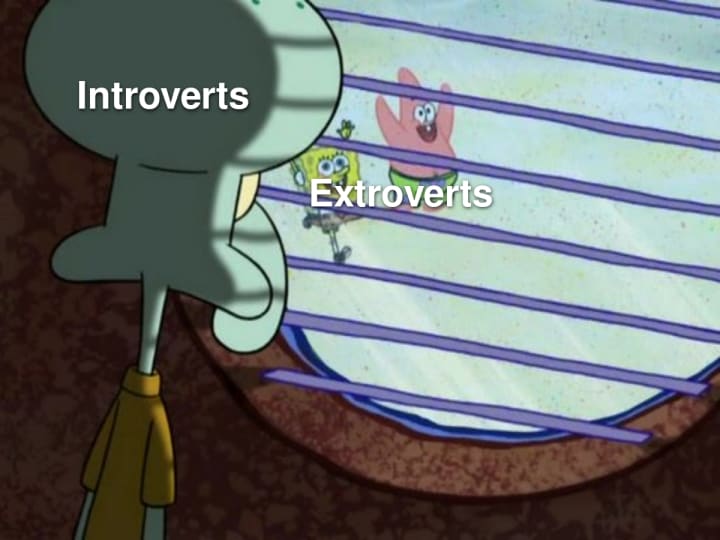
Introverts generally prefer to have their own space, whether reading, being left alone, binging movies, or playing games.
If you are also introverted and you end up going to a party/social event, you might return home and tell yourself that that's all the social activity you need for the year. As an introvert also, you are highly likely to meet a group of strangers, and the only thing that will be on your mind is how you can't wait to return home and recharge for the next three weeks. As a kid, you'd fall into the category of those who enjoyed pretending to be asleep when visitors are around so that you wouldn't have to leave your room or have to interact with other people. I know all of these because I grew up as an introvert.
Here are some experiences I had as an introvert that might help you get an insight into how the mind of an introvert works.
BigPhaze
I was late in my teenage years, and some of my friends had decided that I needed to spice up my social life. No shame here, I was as nerdy today as I was back then. The only thing I had going for me was the fact that I was mildly brilliant, and I also gave a false sense of confidence each time I was asked to answer a question in the classroom. So, I wasn’t totally hideous. Although, with the way I interacted with girls who showed some kind of interest in me, you'd think my special talent was helping girls realize they deserve better.
Following up on the advice of my friends, I decided to follow one of them down to a club in my town. His girlfriend was supposed to join us later, so I was basically third-wheeling. But regardless, his presence gave me some kind of confidence to actually go to a social setting.
It was around the end of the year, so I guess some of my friends had similar social plans. That would definitely explain why I recognized most of the people at the club. But this made my situation worse because they were equally as shocked by the fact that Phaze could actually be at a club as I was. And here, I had lots of awkward and unnecessary interactions with people whom I wish were strangers because then, all the socially awkward moments I had with them wouldn’t all be haunting me.
It got to a point where I had to hang by the corner of the club because I was already beyond nervous and uncomfortable. At the corner, I lowered my screen’s brightness to the lowest, but it wouldn’t go any lower than 0%. Even the app I downloaded for extra darkness proved no help. At this point, regret beset me. But of course, I’m at a club, it wouldn’t have been cool of me to develop social anxiety and then start panting like a hibernating bear, I thought to myself.
After only about 10 minutes of trying not to be an introvert with a near-anxiety issue, I rushed out of the club and headed for the restaurant. What better way to feel normal than engaging in the acts of a glutton?
A couple of minutes later, my friend’s girlfriend showed up and I had to pretend like I didn’t almost die from excessive public exposure. I should have known better since my doctor had recently just declared that I was suffering from No Bitch Syndrome.
There was another instance where introversion got extreme. Like every normal teenager, I was once involved in truth and dare game, and that went about as well as you could imagine it. It was equally the best and perhaps one of the worst days I’ve ever had. In my class, there was a girl that had a crush on me, and she was present at the birthday party where the event took place.
The girl that had a crush on me at that event definitely had questionable taste in men. She was fine as fuck. She had people questioning how it was that we started hanging out together. Till today, I still wonder the same.
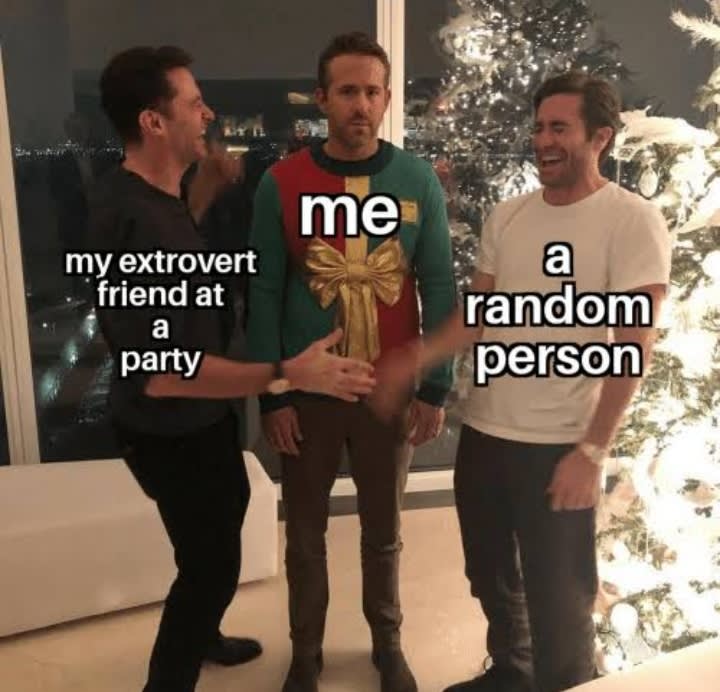
Just like in every good hero story, she was the instrumental side character that was necessary for my protagonist’s growth. She looked past my physical deformity, tasteless sense of fashion, and horrible situation of my financial capabilities, among other deficiencies. She basically stuck around and became an accurate model of how I can learn to not be so awkward and become comfortable in social situations.
I learnt to incrementally expose myself to social settings, I equally learnt to associate with people who weren’t so much like me. This worked perfectly. Gradually, I went from a chronic introvert to “the life of the party”. Although not so much, because my friends only love having me around only for the offensive jokes I tell.
In my journey to being able to move between introversion and extroversion, I managed to lose my sense of shame, which would explain how I’m actively able to tell the most embarrassing stories of my life. I learnt to be stoic, and also never to take myself too seriously. I developed my own philosophies, began working out, working on my fashion sense, and learnt to assert and contribute to conversations when necessary.
Character Development
Learning to be something that isn’t part of your traits is akin to character development. Through my story, you could see some patterns of personal development.
With the way I’ve lived and owned up to my experience, it is safe to say that I started out with a score of 1/10 on the Extraversion personality trait (outgoing, energy filled), but now, I can score 10/10, while still retaining the fact that I am basically an introvert that can be an extrovert when I want, and when I need to be one.
This is the perfect way of being. It is the Daoist symbol of Ying Yang (Order and Chaos), where both of them form a 6 and 9 that go into each other. A balance of these two is the right way to live. Otherwise, you remain the same and you will only be sheltered by “safe spaces”, and you’ll never truly understand the other side.
On the flip side, if you are extroverted, you'd want a job that enables you to socialize with other people. You can't wait to party again, and you can't wait to meet those strangers again, even as a kid you'd be the impulsive one that is always outside, and rarely ever inside.
If you are familiar with those who are referred to as the “class clown”, you’ll know what an extrovert is. A class clown is basically that one person that has the habit of actively trying to be funny. They see themselves as some kind of comic relief, whether or not they fail to realize that it may or may not be the appropriate time to try acting like a medieval court jester. We have all at one point been friends with someone who never gets tired of interacting with other people or even being outside their room.
The average introvert is actively thinking about how they can’t wait to get back home when they are outside. They can’t wait for their guest to leave, so they’ll be left alone and recharge for the next couple of days. Extroverts are more of the type to actively want to do the visiting or the hosting. They enjoy hanging out with other people.
If you are an extrovert in a "mainly introverted field", you would be bored out of your mind because you'd be wondering why everyone prefers to be by themselves when they can be fun. You are also very likely to be the person in the class that always tries to be funny and fails woefully each time. Add to this, you are likely to be the annoying co-worker that is actively going from one person to another in search of conversation or some kind of interaction. You love being the centre of attention. It fuels you in some way.
Extroverts need to learn to be introverts. This is their character development journey. Acting impulsive, and never spending enough time on their own never truly allow the room to think critically. Although this analysis is mainly applicable to those on the extreme end of introversion.
Introverts enjoy spending time alone, and this in essence gives them time to think over events that happened, are happening, or that are yet to happen. For example, rather than being in the bathroom, reminiscing over an argument they had some years ago, and how they could have said hundreds of things differently, introverts are mostly in the bathroom engaging in imaginative debates with themselves or other people over scenarios that are likely and unlikely in the future. This is also one of the many reasons introverts tend to be among those set of people who overthink.
Most introverts also enjoy engaging in all forms of dancing techniques, except that their mirror is the only audience that gets to enjoy their performance. I remember too when I could stay all day in the room dancing, but at parties, I merely move my body on the chair. No matter how much an introvert enjoys dancing, you’ll rarely ever catch them dancing, whether privately or publicly.
The reverse is the case for extroverts. Since they are mostly outgoing, they never have any problem dancing in front of other people, whether strangers or friends.
If you are a boyfriend or girlfriend, or even just friends with an introvert, you are highly likely to be an overthinker. This is no fault of their own. Their biological make-up simply has afforded them lots of time to be by themselves and think over trivial matters.
As an introvert myself, I’ve learnt to not use my introversion as an excuse to make a fuse out of every little event. It was hard initially, but it got easier over time, the more I exposed myself to situations that are outside my comfort zone. I remember when I would have a 15.03 seconds interaction with a girl, then I’ll return to my room only to overthink the things I could have said and done differently.
My development has tilted me towards an accurate understanding of the human psyche; therefore, I am able to move from being an introvert to an extrovert. It has also afforded me the ability to accurately understand and relate with other people who are different from me.
When Socrates “know thyself”, he meant it in the general context of understanding the systems that make up your being. I’m sure, or I hope at least, that reading this piece has come to inform and entertain you in some way. Studying psychology has certainly informed me about human affairs.
Closing Remarks
This is another pretty long write-up, so I hope you enjoyed it in some way. If you did, like and leave comments about your take on it. You might also find the prequel interesting. That one was more focused on introverts.
If you are introverted or extroverted, and you somehow found this relatable, please share with your friends that you think it might also help. Just copy the link and share it with them. I appreciate all the support.
I had some advice in the first piece about introverts. I think you might find them helpful, I you are an introvert or extrovert learning to be more of an omnivert.
Thanks for reading. Here is my Twitter LINK. See you again next week. Cheers!
About the Creator
BigPhaze
I am a Social Scientist, specifically a student of Political Science. I attend Obafemi Awolowo University, Nigeria. Writing is a tool of exploration for me. I hope you'll stick around for my journey into uncharted territories.
The BAFTA Awards
By now, in a stunning departure from recent years, most of the world is aware of what happened at the BAFTA film awards. Social Media Headlines will tell you the bare bones: that John Davidson, a Tourette's Syndrome advocate, shouted a racial slur at two Actors of Colour, Michael B Jordan and Delroy Lindo.
By Natasja Rose6 days ago in Psyche



Comments
There are no comments for this story
Be the first to respond and start the conversation.