
Can Psychopaths Feel Emotions?
How shallow affect presents in individuals with Antisocial Personality Disorder

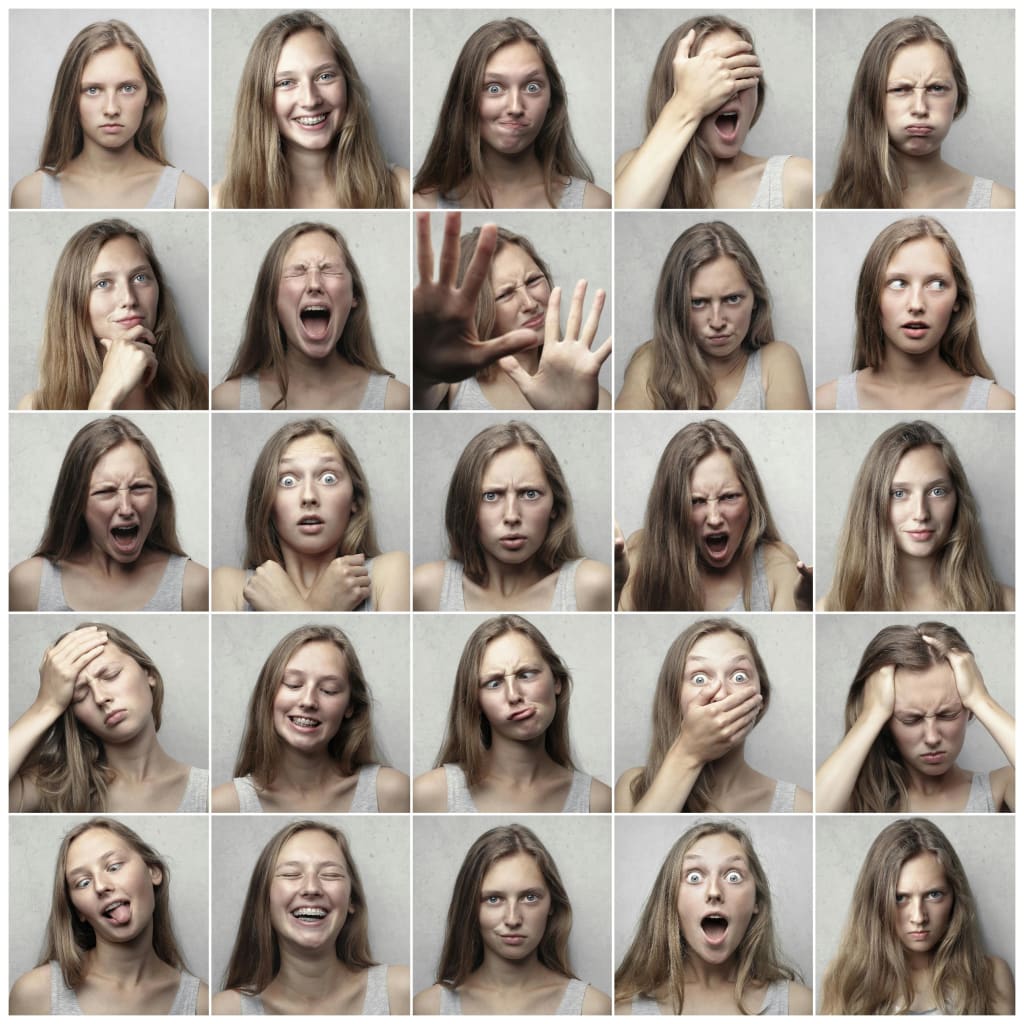
Psychopathy is a personality disorder that presents with bold, disinhibited, and meanness traits, as well as characteristics such as rebellious nonconformity, blame externalization, shallow affect, and manipulativeness.
Shallow affect is an important factor in psychopathy, which is described as a ‘significant reduction in appropriate emotional responses to situations and events’.¹ In accordance with this, psychopaths show significantly less affect-related activity which was observed in fMRI.² Due to this emotional underarousal, psychopaths have often been described as having an incapacity to fall in love.³
What are the similarities between attachment and addiction?
Some studies examine the parallels between attachment and addiction showing that there are significant overlaps between these processes.⁴ After a breakup, we all go through withdrawal, so can we claim love is a form of addiction?
Interestingly, even though substance abuse and psychopathy are highly co-morbid, evidence suggests that psychopaths do not experience withdrawal and craving⁵, at least not to the same extent normal people do. This again confirms the existence of shallow affect showing that psychopaths’ addiction does not have a strong emotional component.
So, what can psychopaths feel?
Contrary to popular perception, psychopaths can feel a range of emotions. Someone with shallow affect is in a neutral and unemotional state most of the time but events, especially negative ones, can still trigger an emotional reaction for them. And it’s not a case where the person is not able to feel certain emotions but more that their emotions are short-lived and not very intense in comparison to healthy people. Psychopaths are capable of feeling fear and anxiety but it tends to be more of a physical reaction they would feel in their stomach and not something long-lasting. Most of their feelings are experienced as thoughts only. In other words, they would feel anxiety in the form of paranoia and hypervigilance but they are rarely “emotionally” anxious.
An interesting example is Ted Bundy, a well-known serial killer who kidnapped, raped, and murdered numerous women. During his interviews, although he was only willing to discuss his murders in the third person, he did admit to feeling guilty for three months after his first victim. He also spoke about how he wanted to stop once and tried to only sexually assault one of his victims but then ended up killing her by accident. These show that psychopaths might not be as emotionless as we think, even though, their emotions are indeed very shallow. For a normal person, murdering someone would likely be accompanied by years and years of feeling guilt and remorse, whereas someone with antisocial personality disorder would only experience these emotions for a much shortened period.
Why do psychopaths deny their emotions?
Ted Bundy, the same person who spoke about feeling guilty, claimed that he was the most ‘cold-hearted son of a bitch’ one can ever meet. He also said he feels sorry for people who feel guilt and remorse.
What is the truth, then? Are psychopaths incapable of feeling these emotions after all?
The answer is a mix of both. Psychopaths have a lower capacity for remorse but it is not true that they cannot feel it at all. Due to the nature of their disorder, psychopaths are preoccupied with not showing any weaknesses or vulnerabilities. They perceive the world as hostile and abusive and therefore see emotions such as empathy, guilt, and remorse are weaknesses they believe people will try to use against them to manipulate or subjugate them. As a result, they often present a façade of invulnerability and hide emotions they consider weak.
References:
[1]: Shallow Affect (n.d.). In APA Dictionary. Retrieved from https://dictionary.apa.org/shallow-affect
[2]: Kiehl, K. A., Smith, A. M., Hare, R. D., Mendrek, A., Forster, B. B., Brink, J., & Liddle, P. F. (2001). Limbic abnormalities in affective processing by criminal psychopaths as revealed by functional magnetic resonance imaging. Biological psychiatry, 50(9), 677–684. https://doi.org/10.1016/s0006-3223(01)01222-7
[3]: Cleckley, H. (1941). The mask of sanity; an attempt to reinterpret the so-called psychopathic personality. Mosby.
[4]: Burkett, J. P., & Young, L. J. (2012). The behavioral, anatomical and pharmacological parallels between social attachment, love and addiction. Psychopharmacology, 224(1), 1–26. https://doi.org/10.1007/s00213-012-2794-x
[4]: Fisher, H. E., Brown, L. L., Aron, A., Strong, G., & Mashek, D. (2010). Reward, addiction, and emotion regulation systems associated with rejection in love. Journal of neurophysiology, 104(1), 51–60. https://doi.org/10.1152/jn.00784.2009
[5]: Cope, L. M., Vincent, G. M., Jobelius, J. L., Nyalakanti, P. K., Calhoun, V. D., & Kiehl, K. A. (2014). Psychopathic traits modulate brain responses to drug cues in incarcerated offenders. Frontiers in human neuroscience, 8, 87. https://doi.org/10.3389/fnhum.2014.00087
If you enjoyed this post and would like to read more, you can subscribe here — https://shopping-feedback.today/authors/ella-harris to get an email whenever I publish a story. You can also buy me ☕ via — https://ko-fi.com/ella_harris
About the Creator
Ella Harris
Writing about trauma, personality disorders, abuse and psychology in general.
Reader insights
Nice work
Very well written. Keep up the good work!
Top insights
Easy to read and follow
Well-structured & engaging content
Expert insights and opinions
Arguments were carefully researched and presented
On-point and relevant
Writing reflected the title & theme
Eye opening
Niche topic & fresh perspectives
Keep reading
More stories from Ella Harris and writers in Psyche and other communities.
Character Analysis: Antisocial Personality Disorder
Antisocial Personality Disorder, also known as psychopathy or sociopathy, is surrounded by exaggerated myths and stories. When we think of this disorder, we picture someone who is a criminal, with an absolute lack of conscience, scary eyes, and violent tendencies. But is that all there is to the disorder?
By Ella Harris2 years ago in Psyche
How to Succeed at the Benson Directory®
Congratulations and welcome to the Benson Directory® employee #22391! As our newest call handler, you will have the privilege of speaking with dozens of unique and interesting people on a daily basis as well as the opportunity to earn bonuses for high performance. Contained within this handbook you will find a set of ease to follow instructions designed to help you settle in to your new role and begin paving the way to success.
By S. A. Crawford5 days ago in Fiction



Comments (4)
Very interesting, I guess they can feel some but not alot
also, relying on brain scan data to support hypotheticals is one of the issues that has led modern cognitive neurophilosophy and neuroscience to the sad and lonely state we find it in today. https://shopping-feedback.today/psyche/brain-imaging-consciousness-jaynes-and-wittgenstein-av1y2o04fo%3C/span%3E%3C/span%3E%3C/span%3E%3C/a%3E%3C/p%3E%3C/div%3E%3C/div%3E%3C/div%3E%3Cdiv class="css-w4qknv-Replies">
"Due to this emotional underarousal, psychopaths have often been described as having an incapacity to fall in love.³" This is a very fascinating thing to ponder from an evolutionary perspective as I did recently without much success unfortunately. https://shopping-feedback.today/humans/could-love-actually-be-a-net-negative-for-humanity%3C/span%3E%3C/span%3E%3C/span%3E%3C/a%3E%3C/p%3E%3C/div%3E%3C/div%3E%3C/div%3E%3Cdiv class="css-w4qknv-Replies">
Extremely interesting post, join us in the Vocal Social Society and share your work there. You can embed your links into your story easily (though you need to be a V+ member to use the Quickedit facility. This is my article on formatting your stories.https://shopping-feedback.today/resources/tips-on-formatting-your-vocal-stories?via=mike