
Can I edit the memory by tracing the mark left by the memory?
Can I edit the memory by tracing the mark left by the memory?

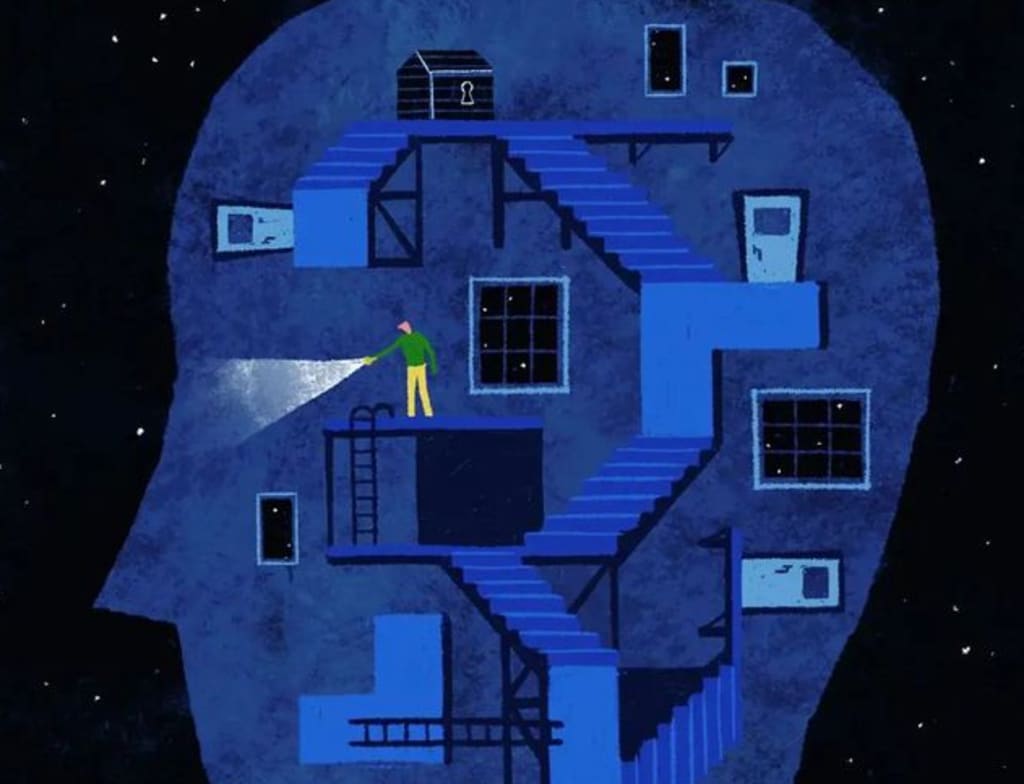
Based on previous research, scientists have found causal evidence of memory imprinting at the level of cell collection for the first time: by killing a specific group of cells in the amygdala, they successfully erased the specific memory in the mouse brain, thus confirming The memory imprinting cell is indeed the physical trace left by the past experience representation in the brain.
○ Nowadays, researchers are exploring re-editing memory by regulating memory imprinting cells. They use optogenetic technology to stimulate memory imprinting cells in mice and "implant" artificial memory for them.
○ With the continuous innovation of technology, mature modulation memory imprinting technology may become a boon for patients with neurodegenerative diseases in the future.
At the beginning of the last century, the German evolutionary biologist Richard Semon (Richard Semon) proposed the concept of engram. He believes that people's specific experiences can activate specific groups of brain cells, causing them to produce continuous chemical/physical changes.
In Richard's obscure life, the concept of memory imprints was unknown in the scientific community. Even though memory imprints became one of the hot topics in psychology after his death, in the following century, countless scientists just lost their way in searching for memory imprints.
In recent years, with the emergence of new technologies, we can finally "see" the footprints of our memories. By manipulating memory imprints, neuroscientists have also initially realized the implantation and erasure of memories.
As early as in ancient Greece, Aristotle wrote in De Anima (On the Soul) that people’s experiences can leave traces, just like “people stamped with a seal ring (in wax oil) [ 1]." Is it true that, as Aristotle said, the memory formed by people's feelings will leave physical traces in the brain?
The first to propose memory imprints was the German evolutionary biologist Chad Simon. In his book "Mneme" [2], Simon defines memory imprinting as "a continuous and irreversible potential change brought about by stimuli." He believes that external stimuli can cause continuous damage to the nervous system. Sexual changes, so that the system can maintain memory and respond in the same way to a stimulus experienced in the long past. Simon's insight is far ahead of his time, which may be the reason for his obscurity throughout his life. Although his theory succeeded in predicting the discovery a century later, Simon wisely gave up the task of searching for memory imprints. He believes: "Based on our current knowledge, the hope of success in pushing such a problem into the molecular domain is very slim. Therefore, I abandon this task."
Many years later, neuropsychologist Karl Lashley used systematic experiments to explore the memory imprinting cells in the mammalian brain. In his classic experiment, Rushley trained mice to study in a maze for several days, remembering to find a route to reward. Later, he removed part of the cerebral cortex of the mouse and tested again whether the mouse could remember the route it had learned before. Through several experiments, Rushley found that although the size of the removed cortex has a certain correlation with the results of the mice in the second test, he still could not accurately find the cortex location that has a decisive impact on the memory of the mice [4]. On the road of searching for the imprint of memory, Fate did not pity the neurologist. After 30 years of fruitless searching, Lashley gave up this research direction.
Compared with Rushley, his students may be closer to the essence of memory imprints. Donald Hebb (Donald Hebb) proposed Hebb's law in 1949, which states that neurons that often fire at the same time will unite with each other to form a cell group. This phenomenon, called plasticity, takes into account the stability (that is, the memory cannot be changed at will after it is formed) and the flexibility (that is, under special circumstances, the memory needs to be allowed to change). However, this neural model of "frequently firing at the same time with enhanced connection" has not been verified in the following 30 years, and its underlying mechanism is therefore unknown.
In 1973, Timothy Bliss and Terje Lømo published the first paper on long-term potentiation (LTP) in history. Bliss and Lomo inserted electrodes into the hippocampus of rabbits and used high-frequency stimulation to try to simulate the neural pattern proposed by Hebb. After performing high-frequency stimulation on the presynaptic neurons, they were pleasantly surprised to find that the postsynaptic neurons had a greater response to the signals sent by the presynaptic neurons, that is to say, the "communication" between them Becomes more effective. The discovery of LTP shows that the connections between neurons are regulated by their activity rules. Such a cellular mechanism satisfies both stability and flexibility, so it is still receiving extensive attention in the memory field. The related research on memory imprints will also come out of it in a few decades.
looking for memory imprinting cells
A century ago, Simon rated the task of finding memory imprinting cells as "an important task with little hope of success." But in recent years, the emergence of new technologies has brought us new possibilities.
In 2007, Mayford Laboratory was the first to find evidence in the brains of genetically modified mice [5]. When the neurons of these genetically modified mice are activated, they produce a fluorescent protein. By detecting these fluorescent proteins, researchers can locate these activated neurons. In the experiment, the researchers played harmless sound stimuli (conditioned stimuli) while applying a slight electric shock (unconditioned stimulus) to the mice’s feet. After several repetitive trainings, the mice learned conditioned reflexes and heard harmless sounds. After sound stimulation, there will be a stiff reaction due to fear. The team found that the neurons in the brain were repetitive in the mice during training and when they heard the sound stimulation again three days later. A series of subsequent studies also supported this conclusion.
However, in order to prove that memory imprinting cells are indeed physical traces of past experience in the brain, we need more concrete evidence. Although Lashley failed to find evidence in 30 years of research due to the lack of precise cell positioning technology, his ideas have inspired future generations-if memory is indeed encoded in memory imprint cells, then Inhibiting the activity of memory imprinting cells, the individual's memory performance should also be affected.
During postdoctoral research, Sheena A. Josselyn (Sheena A. Josselyn) significantly changed the performance of long-term memory in mice by regulating the neurons in the mouse brain. She thought that she might have completed Rushley's task unintentionally, and after nearly ten years of hard work, she finally got the proof of the existence of memory imprint cells. In 2009, Jocelyn’s research team found the causal evidence of memory imprinting at the level of cell collection for the first time: by killing a specific group of cells in the amygdala, they successfully erased specific memories in the brains of mice [6].
In previous studies, Jocelyn demonstrated that neurons with high levels of CREB protein in the lateral amygdala of mice may be related to panic memory. In the new experiment, they trained mice to acquire a panic response to sound stimuli. Then, they used a virus that could accurately locate neurons that overexpress CREB protein (ie, memory imprinting cells) to remove this part of the mouse amygdala. Neurons are killed. Jocelin found that mice that lost memory imprinting cells also lost the memory of the panic experience.
Jocelin’s success has set off a wave of memory research, and researchers have applied these tools that can precisely manipulate memory imprinting cells. If the artificial erasure of specific memories provides more tangible evidence for the existence of memory imprints, a series of subsequent studies have shown us that the discovery of memory imprint cells has opened up unlimited possibilities for science.
Change memory by regulating memory imprinting cells?
In 2012, researchers from MIT's Susumu Tonegawa laboratory demonstrated for the first time through optogenetics that irradiating specific neurons can activate corresponding memory activities. In this way, the researchers also tampered with the memory connections of the mice and implanted them with new memories.
The coronal section of the hippocampal dentate gyrus of the early Alzheimer's disease mouse model. With the combination of optogenetic technology, the memory imprinted cells (green) under the contextual fear memory are labeled with the light-sensitive protein ChR2.
In this study [7], the researchers targeted another memory-related brain area in the mouse brain: the hippocampus. Using optogenetics technology, the researchers cultivated transgenic mice capable of transcribing channel photoreceptor proteins, and then applied a slight electric shock to the transgenic mice. The mice were panicked and reacted stiffly due to the electric shock. This stimulus caused fear-related neurons in the brains of transgenic mice to express light-sensitive ion channels. Subsequently, the researchers only need to irradiate the mouse’s hippocampus with blue light to activate the neurons that encode light-sensitive proteins and make them recall frightening memories. Even in a new environment where no electric shock has been experienced, blue light exposure can make mice feel scared and produce a stiff reaction.
In another subsequent study published in "Science" [8], the researchers stimulated the memory imprinting cells of mice and "implanted" them with artificial memory. The study mice were first placed in cage A. As the mice explored the cage, the researchers recorded the activated neurons in the mouse's brain. Subsequently, the researchers transferred the mice to cage B and gave them electrical stimulation, and the mice showed a fear response. At the same time, the researchers also activated the neurons that the mice activated when they explored the A cage. Activating these memory imprinting cells made the mice mistakenly believe that they had been clicked in cage A, so after returning to the safe cage A, the mice still showed a fear response, even if they were not shocked at this time.
Since Simon proposed the concept of memory imprinting, technological innovation has continued to promote researchers' exploration of memory. In recent years, scientists have gradually turned their attention from rodents to humans. Through sophisticated brain imaging and data analysis techniques, researchers have found neural representations related to memory in the human brain [9]. In the future, by regulating memory imprinting, scientists may be able to help patients suffering from post-traumatic stress disorder (PTSD) or Alzheimer's disease (AD). As Jocelyn said: "We are in the golden age of technological development. With new technologies, we are expected to provide new answers to past questions.
About the Creator
Keep reading
More stories from writers in Psyche and other communities.




Comments
There are no comments for this story
Be the first to respond and start the conversation.