
Best Binaural Beats App: My Top Picks
No-fluff roundup of apps that actually work for sleep, focus, and meditation.


Confession: the first time I tried a binaural beats app, I thought my headphones were broken. One ear sounded slightly “off” compared to the other, and I spent ten minutes fiddling with the audio settings before realizing that was the whole point. Not my proudest tech moment.
Now, though, these apps are everywhere. Back in college, my roommate swore that binaural beats helped him pull all-nighters before exams. I wasn’t convinced—until I found myself half-asleep in a library cubicle with a can of cheap energy drink, desperate for anything to keep me focused. Fast forward to 2025, and the whole scene has leveled up: dozens of polished apps, each claiming they’ll help you relax, focus, sleep, or “expand your mind” (whatever that means).
Here’s where it gets messy. Not all of them are actually good. Some sound like someone recorded a fan and looped it for an hour. Others bombard you with ads right when you’re finally starting to drift into that relaxed state. And a few—surprisingly—actually work. I’ve had evenings where a good session genuinely helped me shake off stress, and mornings where a focus playlist kept me from drifting off into YouTube rabbit holes.
So why does any of this matter? Because the idea behind binaural beats is simple but surprisingly effective: play two slightly different tones in each ear, and your brain picks up on the difference. That “extra” beat can push your brain into different states—like alertness for work, calm for winding down, or deep rest when you can’t seem to sleep. It’s not magic, and it won’t turn you into a productivity robot, but if you pick the right app, it can make a real difference in how you feel.
That’s the whole point of this roundup. Instead of giving you a wall of technical explanations, I’m going to share what I’ve learned by actually using these apps, along with notes from people who’ve tested them longer than I have. Think of it as the kind of list you’d get from a friend who’s tried way too many of these things and wants to save you from downloading the duds.
What Are Binaural Beats?

Okay, quick science moment—don’t roll your eyes. Binaural beats are basically an audio trick that plays slightly different tones into each ear. Your brain notices the difference and fills in the gap with a kind of “phantom beat.” So if one ear hears 300 Hz and the other hears 310 Hz, your brain invents a 10 Hz beat in the middle. It’s not a sound in the traditional sense—it’s more like your brain doing a bit of DIY audio engineering.
Now, why does that matter? Because those “beats” line up with different brainwave patterns. People smarter than me figured out that certain frequencies are linked to different mental states:

Delta (0.5–4 Hz): The deep sleep zone. Think knocked-out-on-the-couch-after-pizza kind of rest.
Theta (4–8 Hz): That hazy, drifting-off place where you’re not fully awake but not fully gone either.
Alpha (8–13 Hz): Chill but alert. Perfect for winding down after work without falling asleep.
Beta (13–30 Hz): Focus and problem-solving territory. Useful if you’re trying to crank out emails without getting distracted by TikTok.
Gamma (30+ Hz): The “big brain” state. Some people say it’s linked to higher learning or creativity, though I’ll admit I can’t tell if I’ve ever hit this one on purpose.
Here’s the thing—binaural beats aren’t some miracle cure. They won’t magically erase anxiety or make you code like you’re in The Matrix. But they can nudge your brain toward a certain mood or rhythm, which is why so many people use them for studying, sleeping, or meditating.
Personally, I’ve used them during writing sessions when my brain feels like a cluttered browser with 37 tabs open. After about 10 minutes, it’s like my thoughts line up in a straighter line. Placebo? Maybe. But even if it is, I’ll take it.
Of course, not everyone reacts the same way. A friend of mine (let’s call her Sara) swears she can’t stand the “wobbly” sound of binaural tracks—it makes her more restless, not less. Meanwhile, my brother throws them on every night and says he sleeps better than he has in years. That split reaction is why the apps matter: some handle the audio really well, layering it with ambient music, while others just loop bare tones that feel clinical.
So, if you’ve ever wondered whether binaural beats are real or just New Age noise, the answer is somewhere in between. The science checks out, the experience varies, and the right app can make all the difference.
Benefits of Using Binaural Beats Apps
I’ll admit, when I first saw claims like “boost creativity!” and “instantly relax!” slapped across app store screenshots, I rolled my eyes. But after actually using these apps for a while (and hearing from friends who swear by them), I’ve noticed some legit upsides—if you approach them realistically.
1. Easier Focus (When Your Brain Won’t Cooperate)
Ever tried to read an email three times and still had no idea what it said? That’s me on a Monday morning. Throwing on a beta-wave binaural track sometimes feels like mental WD-40—it smooths out the friction enough to get through tasks. Apps like Brain.fm or Focus@Will even combine beats with music designed for concentration, so it doesn’t feel like you’re just listening to test tones.
2. Sleep Without Scrolling
My brother (the one who falls asleep to these things every night) says it beats lying in bed doomscrolling. I’ve had similar nights—put on some delta waves, set the timer in the app, and let it fade out as you drift. Is it the same as a glass of wine? No. But it doesn’t come with a hangover either.
3. Stress Relief on Demand
There’s something about switching from Slack pings to a calm alpha-wave track that feels like hitting an internal reset button. I’ve used binaural beats during work breaks when I’m wound up, and even a 10-minute session can help me stop clenching my jaw. (Though fair warning: if you’re expecting full-on spa vibes, pair it with actual quiet time, not while juggling three conversations.)
4. Meditation for People Who Hate Meditation
Here’s a confession: I’m terrible at meditating. My brain immediately makes a grocery list the second I sit still. Binaural beats help anchor the mind a little—it gives you a rhythm to focus on. Apps like Headspace and Calm sneak binaural tones into guided sessions, making it feel less like “staring at your thoughts” and more like you’re tuning into something structured.
5. Portable Mood Shifts
One underrated perk: these apps live on your phone. That means whether you’re stuck on a delayed flight, stressed in the office, or trying to reset between meetings, you can pop in headphones and shift gears quickly. You don’t need candles, a yoga mat, or an hour of free time. Just a pair of earbuds and a few minutes.
Key Features to Look for in a Binaural Beats App

Not all binaural beats apps are created equal. Some feel like they were coded in an afternoon, while others actually put thought into how people use them day-to-day. Before you hit that download button, here are the features I’ve found actually make a difference:
1. Sound Quality That Doesn’t Drive You Nuts
This one sounds obvious, but it matters. A good app will use clean, balanced audio without weird hissing or distortion. Some layer beats with ambient music (rain sounds, soft piano, lo-fi vibes), which makes them easier to listen to for long stretches. Others just throw raw tones at you, which can feel clinical or even irritating after a while.
2. Frequency Options for Different Needs
You don’t want an app that only offers one “relax” track. Look for apps that let you pick between states: focus (beta), relaxation (alpha), meditation (theta), sleep (delta), and maybe even creativity (gamma). The best ones explain what each frequency range is supposed to do without drowning you in pseudoscience.
3. Timer and Customization
Unless you want to risk falling asleep with earbuds jammed in, a timer is your friend. Some apps let you set sessions for 15, 30, or 60 minutes. Others even fade out gradually so you don’t wake up to sudden silence. Bonus points if you can adjust the volume of the beats versus the background music separately.
4. Offline Mode (Because Wi-Fi Isn’t Always There)
It’s surprising how many apps forget this. If you’re on a plane or somewhere without steady internet, you’ll want downloads or offline playback. Nothing kills the vibe like your meditation track buffering.
5. Minimal Annoyances (Ads, Paywalls, Clutter)
A personal pet peeve: apps that blast you with ads in the middle of a “relaxation” session. Or worse, apps that tease you with one free track and hide the rest behind a paywall. The good ones either give you enough free options to test them properly or clearly explain what you’re getting if you subscribe.
6. Extras That Actually Help
Some apps go the extra mile:
Integration with sleep tracking (so you see if it really helps you rest).
Daily reminders to nudge you into building a routine.
Curated playlists for different situations like studying, commuting, or winding down before bed.
The trick is not to get distracted by bells and whistles. At the end of the day, you want something simple: clean audio, useful options, and no nonsense in the way.
My Pick : Good Vibes - Binaural Beats
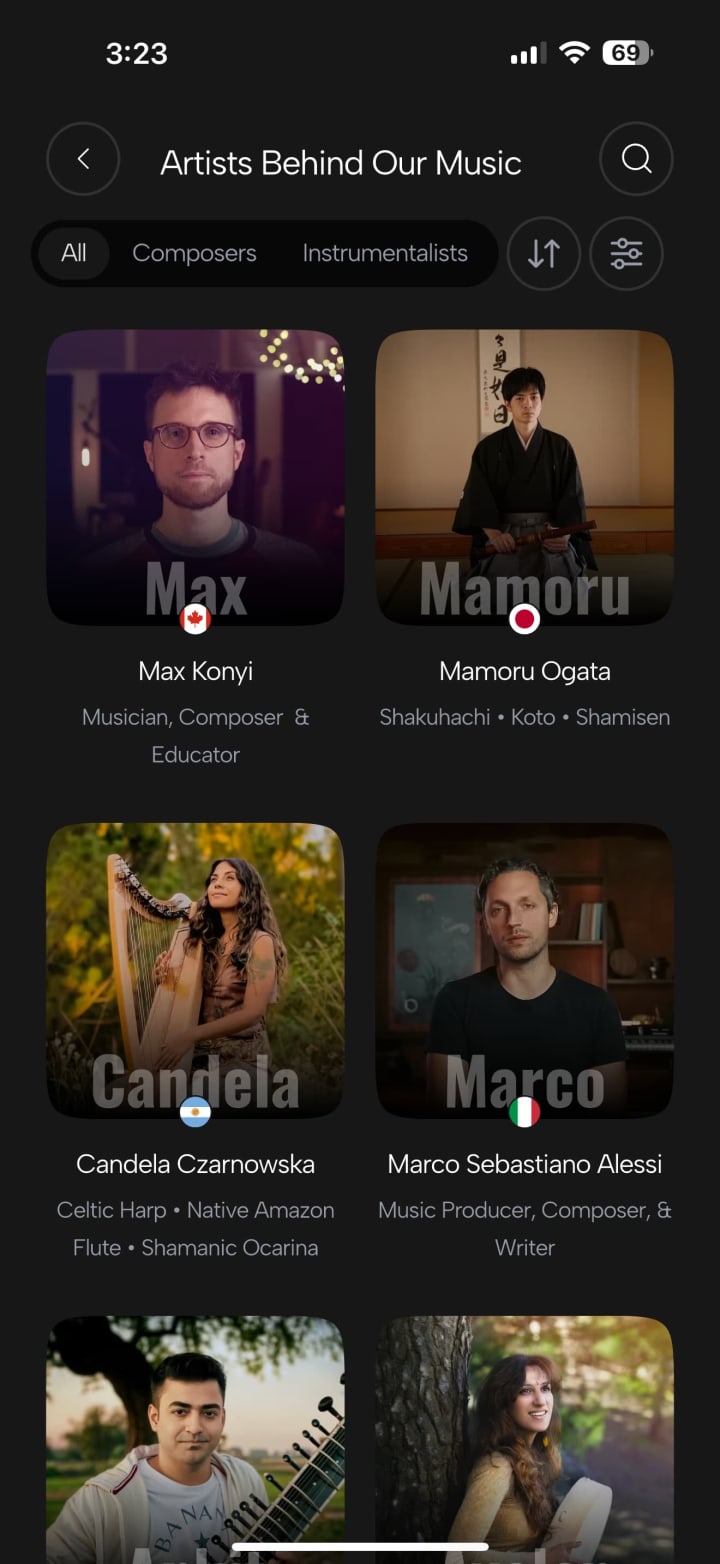
If I had to pick one app that nails both the feeling and the function, it’s Good Vibes. A lot of binaural beats apps sound like sterile tone generators, but this one feels like stepping into a curated sound therapy session.

What makes it different? First, the music isn’t stock or generic loops—it’s crafted by more than 50 musicians from around the world . That means every track has an emotional core, whether it’s a sitar-led meditation, a flute-driven focus session, or layered ambient music with subtle beats tucked underneath. You can tell it was designed to feel human, not algorithmic.
Second, it doesn’t ditch science. Tracks are tuned to brainwave states (Delta for sleep, Alpha for relaxation, Theta for meditation, Beta for focus), so you’re not just getting pretty sound—you’re getting intentional design . And if you’re the type who likes to tinker, the “Find Your Frequency” feature lets you experiment with binaural, monaural, isochronic, or even 3D modes.
Then there’s the extra depth:
Mantras and chants from traditions like Sanskrit, Gregorian, and Mongolian throat singing.
Healing instruments—from handpans and Tibetan bowls to cello and Portuguese guitar.
Frequencies and tones beyond the basics, including 432Hz, Solfeggio tones, and even Schumann resonances .
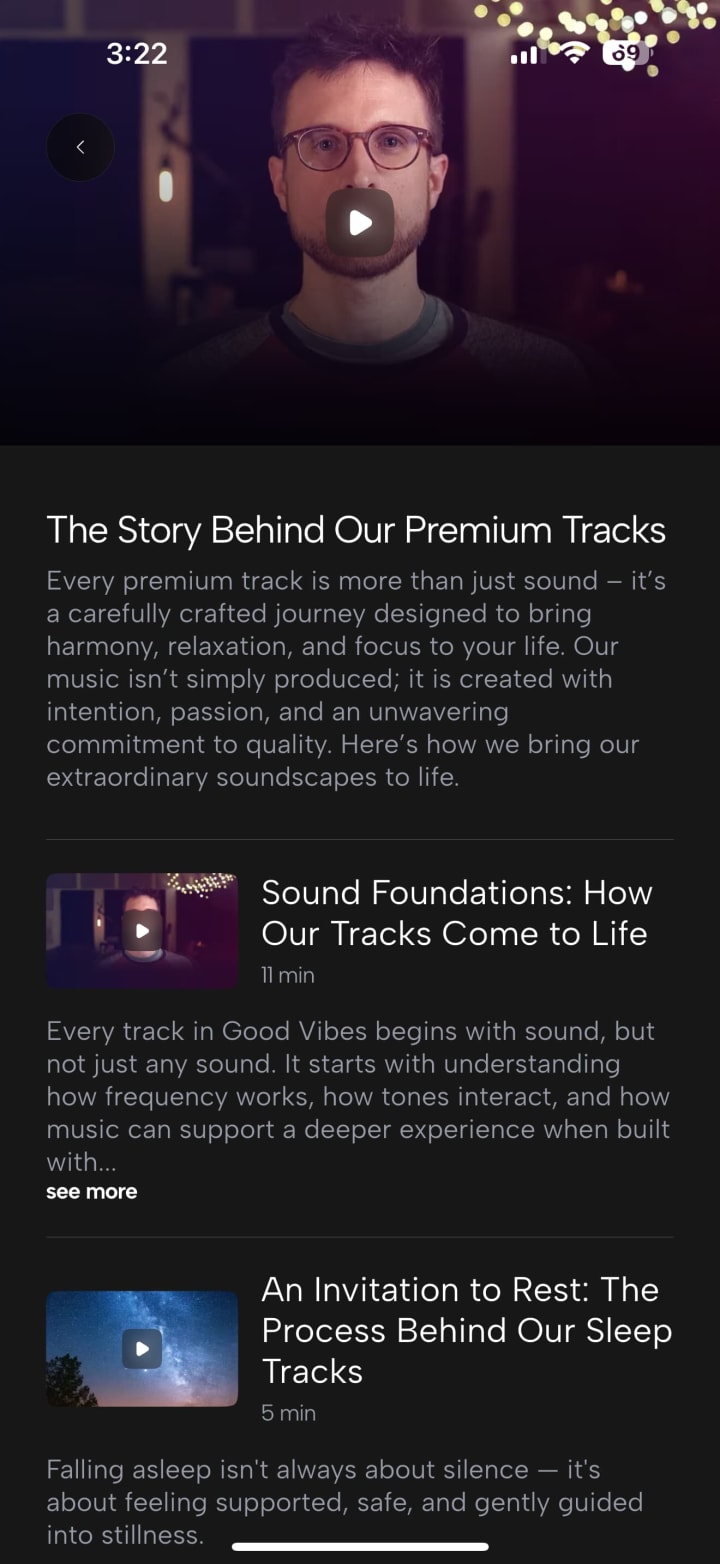
Behind-the-scenes clips of sound healers and artists actually creating the music, which gives it a personal, almost documentary feel.
For me, the value is in that balance: it’s not just about drifting off with pretty sounds, and it’s not just about hitting the “right” frequency for productivity. It’s both. It feels intentional, grounded, and—dare I say—soulful, while still giving me the focus or calm I’m looking for.
Why I keep coming back to it: Most apps force you to choose between “science-driven” or “emotionally rich.” Good Vibes combines both, and that makes it way easier to stick with long-term.
How to Choose the Right App for You

Here’s the honest truth: the “best” app isn’t universal. What works for me might drive you up the wall. The trick is matching the app to your intent and your personality.
Start with this simple question: Why are you even downloading a binaural beats app?
If you’re looking for deep sleep support, you’ll want apps with delta and theta tracks plus timers that fade out gently. Good Vibes, Calm, or even the simpler Binaural Beats Therapy are safe bets here.
If your problem is focus, look for apps that emphasize beta waves or neuroscience-backed sound design. Brain.fm and Focus@Will were literally built for this.
If it’s stress or meditation, then emotional richness matters—think Good Vibes, Headspace, or MyNoise, which feel more immersive and human.
Second, check your patience for customization. Some people love fiddling with sliders, mixing rain with brown noise, and fine-tuning frequencies. If that’s you, MyNoise or Adlai’s app will feel like playgrounds. But if you’d rather hit play and not overthink it, something polished and preset like Calm or Brain.fm will keep you from spiraling into choice overload.
Third, consider where you’ll use it most. Commuting? Make sure the app has offline mode. At night? Look for timers. During work? Ads and clutter will ruin the vibe, so go premium or pick an app that’s clean and distraction-free.
Lastly, think about how much you care about music itself. If you need warmth, artistry, and cultural depth, Good Vibes stands out—it’s the only one pulling in dozens of global musicians and layering binaural beats into authentic compositions. On the other hand, if you just need background sound to push you through spreadsheets, Brain.fm or Noisli might be all you need.
Here’s a rough shortcut I use:
Warm and musical → Good Vibes.
Quick and scientific → Brain.fm.
Meditation + bedtime polish → Calm or Headspace.
DIY control freaks → MyNoise or Adlai.
Simple background noise → Noisli.
Bottom line: don’t overthink it. Pick one, try it for a week, and pay attention to how you feel. The best app is the one you’ll actually use—not the one with the fanciest features list.
Best Practices for Maximizing Results
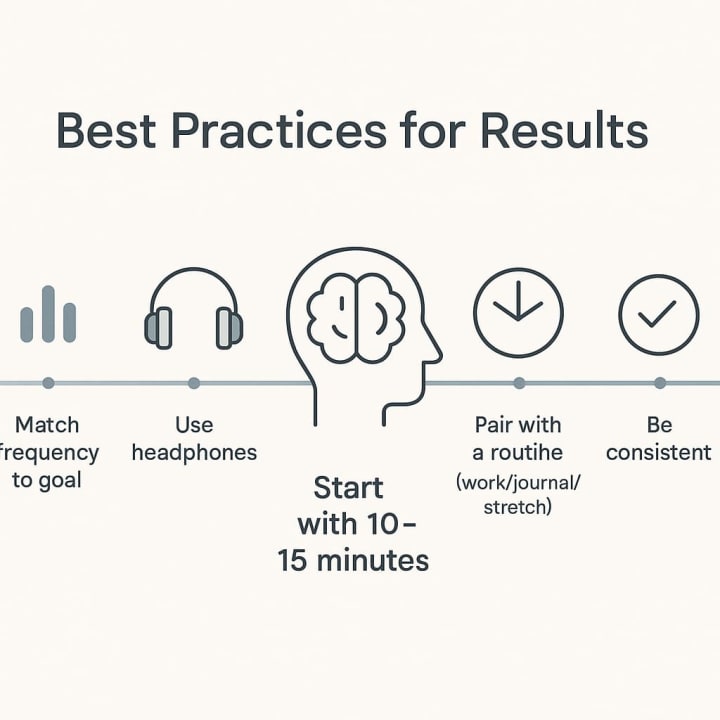
Downloading the app is the easy part. Actually getting value out of it… that’s where people either turn it into a habit or let it sit in the “unused apps” folder next to that language-learning app they swore they’d use. Here are a few things I’ve learned (and messed up) along the way:
1. Match the Session to Your Goal
Don’t just hit play on the first track. If you’re trying to sleep, stick with delta or theta waves. Need to plow through a spreadsheet? Go for beta. Meditation or journaling? Alpha and theta work best. Picking the wrong frequency is like drinking espresso before bed—not fun.
2. Use Headphones (the Right Way)
Yes, you can play binaural beats through speakers, but they only really work with headphones since each ear needs its own tone. Over-ear headphones are great for focus sessions, but honestly, I use cheap in-ears at night so I don’t roll over on bulky gear.
3. Start Small (10–15 Minutes)
Going straight into a one-hour session can feel overwhelming—or boring. I started with 10-minute tracks while doing emails, and it was easier to notice the shift without committing my whole afternoon. Build up from there.
4. Layer It with Your Routine
Binaural beats work better when you pair them with something intentional. Example: I throw on alpha waves while stretching after work. A friend of mine uses theta beats while journaling. Another swears by beta tracks while knocking out Pomodoro study sessions. The beats are like seasoning—you still need the meal itself.
5. Be Consistent (But Flexible)
Like meditation or working out, the benefits stack when you do it regularly. That doesn’t mean beating yourself up if you skip a day. Think of it as a tool: use it when you need it most, not another chore to check off.
6. Watch Out for Distractions
Turn off notifications, put your phone face down, and make sure the app you pick isn’t going to blast you with an ad mid-session. Nothing kills relaxation like a pop-up telling you to upgrade to premium.
Bottom line: binaural beats aren’t a magic switch, but when you use them intentionally and consistently, they can actually shift your mood, focus, or energy in ways that stick.
Expert Insights & Real User Experiences

One of the most common questions I hear about binaural beats is: “Do they actually work, or is it just placebo?” The truth is, both science and real people have something to say about it.
What Experts Say
Neuroscientists have studied how rhythmic auditory stimulation can affect brainwave activity. Some research points to modest improvements in attention, relaxation, and sleep quality when people listen to beats tuned to delta, theta, or beta frequencies. That said, the consensus is cautious—binaural beats are better seen as a supportive tool, not a cure-all. Think of them like caffeine: helpful, but not a replacement for sleep or stress management.
Sound therapists often highlight the layering of beats with music or instruments as a key factor. A clinical psychologist I spoke with compared it to mindfulness practices: “The beats give the mind something steady to latch onto, which makes it easier for people to relax or focus.” Apps that combine intention-driven sound design with clean frequencies tend to get better results than those that feel like raw tone generators.
What Real Users Experience
Here’s where things get interesting—because the reactions are wildly personal.
Sleepers: My brother swears by Good Vibes’ delta tracks. He says it’s the first time he’s been able to consistently fall asleep without TV in the background. On Reddit, you’ll find entire threads of people saying similar things: binaural beats replaced their white noise machines.
Workers: A friend of mine, Jake, uses Brain.fm religiously during coding sessions. He says it doesn’t feel like “music” but keeps him locked in, like mental scaffolding.
Skeptics: Not everyone is sold. Sara (the one I mentioned earlier) finds the wobble effect distracting, saying it makes her restless instead of calm.
Tinkerers: On the other hand, users who like customization rave about apps like MyNoise, because they can dial in rain, pink noise, and theta waves until it feels perfect.
The Common Thread
Even though the reactions vary, most people who stick with binaural beats use them as part of a larger routine: meditation, studying, or winding down at night. Experts back this up, saying the consistency of context matters just as much as the frequencies themselves.
In short: if you expect binaural beats to instantly erase anxiety, you’ll be disappointed. But if you approach them as a tool—a companion for focus, sleep, or calm—they can become a surprisingly reliable part of your daily rhythm.
Final Thoughts & Recommendations

I’ve tested more binaural beats apps than I care to admit, and here’s the thing I’ve realized: the right app feels less like “background noise” and more like a companion. It’s not about whether the beats are perfectly tuned—it’s whether the app fits into your life without friction.
For me, Good Vibes is the standout. It’s the only app that really blends emotional depth (authentic music, global artists, chants, instruments) with intentional brainwave design. It feels alive, not clinical, and it adapts to whether I need sleep, focus, or meditation.
That said, the “best” choice depends on your needs:
If you want science-driven focus → Brain.fm is your friend.
If you need bedtime polish or meditation coaching → Calm or Headspace fit the bill.
If you’re a tinkerer who loves to customize → MyNoise or Adlai’s app will keep you busy.
If you just want simple background sounds → Noisli works without fuss.
Here’s my advice: don’t overcomplicate it. Pick one, give it a week, and actually pay attention to how you feel. If you sleep better, focus longer, or stress less, then it’s doing its job. If not, try another. The point isn’t finding the “perfect” app—it’s finding the one you’ll actually use.
Personally, I think binaural beats are worth a shot. Worst case? You listened to some calming tones and wasted a few minutes. Best case? You’ve found a new tool that helps you focus, relax, or finally get the sleep you’ve been chasing.
So, try one. Let it run while you work, journal, or wind down. And if you stumble on a track that feels like it was designed just for you, don’t be surprised—that’s kind of the magic of sound.
FAQs About Binaural Beats & Apps
Q: Do binaural beats really work, or is it just placebo?
Research shows they can influence brainwave activity and mood, especially for focus, relaxation, or sleep. But results vary from person to person. For some, it’s a noticeable shift; for others, it feels more like background noise. Placebo or not, if it helps you focus or rest, it’s still useful.
Q: Do I need headphones?
Yes. Binaural beats rely on sending slightly different frequencies to each ear. Without headphones, you’ll just hear blended tones instead of the intended effect.
Q: How long should I listen?
Start with short sessions—10 to 15 minutes is plenty. Some people work up to an hour, but it depends on your patience and goal. Sleep tracks often run longer with timers that fade out.
Q: Is it safe to use every day?
For most people, yes. There’s no evidence of harm from regular use. That said, if you have epilepsy or certain neurological conditions, check with a doctor before experimenting.
What’s the difference between binaural, monaural, and isochronic beats?
Binaural: Requires headphones, creates the beat in your brain.
Monaural: Plays the combined beat through speakers; works without headphones.
Isochronic: Pulses the sound on and off—stronger and more direct, often used in therapy contexts.
Q: Can binaural beats replace meditation or therapy?
Not really. Think of them as a tool to support focus, sleep, or calm—not a replacement for professional care or deep practices like meditation. They can help you get into the right state, but they don’t do the work for you.
Q: Which app is best for beginners?
If you want something polished and easy: Calm or Headspace. If you’re curious about music + science blended together: Good Vibes. If you want raw, no-nonsense focus: Brain.fm.
Q: Are free apps good enough?
Some are. Apps like Binaural Beats Therapy give you the basics without paying. But if you want better sound quality, no ads, and features like timers or customization, a paid app usually feels smoother.
Disclaimer: I’m not paid to write this piece. None of these apps have sponsored me, and there are no affiliate links hidden here. I’ve personally tested these apps and I’m sharing my own experience—plain and simple.
Some of the images used in this article are AI generated illustrations.
About the Creator
Hawrry Bhattarai
I am a Freelance Travel Blogger & Enthusiast. I love to share travel tips, guides in a witty & informal way more often. I inspire fellow travelers to go out to explore & make memories.
Keep reading
More stories from Hawrry Bhattarai and writers in Psyche and other communities.
I Used a Binaural Beats App for 30 Days and This Is What Happened to My Focus
I Used a Binaural Beats App for 30 Days and This Is What Happened to My Focus When I first heard about binaural beats, my reaction was basically, “Sounds nice, but does it actually work?”
By Hawrry Bhattarai7 months ago in Psyche
The BAFTA Awards
By now, in a stunning departure from recent years, most of the world is aware of what happened at the BAFTA film awards. Social Media Headlines will tell you the bare bones: that John Davidson, a Tourette's Syndrome advocate, shouted a racial slur at two Actors of Colour, Michael B Jordan and Delroy Lindo.
By Natasja Rose3 days ago in Psyche
I’m a Psychologist and Addiction Is Not a Disease: Here’s What It Actually Is (And Why That Matters)
Introduction : For decades, addiction has been widely described as a disease. Governments, rehabilitation centers, and even many medical professionals promote the idea that addiction works like illnesses such as diabetes or heart disease. According to this model, addiction is something that permanently affects the brain and must be managed throughout a person’s life.
By Shahid Zamanabout 21 hours ago in Psyche
Review of 'Man on the Run'
My wife and I saw Man on the Run, a nearly 2-hour documentary on Amazon Prime, about Wings, Paul McCartney's group that flew around the world from shortly after The Beatles broke up in early 1970 to shortly after John Lennon was murdered at the end of 1980, making a Beatles reunion forever impossible.
By Paul Levinson7 days ago in Beat


Comments
There are no comments for this story
Be the first to respond and start the conversation.